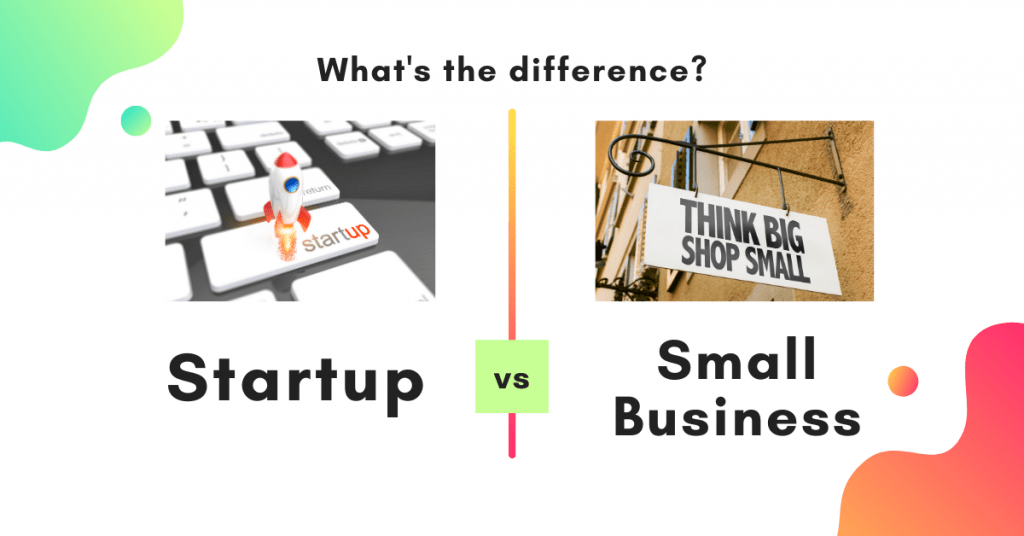
Startup vs Small Business
A startup is a temporary organization in search of a scalable and repeatable business model. Startups often aim to disrupt the market with innovative solutions or technology.
A small business is a permanent and stable entity that aims to generate steady profits by serving a local or niche market. It usually follows a proven business model.
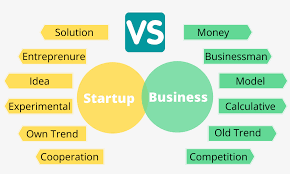
Although they may seem similar at first glance, their approaches, ambitions, and structures set them distinctly apart. Here’s a comprehensive look at the differences between startup and small business, as the central theme, and weaving in “business model,” “growth strategy,” “risk,” and “innovation” throughout the discussion.
Vision: Disruption vs. Stability
A startup is a company established to develop a new product or service and sell it, usually to eventually disrupt the existing market equilibrium. Startups are created from the very beginning with a scalable and new business model. They are founded to solve new or underserved issues using innovative approaches or leading-edge technology. Conversely, a small business typically takes on an existing business model with a demonstrated demand, for example, a bakery, boutique, or neighborhood consultancy, targeting a specific community or niche market.
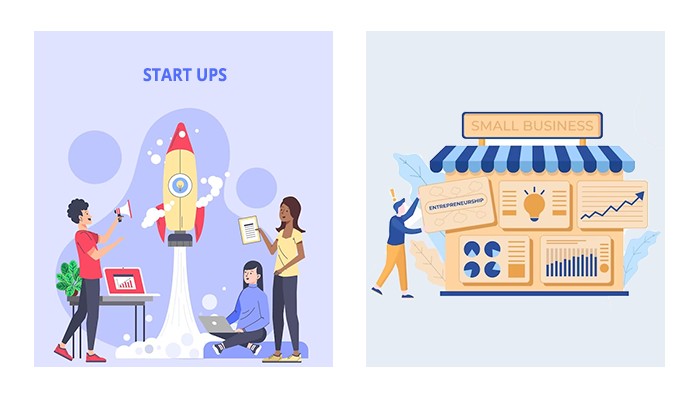
In either instance, the business model dictates how the organization generates, delivers, and captures value, but startups tend to seek business models with potential for explosive growth, while small businesses value dependability and consistency.
Growth Strategy: Scaling Fast or Growing Steadily
One of the defining characteristics of the difference between startup and small business argument is the growth strategy. Startups nearly always pursue rapid, even explosive, expansion. Their growth strategy is to achieve fast acquisition of users quickly, re-invest profits (or venture capital) to accelerate expansion, and in some cases, focus on market share over short-term profitability. Small businesses, on the other hand, focus on steady and sustainable growth. Their growth strategy is to build retention-based customer relationships, improve operations, and sustain.
This core divergence in growth strategy influences almost every facet of how small businesses and startups operate, from hiring and marketing to investment decisions.
Funding & Risk
Startups have a greater risk factor than small businesses. Their new business models tend to need huge investment before they turn a profit, so they typically look for investment from venture capitalists, angel investors, or accelerator programs. They need the cash injection to take their ideas, build products, and grow at pace. But the risk is high—most startups don’t make it past breaking even, but the ones that do can change industries.
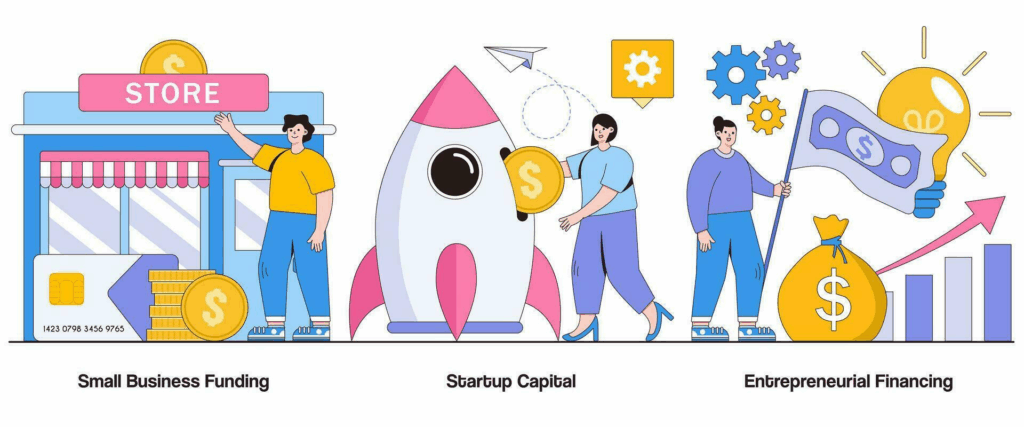
By contrast, small businesses tend to draw upon owner funds, bank lending, or family investment. Their risk-adjusted strategy ensures they become profitable rapidly and are therefore less likely to collapse from a lack of cash. The volume and types of financing directly determine the risk picture and path for the different business types, with small businesses typically avoiding risk by adhering to proven models and smaller debt burdens.
Innovation and Market Focus
Another critical difference is innovation and market orientation. Startups live on innovation—either developing something totally new or providing a revolutionary enhancement to current solutions. Their innovative business models help them solve problems at scale, often geared towards global or national markets.
Small firms seldom go after radical innovation, however. They seek instead to improve current goods or offer services better adjusted to local market requirements. The level of innovation sought and the business model adopted will decide if and how the organization will disrupt the marketplace or prove reliable in the longer term.
Operational Structure and Culture
Their business model, growth strategy, and risk tolerance and love for innovation also contribute to the daily culture of a startup versus a small business. Startups have a reputation for rapid, high-energy work environments and a willingness to shift quickly as market conditions evolve. Small businesses tend to have more routine-based day-to-day activity, strong community roots, and focus on service and continuity rather than quick change.
Defining Success
Success for a startup is typically gauged in terms of its influence—did it shake up an industry, go public, or get sold to someone for a large amount of money? The business model is always focused on maximizing size and, if successful, generating outsize returns.
For a small business, success generally involves establishing a sustainable operation that generates steady income and value to a local community, usually more judged by legacy and customer relationships than by splashy exits.
Conclusion
Overall, the distinction between a startup and a small business is one of vision, the selected business model, strategy for growth, the degree of innovation, and an entirely different mindset toward risk.
In summary, understanding the fundamental differences between startups and small businesses is crucial for anyone looking to enter the entrepreneurial world. Whether you are eyeing rapid innovation and growth or aiming for steady local success, being aware of the common mistakes first-time entrepreneurs make can save you time and resources on your journey. If you’re considering launching a venture, you might also find our detailed guide on how to start a small business in India: step by step , particularly helpful to navigate the process with confidence.