

1. Choose the Right Business Structure
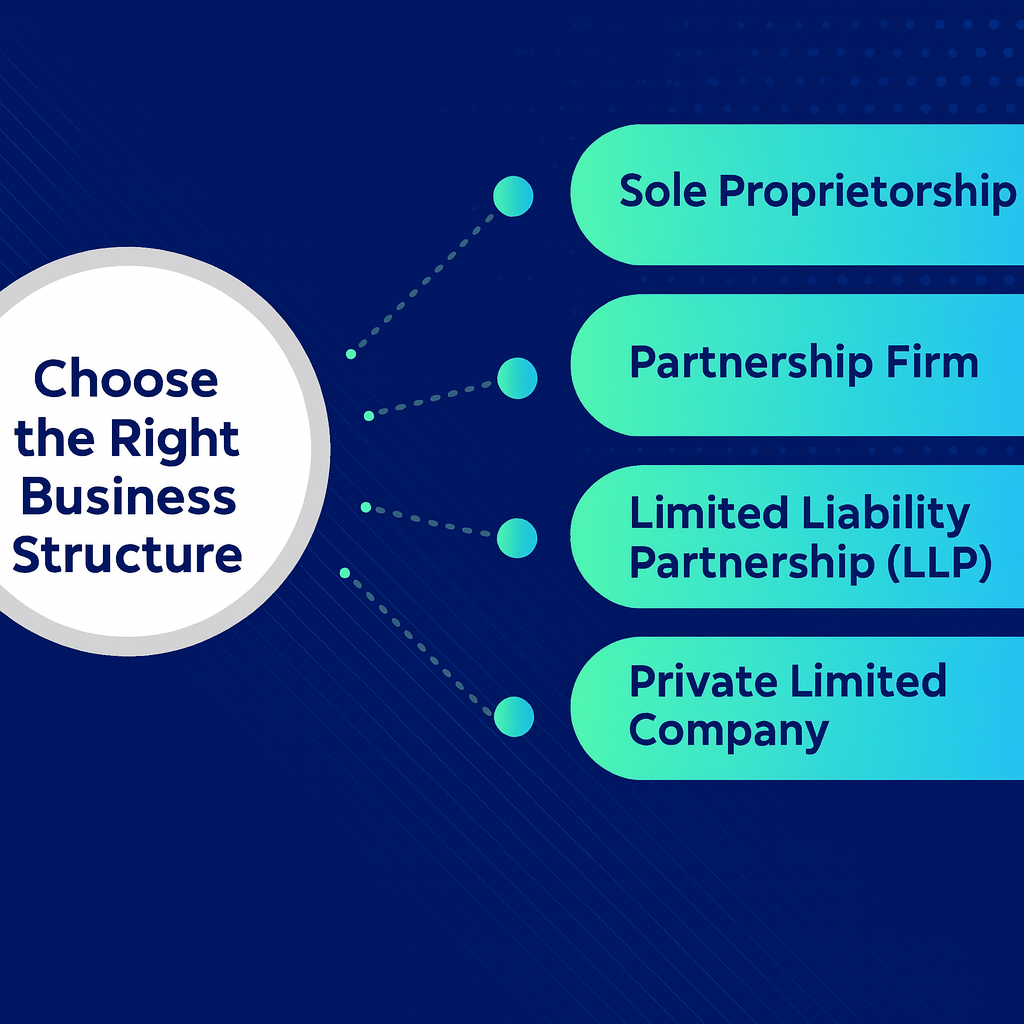
A startup legal checklist in India is the first step in selecting an appropriate business structure. We can choose between the following:
- Sole Proprietorship
- Partnership Firm
- Limited Liability Partnership (LLP)
- Private Limited Company
Most start-up companies in India opt for a Private Limited Company because of its scalability, limited liability, and ease of funding. It all depends upon the tax filings, compliance obligations, and the source of your income.
2. Register Your Business Legally
The business registration process in India is the next step in choosing an appropriate business. The registration process depends upon the organisation’s structure, which is done via:
- MCA (Ministry of Corporate Affairs) for LLPs and Private Limited Companies
- Local government or Udyam portal for sole proprietorships and MSMEs
Ensure you acquire:
- Certificate of Incorporation
- PAN and TAN
- GST Registration (if turnover exceeds limits or if interstate sales are involved)
This step is a critical part of the startup compliance checklist and must be done before starting operations.
3. Draft Legal Agreements

Documentation is the most important part, and any startup must have:
- Founders’ Agreement
- Non-Disclosure Agreements (NDAs)
- Employment Contracts
- Vendor & Client Contracts
Having these contracts in place ensures that all stakeholders are protected and reduces future legal conflicts. This is often the most ignored aspect in the startup legal checklist in India.
4. Intellectual Property Protection

We must protect our ideas, logo, or product design. Apply for:
- Trademark Registration (for your brand/logo)
- Patent Protection (for inventions)
- Copyrights (for creative works)
Startups should include IP registration in their legal requirements for startups in India to build long-term brand value and investor trust.
5. Follow Tax & Compliance Rules
Understanding and following tax laws is non-negotiable. As part of your startup compliance checklist, ensure you:
- File GST returns monthly/quarterly
- Maintain proper bookkeeping
- Follow TDS rules
- Conduct annual company filings
Failure to comply may lead to fines, penalties, or even business closure.
6. Apply for Startup India Recognition
The Indian government’s Startup India initiative offers tax exemptions, easier compliance, and funding support. To qualify, register under DPIIT. This recognition is helpful in simplifying the business registration process in India and attracting funding.
7. Get Industry-Specific Licenses
Depending on your sector, you might need additional licenses like:
- FSSAI License for food businesses
- Drug License for pharmaceutical startups
- Import Export Code (IEC) for international trade
Ignoring these legal requirements for startups in India can result in operational issues or bans.
Final Thoughts
Launching a startup isn’t just about innovation — it’s about preparation. Following a clear startup legal checklist in India helps you avoid legal issues and build a strong foundation. From business registration process in India to maintaining a proper startup compliance checklist, every step you take ensures your venture is credible, investable, and ready to scale.
“If you’re looking for a broader guide beyond legal steps, check out our complete article on how to start a small business in India to turn your idea into a successful venture.”