

Few founders in the high-stakes world of a startup relish their time when the share price drop becomes more visible, whether for a publicly listed company or more subtle internal signals in a private venture. This situation can actually be a valuable lesson for startups, as it isn’t just about numbers falling but rather how founders manage valuation expectations and maintain trust with stakeholders. This article will unpack three core lessons every founder should take away when the tide turns, and how each can leverage those instances to their advantage in emerging stronger.
1. Reevaluate your valuation assumptions
A drop in share price often comes with the message that the market, or at least influential investors, perceives the previous valuation benchmarks to have been overly optimistic. As one commentary notes, the decline in startup valuations reflects shifting market and investor conditions.

For founders, this means the keyword of valuation transparency becomes critical. Revisit your assumptions: Are your growth projections realistic? Is your total addressable market credible? Are unit economics sound? Early-stage ventures have a tendency to rely more on hope rather than hard data.
If you treat valuation as a one-time number rather than a dynamic reflection of risk, performance, and market conditions, you invite credibility to erode when results don’t match. A falling share price underscores the need for humility and flexible valuation strategies.
Actionable step: Develop a valuation update plan with your investors and board that aligns milestones, metrics, and valuation checkpoints.
2. Uphold trust with stakeholders
A price drop doesn’t affect just numbers; it affects mindset. Employees with equity options, early investors, board members-all gauge the health of the company via the implicit signal of valuation. If that drops, trust can weaken fast.

Stakeholder trust in your company’s leadership, growth narrative, and financial discipline is the second keyword. When valuations slip, what happened, why, and how to respond are discussions that must be undertaken in the openness of forums such as board meetings. Governance lapses in down-rounds or valuation resets aren’t just financial; they’re reputational.
Founders should lead by example with transparency: share data, share challenges, and show the remediation route. Humility matched with strategic clarity rebuilds confidence.
Actionable step: schedule a stakeholder communication update after any valuation drop – explain the valuation change, what that means for equity, and next steps.
3. Make resilience part of your business model
Valuation corrections and share price falls often reflect a market reset on interest rates, risk appetite, and other macro-factors. To the founders, this signals the keyword of business resilience.
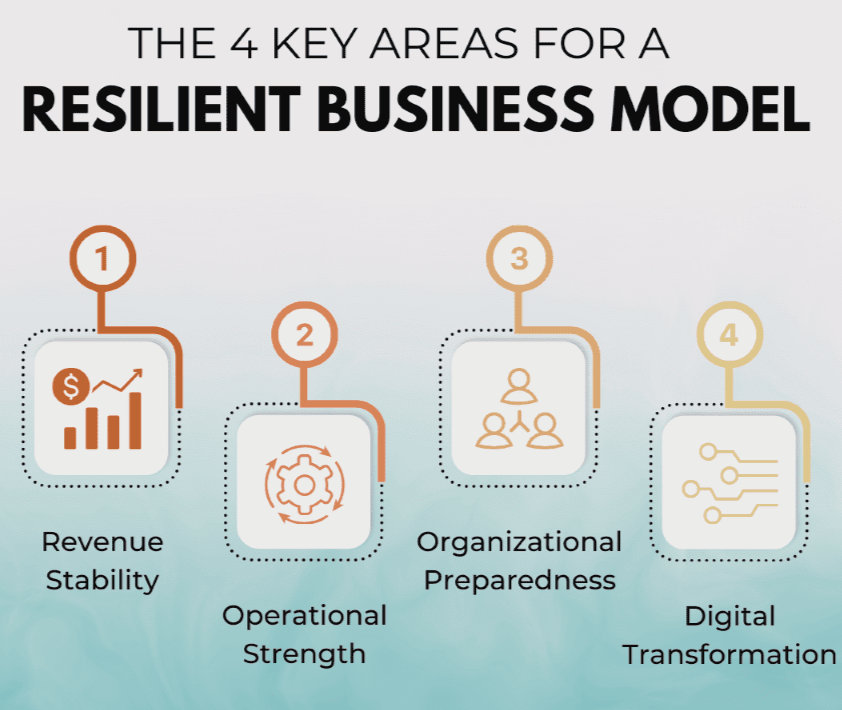
KPMG’s briefing on early-stage companies says valuation should reflect evolving risk profile and business model maturity, not just hype. KPMG Assets Lesson: Adopt a model where you are less dependent on near-term valuations or share price signals. Conversely, focus on the fundamentals: consistent cash flow improvement, unit economics, market validation, and capital use efficiency. In the event of a share price drop, resilient founders have room for maneuver to renegotiate terms, retain talent, preserve culture, and make strategic pivots. Actionable step-develop a “stress-test” where you model what happens to your valuation under slower growth, higher costs, delayed funding-and have a plan B ready.
Conclusion
A drop in share price does not necessarily need to be a crash. It can be a checkpoint. From here, the three interlinked lessons of valuation recalibration, stakeholder trust, and business resilience form a strategic tripod for the founders. By treating valuation not as vanity, but as a living metric, by maintaining honest communication when the signals begin to flicker, and by building an operational model which can weather the fluctuations, that same moment of weakness can be transformed into the foundation for your long-term strength. When the share price falls, all it’s saying may be: realign the narrative, reinforce the base, and regain trust. For founders, that can be the start of a stronger next chapter.
If you’re planning to launch your own venture, don’t miss our complete guide on How to Start a Small Business in India – Step by Step. It covers everything from business registration and legal compliance to marketing strategies and funding options. This resource is perfect for aspiring entrepreneurs who want clear, actionable steps to establish and grow a profitable business in India. Explore the full guide on How to Start a Small Business in India – Step by Step to get started with confidence.