
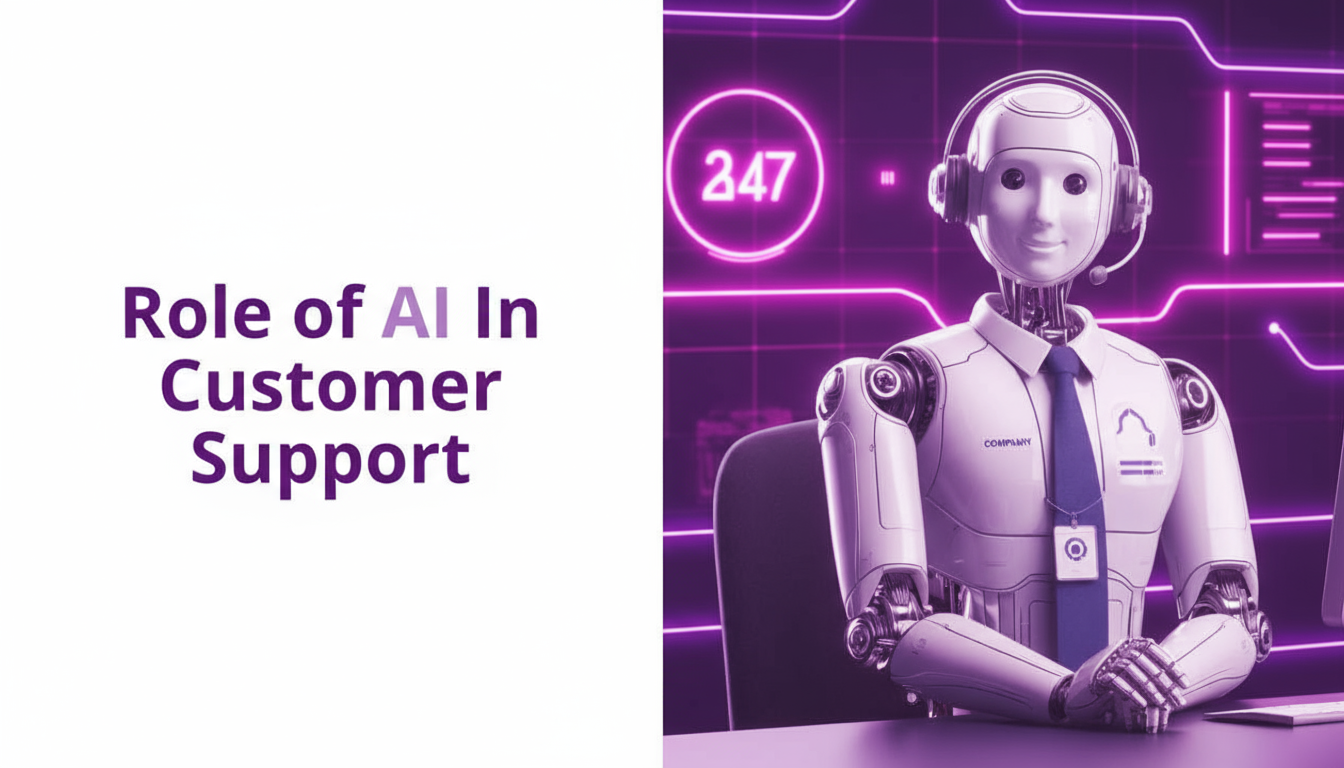
For startups, every interaction with a customer is crucial. With limited resources and the constant pressure to scale quickly, offering seamless and responsive customer experiences can feel overwhelming. That is where AI in customer support is revolutionizing the experience. Through automated responses, personalized interactions, and analyzing customer information, artificial intelligence allows startups to manage more queries without a loss in quality.
Why Startups Need AI in Customer Support?
Startups during initial stages find it challenging to manage product development and customer interaction. It is expensive and time-consuming to hire numerous agents, and therefore, maintaining consistent service is not an easy task. AI-powered customer support is an intermediary solution that offers intelligent chatbots, self-service, and automated ticketing. These provide not just cost-saving operations but also instant support to customers at any point during the day.
Startups can also leverage AI to monitor top questions, pinpoint pain points, and offer input for product development. Rather than relying on educated guesses, entrepreneurs can utilize real-time data to make customer-driven decisions that power expansion.
Key Benefits of AI for Startups
24/7 Availability – AI-powered chatbots never require a break, unlike human agents. They provide customers with the assurances of always being available, increasing satisfaction and trust.
Scalability – As a startup expands, its customer base also expands. AI solutions scale seamlessly with no need for new hiring in dealing with thousands of queries.
Cost Efficiency – Developing a human support staff involves training, payrolls, and infrastructure. With AI support for customers, startups save money without cutting down on quality.
Personalization – AI uses past interactions, purchase history, and preferences to provide personalized suggestions. Customers are made to feel special, strengthening loyalty.
The Human-AI Balance
While AI optimizes repetitive questions, startups need not eliminate human touch altogether. Consumers continue to value empathy, imagination, and sophisticated problem-solving that computers are incapable of. A blended approach is optimal—AI deals with FAQs, billing inquiries, or product issues, while complicated problems get elevated to humans. That balance provides efficiency without losing emotional rapport.

For example, when a customer faces a technical issue with a product, AI can guide them through basic troubleshooting. If the problem persists, the system automatically transfers the case to a human expert, who continues the conversation with context already provided. This reduces frustration and resolution time.
Building Better Experiences with Automation
For small businesses, implementing AI-driven customer service doesn’t require heavy investment. Tools like Intercom, Zendesk AI, and Freshdesk offer ready-to-use solutions tailored for startups. These platforms provide automation workflows, sentiment analysis, and reporting dashboards to track performance.
Where used appropriately, AI not only answers faster but also gathers useful insights. Figures on the highest query times, how often customers complain, and customer feelings help startups make data-driven decisions regarding staff, marketing campaigns, and product releases.
Challenges Startups Should Consider
Although it is advantageous, AI is not a magic wand. Incompetently developed chatbots can infuriate consumers rather than assist them. Dependence on automation can also generate a sterile, non-personalized experience. Startups need to continually check performance and update their AI systems using fresh data to keep it accurate.
Moreover, preserving customer privacy is of utmost importance. AI is data-dependent, so startups need to adhere to data protection laws and disclose how information will be handled. Building trust upfront guarantees long-term loyalty.
Future of AI in Startup Support
The AI role in customer care will further grow with startups embracing sophisticated features such as voice assistants, predictive analytics, and emotion detection. These will enable companies to pre-empt issues before they arise, solve questions in a more natural way, and provide proactive solutions.
Picture a system that anticipates when a customer will require assistance based on how they’ve acted in the past, like multiple unsuccessful login attempts or cart abandonment. Rather than waiting for the customer to request it, AI takes the initiative and reaches out with support. This kind of anticipatory service strengthens bonds and distinguishes startups from competition in crowded markets.
Final Thoughts
For startups looking to scale responsibly, AI for customer support provides more than simple cost-cutting—it provides a competitive edge. By integrating automation with human empathy, companies can provide quicker, wiser, and more personalized experiences.
Those startups that thrive in today’s competitive environment will look at AI as neither a substitute for human teams, but as a robust partner in building connective relationships with customers.
This blog on The Role of AI in Customer Support for Startups fits perfectly under the broader theme of AI-driven innovation. It directly connects with AI Startup Ideas for the Future, as customer support automation is not just a cost-saving tool but also a scalable startup idea in itself, showing how AI can transform business operations and create new opportunities in advanced tech.