
Over the past decade, venture capital has been the buzzword for startups. Everyone’s sure that raising rounds is the only way to scale fast. Is that actually the case? The notion that the bootstrapping startup model is dead needs to be questioned. There are still many founders who like to scale intentionally with modest means—and their stories contain important lessons.
What does bootstrapping startup mean for new founders?

Bootstrapping startup means developing a business out of personal funds—savings, reinvested profits, sweat equity—instead of raising funds from outside the company at first.
Essentially, the firm funds its business internally, incrementally expanding and tightly managing expenses.
Some entrepreneurs view the bootstrap approach not as a default but as a strategic decision: for control, discipline, and growth that can last versus pursuing glamorous valuations.
Why Some Think Bootstrapping Is “Dead”?
1. Scale demands capital
Most markets necessitate quick scaling—marketing, hiring, infrastructure—that appears impossible without outside capital. Bootstrapped companies tend to expand more slowly.
2. Investor signals and validation
In environments where VC support is a mark of legitimacy, not having outside capital might be considered a warning sign to users, partners, or employees.
3. Network & support missing
Investors contribute more than capital: mentorship, distribution networks, and pipelines for hiring. Bootstrapped entrepreneurs do not have these on their side.
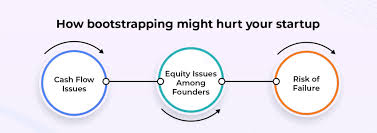
4. Higher personal financial risk
Because the founder carries a greater personal risk (drawing on savings, taking out credit, etc.), there’s more at stake if it all goes south.
For these reasons, the traditional bootstrap route is, some say, a relic of the past in hypercompetitive, capital-hungry industries. But the truth is more complex.
Why Bootstrapping Still Works—and When It’s Wise?
1. Control and ownership
Not giving away equity early, you hold decision-making autonomy. Many founders find this invaluable—fewer pressures from outside parties.
2. Discipline and frugality
Working with tight constraints necessitates shrewd decisions, cost sensitivity, and choice-making. This tends to create better product-market fit and financial acumen.
3. Resilient business models
If your model has to deliver profits early, bootstrapping typically becomes a filter: only successful businesses make it through.
4. Evidence for future funding
An independently financed, revenue-increasing business is a proof that your model is successful. That may reassure future investors.
5. Success stories exist
While no big brands bootstrap completely, some businesses began frugal and developed strongly before seeking funds.
Risks & When Bootstrapping May Not Fit
- If your startup is in a capital-intensive domain (hardware, biotech, marketplaces) the gap between bootstrap growth and market demands may be too large.
- If first-mover advantage is critical, waiting to scale might mean missing the window.
- Personal burnout: wearing too many hats, underinvestment in talent, and stress are real dangers.
- Limited leverage: You might lack the ability to hire top talent or invest in marketing to match VC-backed competitors.
How to Bootstrap Effectively (Best Practices)
- Start with minimal viable product (MVP): Build an early version, test it in the market, and refine before scaling.
- Prioritize cash flow & customer revenue: Use early sales or recurring revenue to fund the next phase.
- Be ruthless in expense control: Every cost must justify itself.
- Leverage equity compensation: Give early team members ownership as incentive, reducing cash burden.
- Use incremental funding judiciously: If needed, small funding rounds or convertible notes can complement bootstrapping without full dilution.
- Plan exit or growth path: Decide whether you’ll stay small, grow organically, or eventually raise.
Is Bootstrapping startup Dead? The Verdict
No, the self-funded startup strategy is alive, if not always applicable. It’s not a universal fit—but for most founders, still a daring, realistic option. In the scale and funding round obsessed world, the bootstrappers continue to have an unspoken counterpoint: that grit, responsibility, and creating value trump hysteria.
So, before you declare bootstrapping startup dead, ask yourself: Does my business require huge capital now, or could it grow sustainably with discipline and patience? For most founders who “swear by it,” the answer is still the latter.
If you’re exploring alternatives to bootstrapping, check out our blog on Creative Ways to Fund Your Startup Without Giving Away Equity for more funding strategies that let you retain full control over your business.