
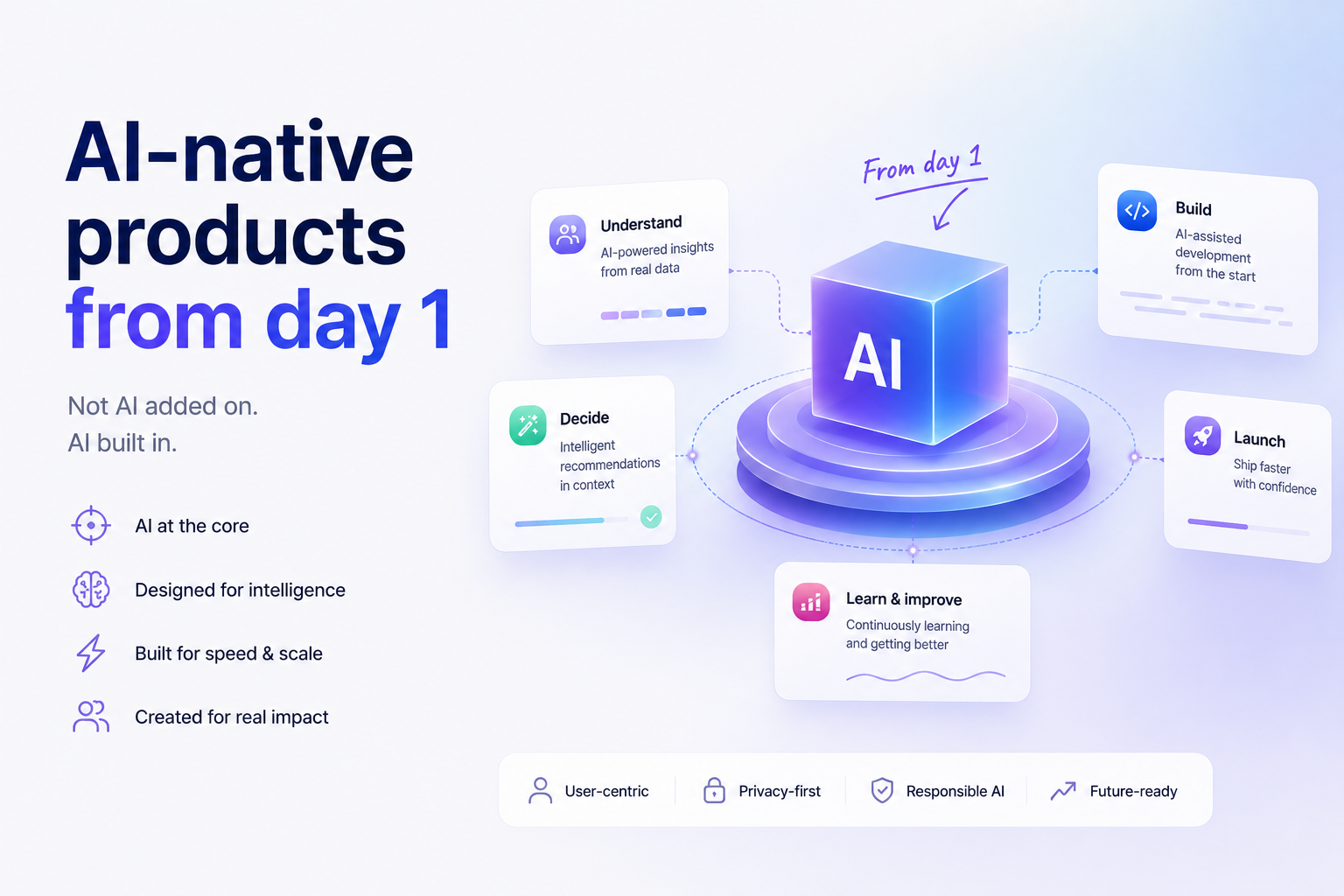
Artificial Intelligence is no longer a future technology—it is becoming a core part of modern business operations. Startups today have a unique advantage: they can build AI into their products from the very beginning rather than integrating it later. This approach enables businesses to create smarter solutions, improve user experiences, and scale more efficiently. As a result, AI-native products for startups are emerging as a powerful trend across industries ranging from healthcare and finance to education and e-commerce.
Unlike traditional software products, AI-native solutions are designed with intelligence at their core. They use machine learning, automation, predictive analytics, and data-driven decision-making as fundamental components of the product architecture. For startups looking to innovate and compete in fast-changing markets, building AI-first products can provide a significant advantage.
What Are AI-Native Products?
AI-native products are applications, platforms, or services that rely on Artificial Intelligence as a central feature rather than an add-on capability. These products use AI to analyze data, automate processes, personalize experiences, and continuously improve performance.
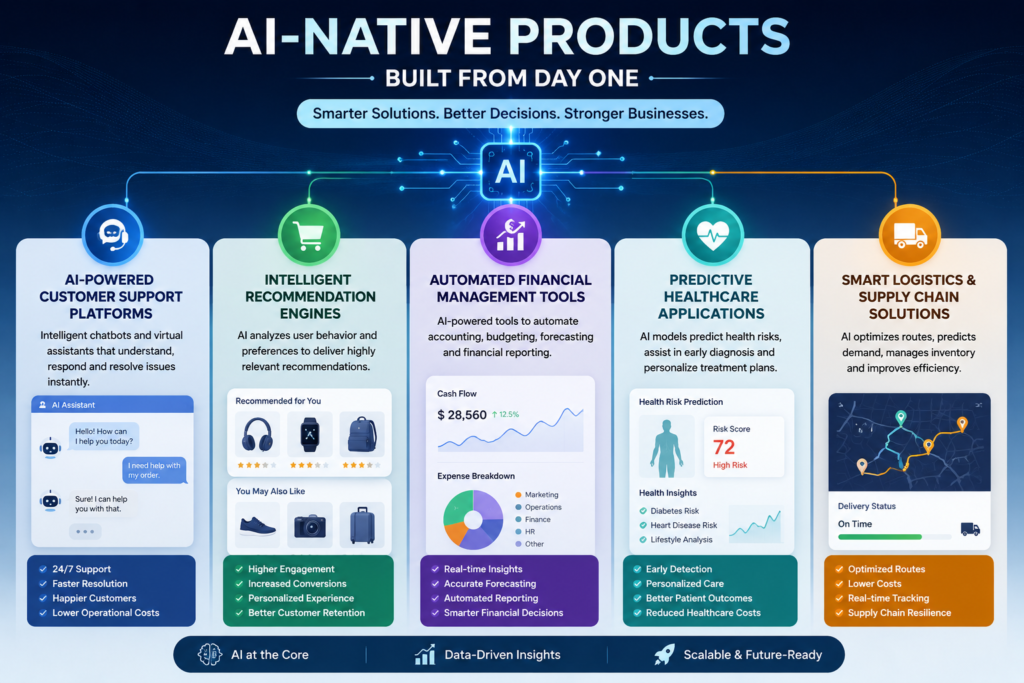
Examples include:
- AI-powered customer support platforms
- Intelligent recommendation engines
- Automated financial management tools
- Predictive healthcare applications
- Smart logistics and supply chain solutions
The growing demand for AI-powered startup solutions reflects how businesses and consumers increasingly expect intelligent and personalized experiences.
Why Startups Should Build AI from Day One
Established companies often face challenges when integrating AI into existing systems because their technology infrastructure was not designed for it. Startups, however, have the flexibility to build AI capabilities into their products from the start.
By creating AI-native products for startups, founders can:
- Deliver personalized customer experiences
- Automate repetitive tasks
- Improve operational efficiency
- Enhance decision-making
- Scale more effectively
Building AI-first products also allows startups to gather valuable data early, helping them continuously refine their offerings and gain deeper customer insights.
Creating a Competitive Advantage
In competitive markets, differentiation is essential. Customers often choose products that save time, provide better recommendations, and offer personalized experiences.
A strong startup AI strategy enables businesses to create unique value propositions that competitors may struggle to replicate. For example, an AI-powered customer service platform can resolve inquiries faster than traditional support systems, while an AI-driven healthcare application can provide more accurate recommendations based on patient data.
The ability to learn and improve through data gives AI-native products a sustainable competitive advantage over conventional software solutions.
The Role of Data in AI Product Development
Data is the foundation of every successful AI product. Startups must establish systems that collect, organize, and analyze data effectively from the beginning.
Successful artificial intelligence product development depends on:
High-Quality Data
Accurate and relevant data improves AI performance and reliability.
Scalable Infrastructure
Cloud-based systems help startups manage growing volumes of data efficiently.
Continuous Learning
AI models should evolve based on user behavior and new information.
Security and Compliance
Protecting customer data is essential for maintaining trust and meeting regulatory requirements.
When startups prioritize these elements, they create stronger foundations for long-term AI success.
Enhancing Customer Experiences
One of the biggest advantages of AI-native products is their ability to deliver personalized experiences. Customers increasingly expect businesses to understand their preferences and provide relevant recommendations.
Many AI-powered startup solutions use machine learning algorithms to:
- Recommend products and services
- Predict customer needs
- Automate communication
- Improve user engagement
- Deliver customized content
These capabilities help startups increase customer satisfaction while improving retention and loyalty.
Challenges of Building AI-Native Products
While the opportunities are significant, startups must also address several challenges when developing AI-first solutions.
Access to Quality Data
New businesses may initially have limited data available for training AI models.
Technical Expertise
Building AI products often requires specialized skills in machine learning, data science, and software engineering.
Infrastructure Costs
Although cloud technologies have reduced barriers, AI systems still require investment in technology infrastructure.
Ethical Considerations
Startups must ensure transparency, fairness, and responsible use of AI technologies.
A carefully planned startup AI strategy can help founders overcome these challenges while maximizing the benefits of AI adoption.
Industries Leading the AI Revolution
Several industries are rapidly embracing AI-native solutions:
Healthcare
AI supports diagnostics, patient monitoring, and treatment recommendations.
Finance
Intelligent systems improve fraud detection, risk assessment, and financial planning.
E-Commerce
AI enhances product recommendations and customer engagement.
Education
Adaptive learning platforms personalize educational experiences.
Manufacturing
Predictive maintenance and automation improve efficiency and productivity.
The growth of artificial intelligence product development across these sectors highlights the expanding opportunities for startups.
Future Opportunities for AI Startups
As AI technology continues to evolve, startups that build AI-native products today will be well-positioned to capitalize on future opportunities. Emerging technologies such as generative AI, autonomous systems, and advanced analytics are creating entirely new business models and markets.
Investors are increasingly interested in startups that integrate AI into their core products because these businesses often demonstrate stronger scalability and innovation potential. The future belongs to companies that can effectively combine technology, data, and customer-focused solutions.
Conclusion
Building AI-native products from day one allows startups to create smarter, more scalable, and highly personalized solutions. By embedding intelligence into their products at the core level, startups can improve efficiency, enhance customer experiences, and establish sustainable competitive advantages.
As AI continues to transform industries worldwide, founders who embrace AI-native products for startups will be better positioned to lead innovation and capture emerging market opportunities. Entrepreneurs beginning their journey can further strengthen their foundation by learning how to start a small business in India step by step guide, combining sound business practices with cutting-edge AI innovation for long-term success.