

India’s financial landscape is in the middle of a technological renaissance. Across metros and far-flung villages, FinTech innovations India is not a buzzword anymore — it’s a paradigm shift. With smartphone penetration, regulatory changes, and robust investor appetite driving it, the Indian market is seeing fast-paced adoption of disrupting financial technologies. Here are some of the most decisive innovations that are rewriting the playbook.
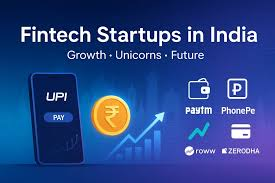
1. Top FinTech Innovations India: Real-time Payments & UPI Expansion
India’s Unified Payments Interface (UPI) has already set the template for instant payments at enormous scale.
Next up is deeper integration of UPI across different services: subscription billing, tax payment, government benefits, et al. NPCI is also driving UPI 3.0 features such as conversational voice payments to eliminate language and UX impediments.
This innovation significantly lowers friction and enables financial inclusion, providing even tiny merchants and rural consumers with access to frictionless digital payments.
2. Digital Lending & AI: Core FinTech Innovations India Market

AI and Machine Learning (ML) are disrupting traditional credit scoring: leveraging alternative data (mobile behavior, utility bills, social trails) to determine creditworthiness, particularly for thin-file customers.
Digital lending platforms provide instant sanction, short-term credit, and in-built credit at checkout — typically in minutes. This brings credit within reach for small businesspersons, gig economy workers, and underprivileged communities.
3. Blockchain, Smart Contracts & CBDC (Digital Rupee)
Blockchain is making it possible to have more transparency, traceability, and security, particularly in trade finance, supply chain lending, and identity. A few Indian FinTech companies are working with blockchain for KYC, cross-border remittance, and settlement efficiency.
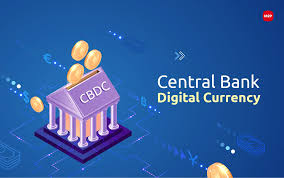
India’s central bank also experimented with the Digital Rupee (e₹) as a Central Bank Digital Currency (CBDC).
The e-Rupee also guarantees programmable transactions, less settlement friction, and a new era of monetary innovation. A few private fintechs are incorporating e-Rupee into wallets.
4. Neo-banks & platform banking
Neobanks (digital-only) are on the rise, with lean, user-centric banking through apps and APIs, with zero or minimal physical presence. Their business models focus on automated customer onboarding, intelligent insights, and modular financial services (e.g. savings + lending + insurance).

Additionally, embedded finance is becoming pervasive — non-financial apps (e-commerce, ride hailing, retail) are embedding payments, credit, and insurance directly into their user experience.
5. RegTech, Fraud Detection & Cybersecurity
Scale brings risk. FinTech participants are heavily investing in Regulatory Technology (RegTech), fraud analysis, identity verification (biometrics, document scanning), and Anti-Money Laundering (AML) software. AI/ML models scan patterns in real time to flag suspicious transactions.

Breakthroughs such as zero-knowledge proofs, homomorphic encryption, and federated learning enable privacy-preserving analytics — imperative in a nation with stringent data regulations.
6. Rural & inclusive FinTech (micro-ATMs, last-mile networks)
One of the most difficult challenges is India’s urban–rural divide. FinTechs such as Spice Money have micro-ATMs, cash-in/cash-out kiosks, and agent networks in villages, which make financial access real.
Such rural fintech models bring banking, payments, insurance, and even government services — sometimes offline or low-connectivity friendly — to financial inclusion’s reach deep in Bharat.
7. Generative AI / LLMs in FinTech operations
A new frontier: applying generative AI and large language models (LLMs) to automate customer service, compliance screening, document processing, and risk modeling. Indian FinTech infrastructure startups are raising money to construct generative AI platforms specific to banking and financial services.
They can minimize manual overhead, accelerate user experience, and facilitate scaling with less resource.
Why These Innovations Matter & What’s Next
Market growth potential: India’s fintech market is expected to grow to a $990 billion market by 2032, at ~30 % CAGR.
Policy support: Beneficial regulation (RBI, NPCI, IFSCA) and national priority towards digital India aid in unlocking innovations.
Inclusion & social impact: Increasing credit, financial services, and payments to underbanked regions can drive economic growth.
Interoperability & cooperation: FinTech companies, banks, regulators, and technology firms will have to collaborate to create secure, interoperable frameworks.
In the next few years, we can expect super-apps (finance + commerce + social), tokenized assets (immovable property, equity shares), DeFi hybrids, and extensive integration of AI/ML at all levels of financial services.
India’s tale is not merely one of disruption — it is one of redefining finance from scratch, for every segment. These fintech innovations India market trends are here to stay, not temporary fads; they are structural changes that will shape how Indians earn, borrow, save, and invest over the next few decades.
As many of these FinTech innovations India are backed by strong investor interest, understanding how seed funding and later rounds like Series A, B, and C work is crucial for founders.