
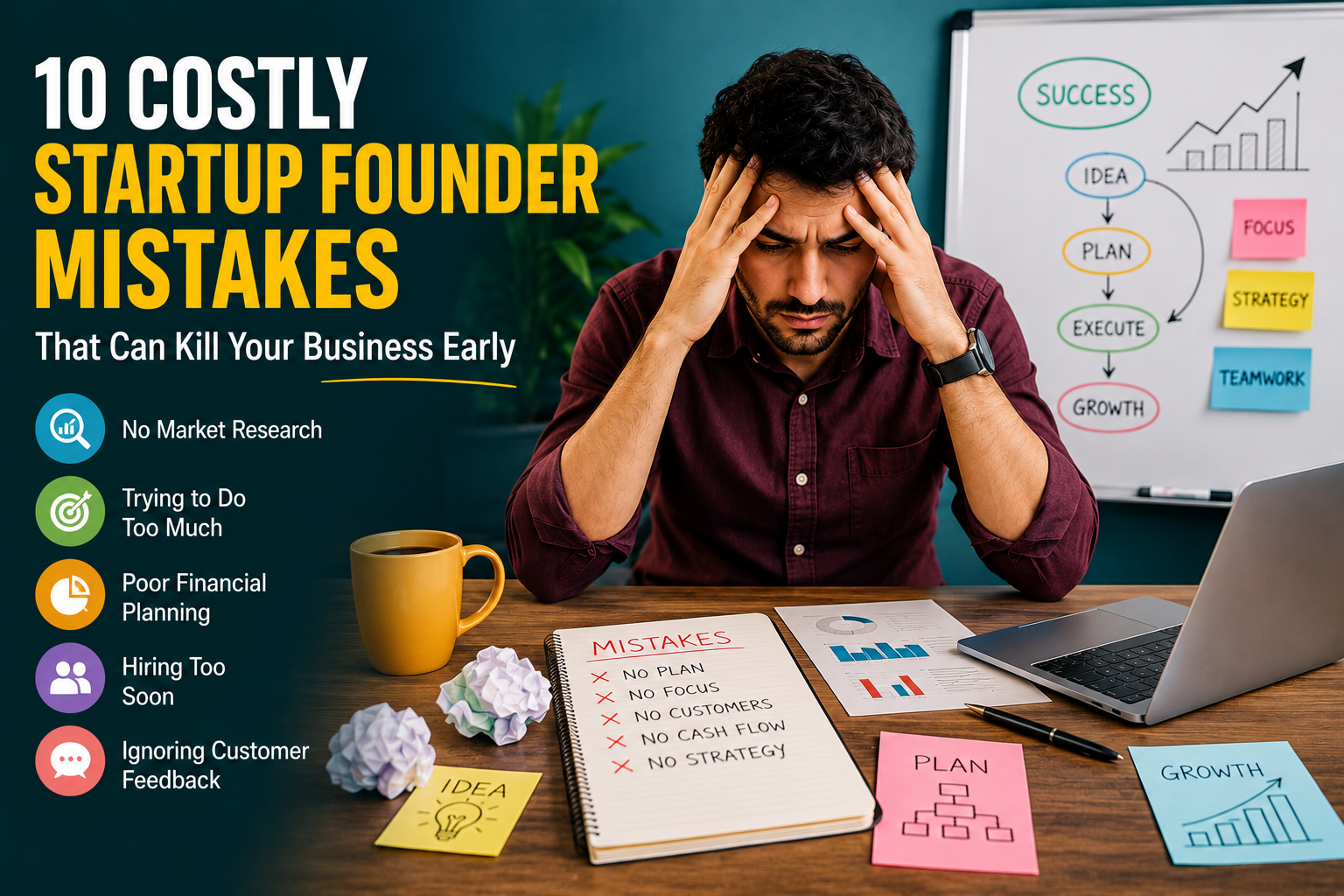
Launching a startup is exciting, but it also comes with significant challenges. Many entrepreneurs enter the business world with innovative ideas and strong motivation, yet a large percentage of startups fail within the first few years. While market conditions and competition play a role, many failures result from avoidable startup founder mistakes.
Understanding these common pitfalls can help entrepreneurs make better decisions, reduce risks, and build stronger businesses. Whether you’re launching a technology company, an e-commerce brand, or a service-based startup, avoiding these mistakes can dramatically improve your chances of long-term success.
1. Starting Without Market Research
One of the biggest reasons startups fail is the lack of proper market research. Many founders become so passionate about their idea that they assume customers will automatically buy their product.
Before investing significant time and money, entrepreneurs should validate demand by:
- Conducting customer surveys
- Analyzing competitors
- Testing product concepts
- Understanding customer pain points
Ignoring market validation is among the most common startup business mistakes that can lead to wasted resources and poor product-market fit.
2. Trying to Solve Too Many Problems
Many startups attempt to build products with excessive features from the beginning. While founders often want to impress customers, complexity can delay launches and increase development costs.
Successful startups usually begin with a Minimum Viable Product (MVP) that solves one specific problem effectively. This approach allows businesses to gather feedback and improve over time.
Following practical new startup founder tips can help entrepreneurs remain focused on delivering core value rather than unnecessary features.
3. Poor Financial Planning
Financial mismanagement is a major contributor to startup failure. Founders often underestimate expenses, overestimate revenue, or fail to manage cash flow properly.
Important financial practices include:
- Creating realistic budgets
- Monitoring expenses regularly
- Maintaining emergency reserves
- Forecasting future cash needs
Many startup founder mistakes occur because entrepreneurs focus heavily on growth while neglecting financial discipline.
4. Hiring Too Quickly
Building a team is important, but hiring too many employees too early can create financial strain. Startups should prioritize hiring individuals who can contribute across multiple functions and support business growth efficiently.
Instead of rapidly expanding headcount, founders should carefully evaluate hiring needs and focus on building a strong core team.
This helps reduce operational costs while maintaining flexibility during the early stages of business development.
5. Ignoring Customer Feedback
Customers provide valuable insights that can help improve products and services. Some founders become emotionally attached to their original vision and ignore feedback that challenges their assumptions.
Listening to customers helps startups:
- Improve products
- Identify new opportunities
- Increase customer satisfaction
- Build stronger brand loyalty
Overlooking customer feedback remains one of the most damaging startup business mistakes entrepreneurs can make.
6. Lack of Clear Business Goals
Many startups operate without measurable objectives. Without clear goals, teams struggle to prioritize tasks and evaluate performance.
Effective founders establish Key Performance Indicators (KPIs) and regularly track progress. Goals may include:
- Revenue targets
- Customer acquisition metrics
- Product development milestones
- Customer retention rates
Setting clear objectives provides direction and improves decision-making throughout the organization.
7. Weak Marketing Strategy
Even exceptional products can fail if customers don’t know they exist. Many founders invest heavily in product development while neglecting marketing and brand building.
A successful marketing strategy should include:
- Content marketing
- Search engine optimization (SEO)
- Social media engagement
- Email marketing
- Paid advertising
Addressing first-time entrepreneur challenges often requires learning how to balance product development with customer acquisition efforts.
8. Attempting to Do Everything Alone
Many startup founders try to manage every aspect of the business themselves. While dedication is important, attempting to handle all responsibilities can lead to burnout and reduced productivity.
Successful entrepreneurs learn to:
- Delegate responsibilities
- Build strong teams
- Seek expert advice
- Utilize mentors and advisors
Recognizing when to ask for help is one of the most valuable new startup founder tips for long-term success.
9. Ignoring Competition
Some founders believe their idea is entirely unique and fail to monitor competitors. However, understanding the competitive landscape is essential for strategic planning.
Competitor analysis helps businesses:
- Identify market trends
- Understand customer expectations
- Improve product differentiation
- Discover growth opportunities
Learning from competitors can help startups refine their strategies and strengthen their market position.
10. Scaling Too Early
Rapid growth sounds appealing, but expanding before achieving product-market fit can be dangerous. Startups that scale prematurely often face operational challenges, financial strain, and declining customer satisfaction.
Before scaling, founders should ensure:
- Consistent customer demand
- Sustainable revenue streams
- Reliable business processes
- Strong operational foundations
Avoiding premature expansion is one of the most important ways to reduce startup founder mistakes and improve long-term sustainability.
How Successful Founders Overcome Challenges
Every entrepreneur encounters obstacles, but successful founders view challenges as opportunities to learn and improve. By focusing on customer needs, maintaining financial discipline, and continuously adapting to market conditions, startups can increase their chances of success.
Addressing common first-time entrepreneur challenges requires patience, resilience, and a willingness to learn from mistakes. Entrepreneurs who remain flexible and data-driven are often better equipped to navigate uncertainty and achieve sustainable growth.
Conclusion
Starting a business is a rewarding journey, but avoiding common mistakes can make the path significantly smoother. From poor market research and weak financial planning to ignoring customer feedback and scaling too quickly, these errors can limit growth and threaten business survival.
By understanding these startup founder mistakes, entrepreneurs can make more informed decisions and build stronger foundations for long-term success. If you’re planning your entrepreneurial journey, learning how to start a small business in India can provide valuable guidance on business registration, funding, compliance, and growth strategies that support sustainable startup success.