
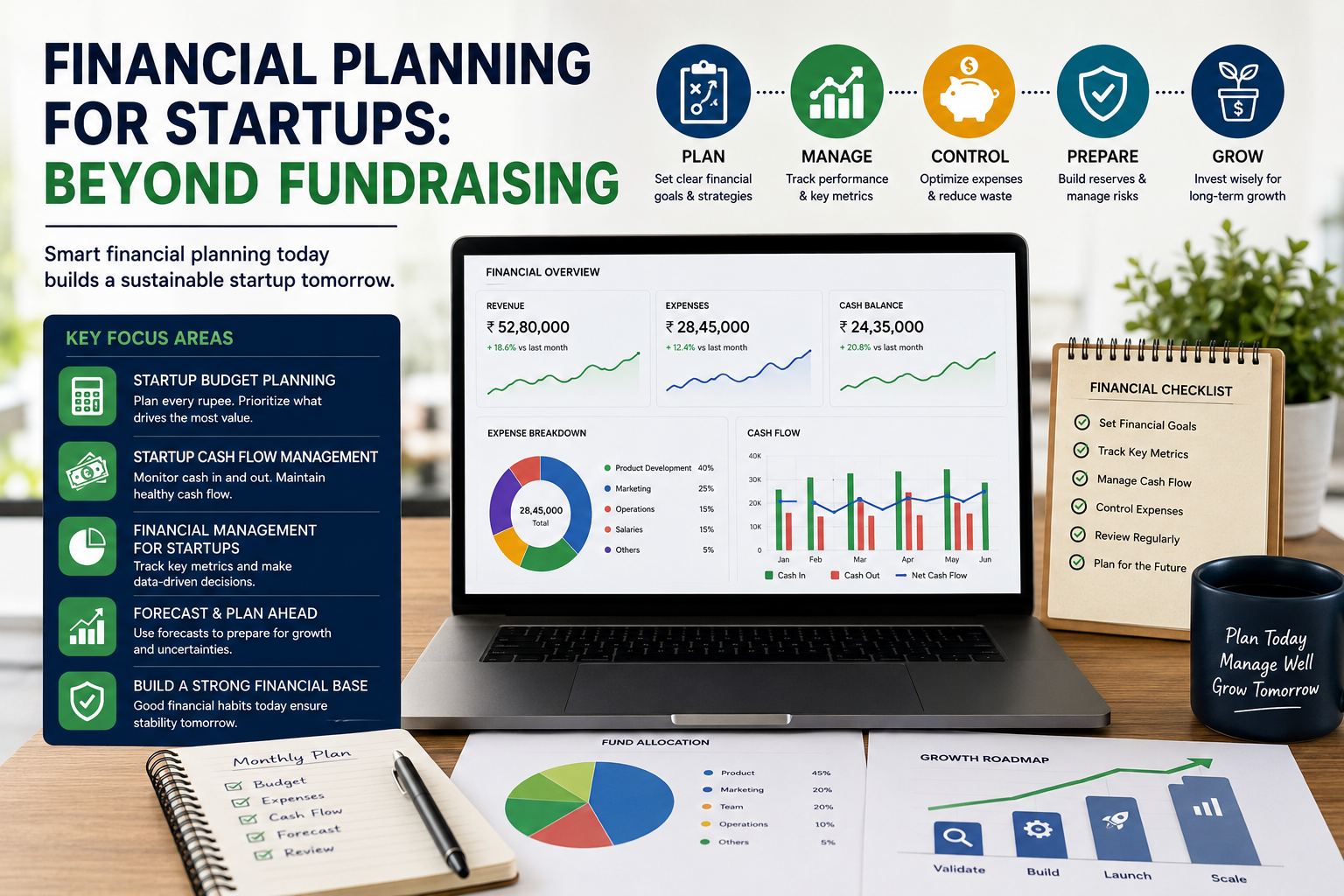
Many entrepreneurs believe that securing investment is the biggest financial milestone for a startup. While raising capital is undoubtedly important, long-term success depends on what happens after the funds arrive. Effective Startup Financial Planning helps startups allocate resources wisely, manage risks, and build a sustainable business that can thrive even in uncertain market conditions.
Without proper financial planning, startups can quickly run into cash shortages, overspend on non-essential activities, or struggle to achieve profitability. A well-structured financial strategy goes beyond fundraising by focusing on budgeting, cash flow, forecasting, and financial discipline. In this guide, we’ll explore how startups can create a strong financial foundation for long-term growth.
Why Startup Financial Planning Matters
A startup’s financial health influences every business decision, from hiring employees and launching products to expanding into new markets. Strong Startup Financial Planning enables founders to make informed decisions based on accurate financial data rather than assumptions.
Some key benefits include:
- Better control over business expenses
- Improved decision-making
- Higher investor confidence
- Sustainable business growth
- Reduced financial risks
Implementing effective Financial Management for Startups allows founders to prepare for challenges while taking advantage of new opportunities.
Create a Realistic Startup Budget
Budgeting is one of the first steps in successful financial planning. Every startup should develop a realistic budget that reflects expected income and projected expenses.
Your Startup Budget Planning should include:
- Product development costs
- Employee salaries
- Marketing expenses
- Office and operational costs
- Software subscriptions
- Legal and compliance fees
- Emergency reserves
A detailed budget helps founders avoid unnecessary spending and allocate resources to high-priority activities. Regularly reviewing your budget also ensures that spending aligns with business goals.
Focus on Cash Flow Management
Cash flow is often more important than profitability during the early stages of a startup. Even profitable businesses can fail if they run out of cash to cover daily operations.
Effective Startup Cash Flow Management includes:
- Monitoring incoming and outgoing cash
- Sending invoices promptly
- Following up on overdue payments
- Negotiating favorable payment terms with suppliers
- Maintaining an emergency cash reserve
Strong Startup Financial Planning ensures that startups always have enough working capital to continue operating and investing in growth.
Build Accurate Financial Forecasts
Financial forecasting helps startups prepare for future opportunities and potential challenges.
Forecasts should estimate:
- Monthly revenue
- Operating expenses
- Cash flow
- Profit margins
- Hiring requirements
- Capital needs
Accurate forecasting is an essential part of Financial Management for Startups because it allows founders to make proactive decisions instead of reacting to financial problems after they occur.
Regularly updating forecasts also improves investor confidence and business planning.
Monitor Key Financial Metrics
Successful startups continuously track financial performance.
Important metrics include:
- Monthly recurring revenue (MRR)
- Gross profit margin
- Customer acquisition cost (CAC)
- Customer lifetime value (CLV)
- Burn rate
- Runway
- Net profit margin
Monitoring these indicators strengthens Startup Financial Planning by providing valuable insights into business performance and financial stability.
Control Business Expenses
Rapid growth often leads startups to increase spending too quickly. Smart founders regularly review expenses to identify unnecessary costs.
Practical Startup Budget Planning tips include:
- Prioritize essential investments
- Automate repetitive tasks
- Negotiate with vendors
- Review subscriptions regularly
- Outsource non-core activities when appropriate
Careful cost management supports long-term sustainability without limiting business growth.
Diversify Revenue Streams
Relying on a single revenue source increases financial risk.
Startups should explore opportunities such as:
- Subscription services
- Premium features
- Consulting services
- Strategic partnerships
- Licensing agreements
Diversified income supports better Startup Cash Flow Management and improves financial resilience during market fluctuations.
Prepare for Unexpected Challenges
Economic uncertainty, supply chain disruptions, and changing customer demands can impact startup finances.
Every business should maintain contingency plans that include:
- Emergency cash reserves
- Expense reduction strategies
- Alternative suppliers
- Flexible hiring plans
- Risk management procedures
Strong Financial Management for Startups helps businesses respond quickly without disrupting operations.
Invest in Financial Technology
Modern financial tools simplify budgeting, accounting, invoicing, and reporting.
Popular solutions include:
- QuickBooks
- Xero
- Zoho Books
- FreshBooks
- Wave Accounting
These platforms improve Startup Financial Planning by providing real-time financial insights and reducing manual work.
Review Financial Performance Regularly
Financial planning should never be a one-time activity. Schedule monthly and quarterly reviews to evaluate performance against business goals.
Review:
- Budget performance
- Revenue growth
- Cash flow trends
- Expense management
- Financial forecasts
Regular analysis strengthens Startup Budget Planning and ensures your startup remains financially healthy as it grows.
Conclusion
Securing funding is only the beginning of a startup’s financial journey. Long-term success depends on effective Startup Financial Planning, disciplined Financial Management for Startups, accurate Startup Budget Planning, and proactive Startup Cash Flow Management.
If you’re planning to launch a successful venture, understanding financial planning is just as important as learning how to start a small business in India and building a strong foundation for future growth.

My Design Minds helps startups transform innovative ideas into successful products through expert product design, engineering, prototyping, and manufacturing solutions, enabling businesses to scale efficiently while managing resources effectively.