
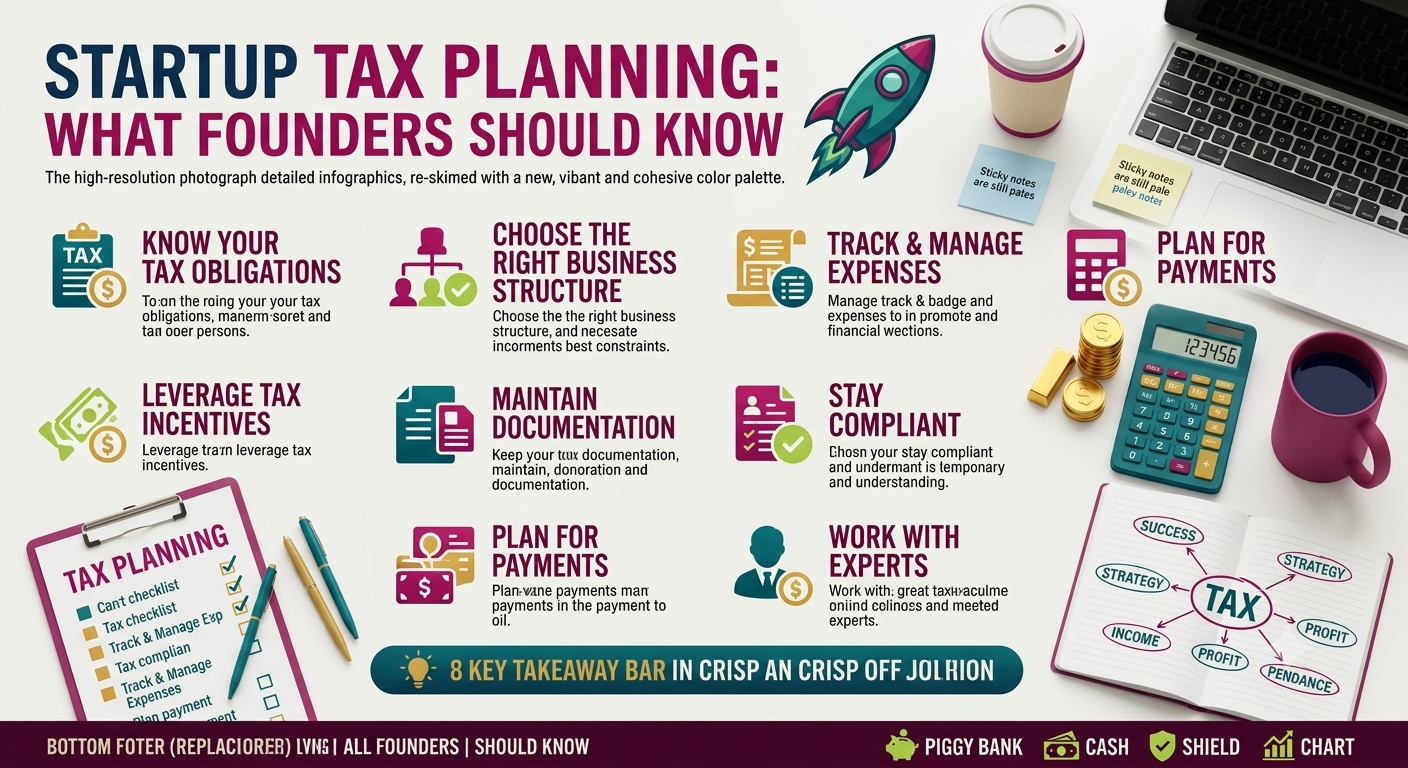
Starting a business involves more than developing innovative products and attracting customers. One of the most important yet often overlooked aspects of running a successful startup is managing taxes effectively. Proper Startup Tax Planning helps founders reduce tax liabilities, remain compliant with government regulations, improve cash flow, and create a financially healthy business.
Many startups make the mistake of treating taxes as a year-end responsibility. However, proactive tax planning should be part of every business decision from the beginning. Understanding tax obligations, maintaining accurate records, and taking advantage of available deductions can save startups significant amounts of money while avoiding legal penalties.
In this guide, we’ll explore essential Startup Tax Planning strategies that every founder should know.
Why Tax Planning Matters for Startups
Taxes directly impact a startup’s profitability and long-term sustainability. Poor tax management can result in penalties, cash flow problems, and compliance issues that hinder business growth.
Effective Startup Tax Planning offers several benefits:
- Reduces overall tax liability
- Improves financial planning
- Prevents costly penalties
- Enhances investor confidence
- Supports better cash flow management
- Ensures regulatory compliance
Implementing smart Business Tax Strategies helps startups allocate more resources toward innovation and expansion.
Understand Your Business Structure
Your business structure determines how your startup is taxed.
Common business structures include:
- Sole Proprietorship
- Partnership
- Limited Liability Partnership (LLP)
- Private Limited Company
- One Person Company (OPC)
Each structure has different tax implications. Choosing the right entity is one of the first steps in successful Tax Planning for Startups.
Consulting a tax professional during business registration helps founders select the most tax-efficient structure.
Register for Applicable Taxes
Every startup must comply with local tax regulations.
Depending on your country and business type, registration may include:
- GST or VAT
- Income Tax
- Professional Tax
- Payroll Taxes
- Import and Export Taxes
Timely registration strengthens Startup Tax Compliance and prevents unnecessary legal complications.
Maintain Accurate Financial Records
Good recordkeeping simplifies tax filing and financial management.
Track:
- Sales invoices
- Purchase receipts
- Employee salaries
- Business expenses
- Bank transactions
- Asset purchases
- Loan repayments
Proper documentation supports Startup Tax Planning by ensuring accurate tax calculations and reducing audit risks.
Cloud-based accounting software can automate much of this process.
Separate Business and Personal Finances
Many founders initially use personal accounts for business transactions. This creates accounting confusion and tax complications.
Open a dedicated business bank account to:
- Track expenses accurately
- Simplify bookkeeping
- Improve financial transparency
- Support Startup Tax Compliance
Maintaining separate finances also improves investor confidence.
Claim Eligible Business Deductions
Many startups miss valuable tax deductions because they lack awareness.
Common deductible expenses include:
- Office rent
- Employee salaries
- Internet and utilities
- Software subscriptions
- Marketing expenses
- Professional services
- Business travel
- Equipment purchases
Taking advantage of these deductions is one of the most effective Business Tax Strategies for reducing taxable income.
Plan for Quarterly Tax Payments
Waiting until the end of the financial year to pay taxes can create cash flow problems.
Instead:
- Estimate annual tax liability
- Make advance tax payments
- Set aside funds regularly
This approach strengthens Tax Planning for Startups while avoiding interest charges and penalties.
Understand Tax Incentives
Many governments encourage innovation by offering tax benefits to startups.
Potential incentives include:
- Startup tax exemptions
- Research and development (R&D) credits
- Export incentives
- Manufacturing benefits
- Investment deductions
Understanding these programs enhances Startup Tax Planning and improves profitability.
Prepare for Tax Audits
Although audits are not common for every business, startups should always be prepared.
Maintain:
- Organized financial records
- Supporting invoices
- Payroll documentation
- Bank statements
- Tax returns
- Compliance certificates
Strong Startup Tax Compliance reduces stress and simplifies the audit process.
Work with Tax Professionals
Tax laws frequently change, making professional guidance valuable.
Experienced accountants and tax consultants help startups:
- Identify deductions
- File accurate returns
- Ensure regulatory compliance
- Develop tax-saving strategies
- Reduce financial risks
Professional advice strengthens Business Tax Strategies while allowing founders to focus on business growth.
Common Tax Planning Mistakes
Avoid these mistakes:
- Missing tax filing deadlines
- Poor bookkeeping
- Mixing personal and business expenses
- Ignoring tax law changes
- Underestimating tax liabilities
- Failing to claim deductions
- Delaying professional advice
Avoiding these errors improves Tax Planning for Startups and protects businesses from unnecessary financial burdens.
Best Practices for Startup Tax Planning
Follow these practical tips:
- Keep financial records updated.
- Review tax obligations regularly.
- Budget for tax payments throughout the year.
- Monitor changing tax regulations.
- Invest in accounting software.
- Consult professionals before making major financial decisions.
- Maintain complete documentation.
These practices improve Startup Tax Compliance and contribute to long-term financial stability.
Conclusion
Tax planning is not just about reducing tax payments—it is about building a financially responsible business. Effective Startup Tax Planning, strong Tax Planning for Startups, consistent Startup Tax Compliance, and practical Business Tax Strategies help founders reduce financial risks, improve cash flow, and support sustainable growth. By making tax planning a year-round priority, startups can remain compliant while investing more confidently in innovation and expansion.
If you’re planning to launch a successful venture, understanding taxation is just as important as learning how to start a small business in India and building a strong financial foundation for future success.
About My Design Minds
My Design Minds helps startups transform innovative ideas into market-ready products through expert product design, CAD engineering, rapid prototyping, and manufacturing solutions. Our experienced team supports startups from concept to production, enabling businesses to accelerate product development, reduce costs, and focus on sustainable growth while bringing innovative products to market with confidence.