
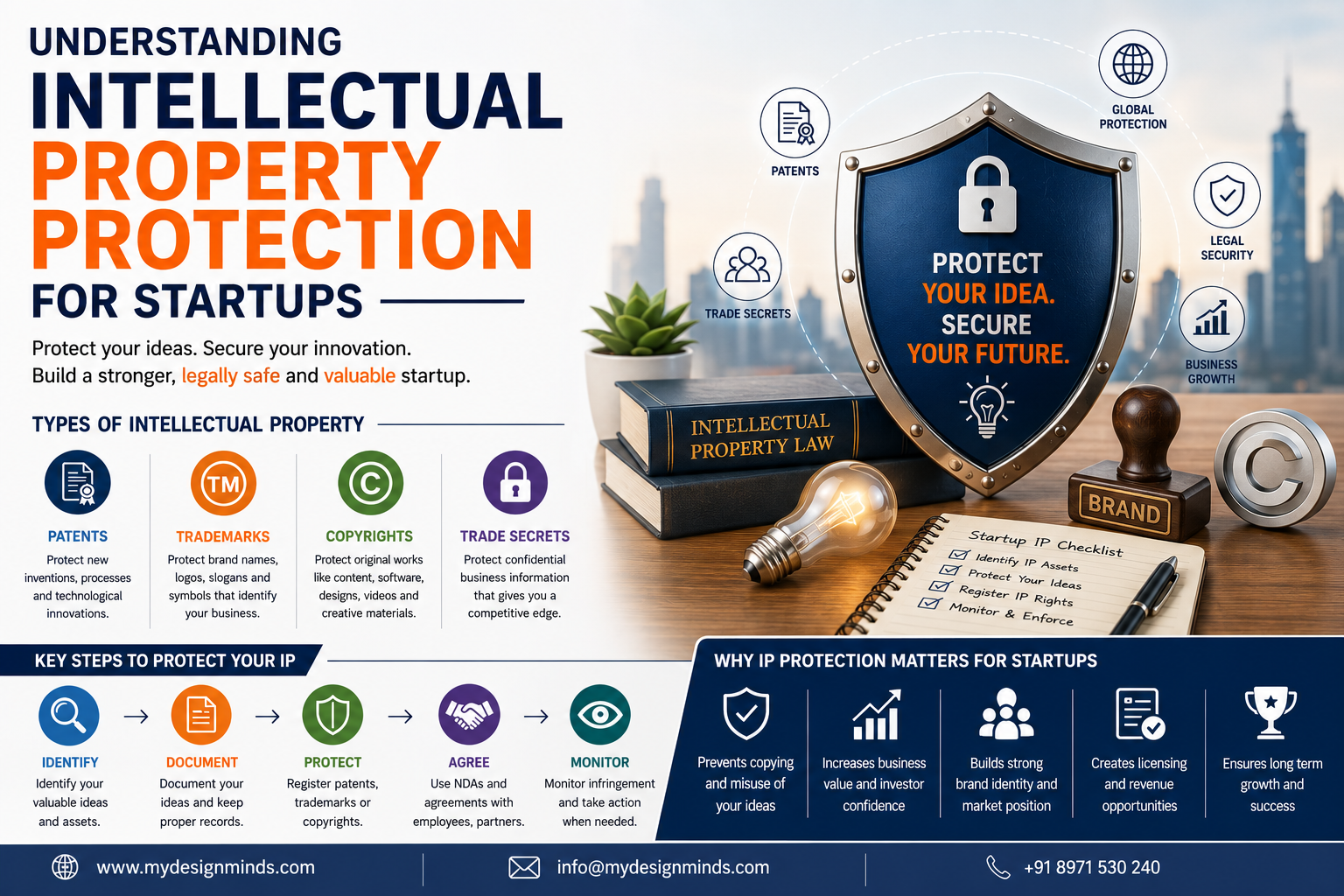
Every successful startup begins with an innovative idea. Whether it’s a unique product, software application, business process, or brand identity, these valuable assets deserve legal protection. Without proper Intellectual Property Protection for Startups, competitors may copy your innovations, weakening your competitive advantage and reducing your business value.
Intellectual property (IP) is one of the most valuable assets a startup owns. Protecting it early helps attract investors, strengthen market positioning, and secure long-term growth. In this guide, we’ll explain the different types of intellectual property, why they matter, and how startups can develop effective protection strategies.
What Is Intellectual Property?
Intellectual property refers to creations of the mind that have commercial value. These include inventions, designs, software, logos, trademarks, written content, and unique business processes.
Effective Intellectual Property Protection for Startups ensures founders maintain exclusive rights over their innovations and prevent unauthorized use by competitors.
Strong Startup Intellectual Property management also increases business credibility and supports future expansion.
Why Intellectual Property Matters for Startups
Many startups focus on product development while overlooking legal protection. Unfortunately, failing to protect valuable ideas can lead to expensive legal disputes and lost business opportunities.
Benefits of Intellectual Property Protection for Startups include:
- Prevents competitors from copying innovations
- Builds investor confidence
- Increases company valuation
- Creates licensing opportunities
- Strengthens brand identity
- Supports long-term business growth
Implementing effective IP Protection Strategies early provides startups with a significant competitive advantage.
Types of Intellectual Property
Understanding the various forms of intellectual property helps startups choose the right legal protection.
Patents
Patents protect new inventions, technologies, products, and manufacturing processes.
A patent gives inventors exclusive rights to manufacture, use, or sell their invention for a specified period.
For technology startups, obtaining a Patent and Trademark for Startups can significantly enhance business value and investor appeal.
Trademarks
Trademarks protect brand names, logos, slogans, symbols, and product names.
Registering a trademark ensures customers can easily identify your brand while preventing others from using similar branding.
Strong Startup Intellectual Property begins with securing your business identity.
Copyrights
Copyright protects original creative works such as:
- Software code
- Website content
- Marketing materials
- Videos
- Books
- Product documentation
Copyright registration supports Intellectual Property Protection for Startups by safeguarding original content against unauthorized reproduction.
Trade Secrets
Trade secrets include confidential business information such as:
- Manufacturing methods
- Customer databases
- Business strategies
- Proprietary algorithms
- Product formulas
Businesses should implement confidentiality agreements as part of their IP Protection Strategies to protect sensitive information.
Register Your Intellectual Property Early
Waiting too long to register intellectual property increases legal risks.
Startups should protect:
- Company name
- Product names
- Logos
- Inventions
- Software
- Industrial designs
Early registration strengthens Patent and Trademark for Startups while reducing the possibility of ownership disputes.
Use Non-Disclosure Agreements (NDAs)
During product development, startups often share ideas with employees, investors, manufacturers, consultants, and business partners.
Non-Disclosure Agreements help:
- Protect confidential information
- Prevent unauthorized disclosure
- Define ownership rights
- Reduce legal risks
NDAs are an essential part of effective IP Protection Strategies.
Protect Digital Assets
Today’s startups rely heavily on digital technology.
Protect digital assets by:
- Securing software source code
- Using strong cybersecurity practices
- Restricting access to confidential files
- Backing up critical data
- Registering software copyrights
Proper digital security strengthens overall Startup Intellectual Property management.
Monitor Intellectual Property Infringement
Protecting intellectual property doesn’t end after registration.
Regularly monitor the market for:
- Counterfeit products
- Trademark misuse
- Unauthorized software copies
- Copyright violations
- Patent infringement
Early detection supports effective Intellectual Property Protection for Startups and reduces potential financial losses.
Develop an IP Strategy
Every startup should create a long-term intellectual property strategy.
An effective strategy includes:
- Identifying valuable intellectual assets
- Prioritizing registrations
- Budgeting for legal protection
- Reviewing IP regularly
- Expanding protection internationally when required
Well-planned IP Protection Strategies help businesses maintain a competitive advantage as they grow.
Common Intellectual Property Mistakes
Avoid these common mistakes:
- Delaying patent applications
- Using unregistered trademarks
- Sharing confidential ideas without NDAs
- Ignoring employee IP ownership agreements
- Failing to monitor infringement
- Overlooking international protection
Understanding these risks strengthens Patent and Trademark for Startups and prevents costly legal issues.
Seek Professional Legal Guidance
Intellectual property laws vary across countries and industries.
Working with experienced legal professionals helps startups:
- File patents correctly
- Register trademarks
- Draft licensing agreements
- Protect confidential information
- Resolve IP disputes
Professional guidance ensures your Startup Intellectual Property portfolio remains legally secure.
Conclusion
Innovation is one of a startup’s greatest assets, and protecting it should be a top priority. Effective Intellectual Property Protection for Startups safeguards valuable ideas, strengthens brand identity, attracts investors, and supports long-term business growth. By implementing strong Startup Intellectual Property practices, adopting effective IP Protection Strategies, and securing the right Patent and Trademark for Startups, founders can confidently build businesses that remain competitive in today’s global marketplace.
If you’re planning to launch a successful venture, protecting your intellectual property is just as important as learning how to start a small business in India and establishing a legally secure foundation for future growth.

My Design Minds helps startups transform innovative ideas into market-ready products through expert product design, engineering, CAD development, rapid prototyping, and manufacturing solutions. Our experienced team understands the importance of protecting innovation throughout the product development process, enabling businesses to confidently bring unique ideas to life while maintaining quality, confidentiality, and long-term competitive advantage.