
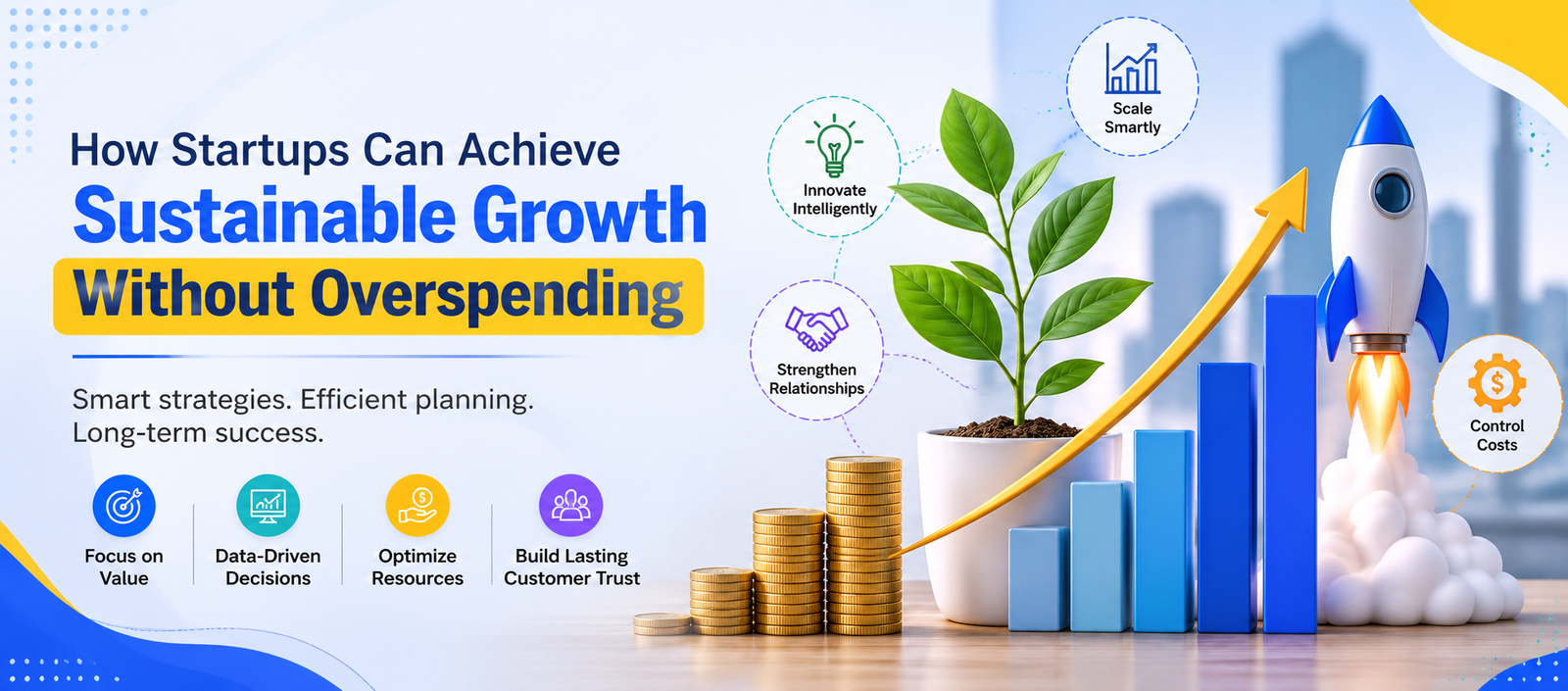
Growth is one of the biggest goals for every startup, but rapid expansion does not always mean successful growth. Spending heavily on advertising, hiring, technology, and expansion without a clear strategy can quickly drain a startup’s resources. For new businesses, the goal should be to achieve Sustainable Growth for Startups by balancing expansion with profitability, efficiency, and long-term financial stability.
Sustainable growth means building a business that can increase revenue and customer reach without continuously increasing expenses at the same rate. Startups can achieve this by understanding their customers, controlling costs, improving operational efficiency, retaining existing customers, and investing in strategies that generate measurable returns.
Why Sustainable Growth Matters for Startups
Startups often operate with limited capital. Whether funding comes from founders, investors, loans, or business revenue, every expense needs to contribute toward a clear objective.
Unsustainable growth can result in:
- High operating costs
- Poor cash flow
- Excessive hiring
- Unprofitable customer acquisition
- Increased financial pressure
- Dependence on external funding
A sustainable approach allows startups to grow at a manageable pace while protecting their financial position.
1. Create a Realistic Growth Plan
The first step toward Sustainable Growth for Startups is creating a realistic growth plan. Instead of setting ambitious targets without considering available resources, establish measurable goals based on market demand, current revenue, customer acquisition, and operational capacity.
Set targets for:
- Revenue
- Customer acquisition
- Customer retention
- Profit margins
- Operating expenses
- Cash flow
- Market expansion
Break larger goals into monthly or quarterly milestones. This makes it easier to identify problems early and adjust the strategy.
2. Prioritize Profitable Customers
Not every customer contributes the same value to a business. Startups should understand which customer segments generate the best returns.
Analyze:
- Customer acquisition cost
- Customer lifetime value
- Average order value
- Purchase frequency
- Retention rate
- Profit margin
Focus marketing and sales resources on customer groups that are most likely to become profitable over time. This is one of the most effective Startup Growth Strategies because it helps businesses avoid wasting resources on low-value leads.
3. Focus on Customer Retention
Acquiring new customers can require significant marketing and sales investment. Retaining existing customers can create a more stable source of revenue.
Startups can improve retention through:
- Personalized communication
- Loyalty programs
- Excellent customer support
- Product improvements
- Regular follow-ups
- Exclusive offers
- Valuable educational content
Satisfied customers can also recommend your business to others, creating additional growth through referrals.
4. Use Cost-Effective Marketing
Startups do not always need large advertising budgets to build visibility. Digital channels can provide opportunities to reach targeted audiences efficiently.
Consider investing in:
- SEO
- Content marketing
- Email marketing
- Social media
- Referral marketing
- Partnerships
- Community building
Organic marketing may take time, but quality content and strong SEO can continue attracting potential customers without paying for every visitor.
A balanced Cost-Effective Startup Growth strategy combines organic methods with carefully measured paid campaigns.
5. Automate Repetitive Tasks
Technology can help startups achieve more without significantly increasing their workforce.
Automate repetitive activities such as:
- Email marketing
- Customer follow-ups
- Appointment scheduling
- Invoicing
- Reporting
- Lead management
- Social media publishing
Automation saves time and allows employees to focus on higher-value activities such as customer relationships, innovation, and strategic planning.
6. Avoid Premature Hiring
Hiring too quickly can create unnecessary financial pressure. Before adding employees, determine whether the workload is consistent and whether the position directly contributes to business growth.
Startups can initially consider:
- Freelancers
- Contractors
- Part-time specialists
- Outsourcing
- Automation
As revenue becomes more predictable, businesses can gradually build permanent teams.
The goal is not to avoid hiring but to hire at the right time.
7. Control Operating Expenses
Effective Startup Financial Management requires regular monitoring of expenses.
Review costs such as:
- Office space
- Software subscriptions
- Marketing
- Professional services
- Travel
- Equipment
- Administrative expenses
Identify unnecessary or underused expenses and eliminate them where possible.
However, cost-cutting should not damage essential areas such as product quality, customer support, cybersecurity, or employee performance.
8. Build Multiple Revenue Opportunities
Depending on the business model, startups can explore additional revenue streams.
These might include:
- Subscription plans
- Premium features
- Consulting services
- Add-on products
- Licensing
- Training
- Partnerships
Diversifying revenue can reduce dependence on a single product or customer segment.
However, startups should validate demand before investing heavily in new revenue opportunities.
9. Test Before Scaling
One of the biggest mistakes startups make is spending heavily before knowing whether an idea works.
Use small-scale experiments before making major investments.
For example:
- Test an advertising campaign with a limited budget.
- Launch a minimum viable product.
- Test different pricing models.
- Run a small promotional campaign.
- Target one customer segment before expanding.
If the results are positive, gradually increase investment.
This approach reduces financial risk while supporting Cost-Effective Startup Growth.
10. Monitor Cash Flow
Revenue does not always mean financial health. A startup can generate sales and still experience cash-flow problems.
Monitor:
- Cash inflows
- Cash outflows
- Accounts receivable
- Accounts payable
- Monthly expenses
- Cash reserves
- Upcoming financial obligations
Maintain a financial buffer whenever possible. Strong cash-flow management gives startups more flexibility when unexpected expenses or market challenges arise.
11. Use Data to Make Decisions
Data can help founders determine where money is generating results.
Track important metrics such as:
- Revenue growth
- Gross margin
- Customer acquisition cost
- Customer lifetime value
- Conversion rate
- Retention rate
- Burn rate
- Monthly recurring revenue
Instead of increasing spending simply because competitors are spending more, use performance data to determine where investment is justified.
12. Build Scalable Systems
Growth becomes expensive when every additional customer requires a proportional increase in manual work.
Create systems that can handle increasing demand efficiently.
Examples include:
- Automated onboarding
- Standard operating procedures
- Self-service customer support
- Cloud-based tools
- Digital payment systems
- Automated reporting
Scalable systems allow startups to increase revenue without dramatically increasing operational costs.
Common Mistakes Startups Should Avoid
Startups should be careful about:
- Spending too much on branding before validating demand
- Hiring larger teams too early
- Expanding into multiple markets simultaneously
- Ignoring customer retention
- Running unmeasured advertising campaigns
- Taking on unnecessary debt
- Buying tools that are not being used
- Scaling before achieving product-market fit
Avoiding these mistakes helps preserve capital and creates a stronger foundation for growth.
Best Practices for Sustainable Startup Growth
For long-term success, startups should:
- Set realistic growth targets.
- Understand customer profitability.
- Prioritize retention.
- Use cost-effective marketing.
- Automate repetitive tasks.
- Control unnecessary expenses.
- Test ideas before scaling.
- Monitor cash flow.
- Track business KPIs.
- Build scalable systems.
These Startup Growth Strategies help businesses grow while maintaining financial discipline.
Conclusion
Achieving Sustainable Growth for Startups does not require spending heavily or expanding as quickly as possible. The strongest businesses focus on creating value, controlling costs, retaining customers, and investing resources where they generate measurable results.
Effective Startup Growth Strategies can include SEO, content marketing, customer referrals, automation, partnerships, and retention programs. Meanwhile, Cost-Effective Startup Growth allows businesses to experiment with new opportunities without putting excessive pressure on their budgets.
Strong Startup Financial Management is equally important. By monitoring cash flow, controlling expenses, measuring customer profitability, and testing strategies before scaling, founders can create a business that grows at a healthy and manageable pace.
For entrepreneurs learning how to start a small business in India, sustainable growth should be considered from the beginning. Building efficient systems, understanding customers, managing finances carefully, and focusing on long-term value can help a startup grow confidently without overspending.

About StartupSpark
StartupSpark provides practical insights and actionable strategies for entrepreneurs looking to launch, grow, and scale successful businesses. From startup finance and marketing to SEO, branding, sales, technology, operations, and business development, StartupSpark helps founders make smarter decisions and build sustainable businesses in a competitive market.