
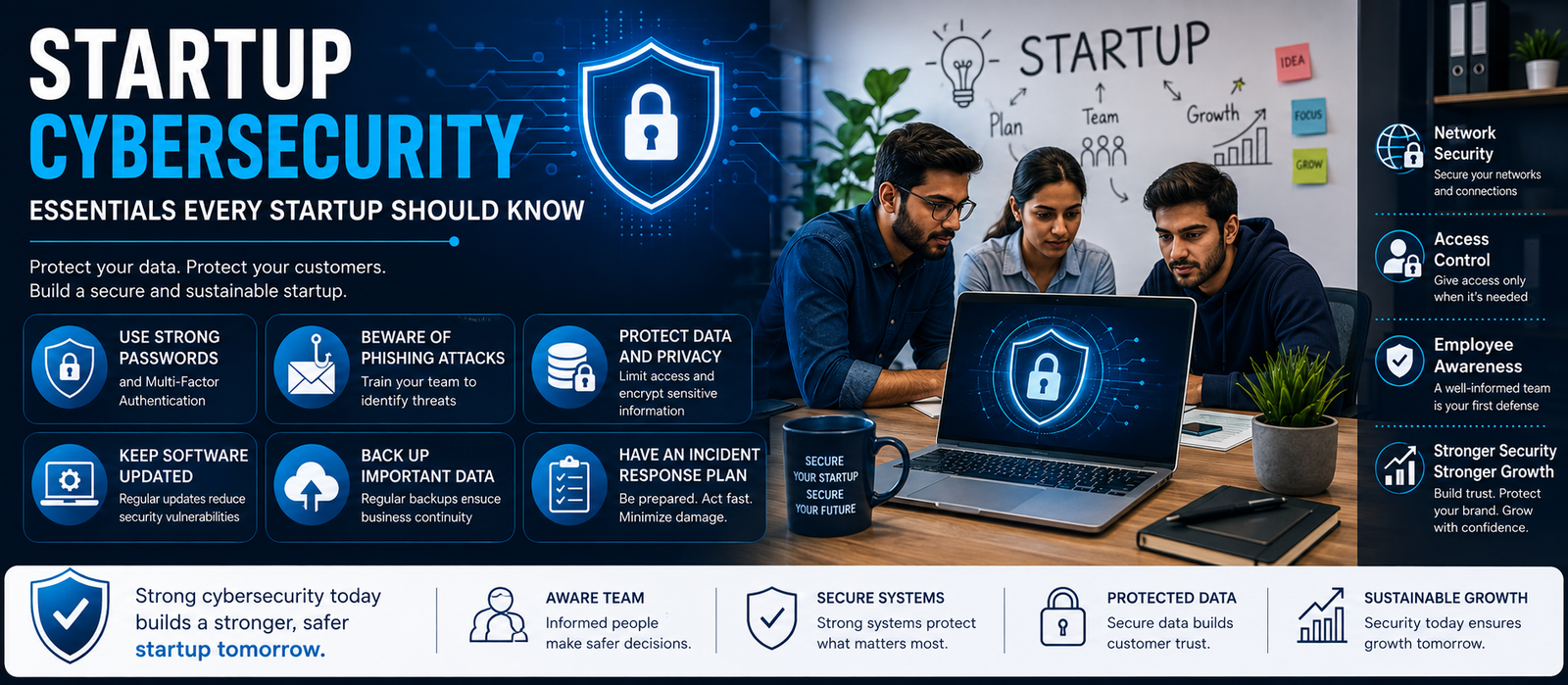
Startups often focus on developing products, acquiring customers, increasing revenue, and building strong teams. However, cybersecurity can sometimes receive less attention during the early stages of business. As startups increasingly depend on cloud platforms, digital payments, customer databases, remote work, and online communication, protecting business information has become essential. Startup Cybersecurity should therefore be considered a core part of building a reliable and sustainable business.
A cybersecurity incident can expose sensitive customer information, disrupt operations, damage a company’s reputation, and create unexpected financial costs. The good news is that startups do not always need expensive security infrastructure to improve their protection. Establishing strong basic practices from the beginning can significantly reduce common risks.
Understand the Biggest Cybersecurity Risks
The first step is understanding what could go wrong. Startups may face risks such as phishing emails, weak passwords, malware, ransomware, unauthorized access, data theft, and social engineering attacks.
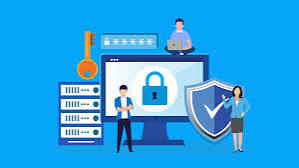
Employees can unintentionally create security vulnerabilities by clicking suspicious links, downloading unsafe files, or sharing confidential information with unauthorized individuals.
Founders should identify the company’s most valuable digital assets. These may include customer information, financial records, intellectual property, employee data, product designs, source code, and business documents.
Understanding these assets helps businesses prioritize security measures according to actual risks.
Use Strong Passwords and Multi-Factor Authentication
Weak or reused passwords remain a common security problem. Employees should use unique passwords for important business accounts and avoid sharing login credentials.
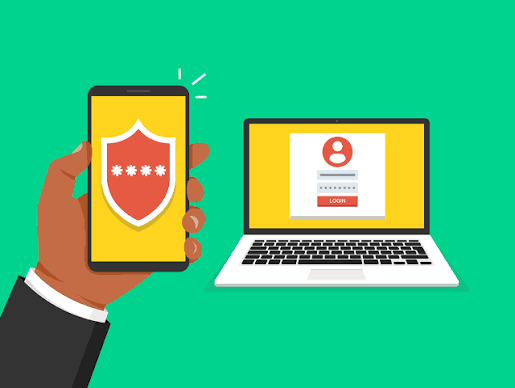
Password managers can help teams securely create and manage complex passwords. Businesses should also enable multi-factor authentication wherever possible.
Multi-factor authentication adds another verification step beyond a password. Even if a password is compromised, an attacker may have difficulty accessing the account without the additional authentication method.
These simple measures can become an important part of Cybersecurity for Startups.
Train Employees to Identify Threats
Technology alone cannot protect a startup. Employees are an important part of cybersecurity, which makes security awareness training essential.
Teams should learn how to identify suspicious emails, fake login pages, unusual payment requests, unexpected attachments, and social engineering attempts.
Founders can conduct periodic training sessions and create simple internal guidelines explaining what employees should do when they encounter suspicious activity.
Creating a workplace where employees feel comfortable reporting potential security incidents is also important. Early reporting can give the company more time to respond before a problem becomes serious.
Protect Customer and Business Data
Startups often collect significant amounts of information from customers and business partners. This information should be protected carefully.
Businesses should limit access to sensitive data according to employee responsibilities. Employees should only have access to information required for their roles.
Data should also be protected during storage and transmission using appropriate security controls. Regular reviews can help identify unnecessary accounts and permissions.
A clear data-management policy can help startups understand what information they collect, where it is stored, who can access it, and when it should be removed.
Keep Software and Systems Updated
Outdated software can contain security vulnerabilities that attackers may exploit. Startups should regularly update operating systems, applications, websites, plugins, and other business software.
Automatic updates can be useful when appropriate, but businesses should still maintain oversight of their technology environment.
Founders should also maintain an inventory of important software and digital services. Knowing what systems are being used makes it easier to manage updates and identify potential security gaps.
Secure Cloud and Remote Work
Many startups use cloud-based applications for collaboration, storage, accounting, customer management, and project management. These platforms can improve productivity, but they must be configured securely.
Founders should review user permissions, authentication settings, sharing controls, and administrator accounts.
Remote employees should avoid accessing sensitive company systems through unsecured networks whenever possible. Company devices should also use screen locks, security software, and appropriate access controls.
Cloud security should become part of the company’s overall Startup Cybersecurity strategy rather than being treated as a separate concern.
Back Up Important Information
A reliable backup strategy can help a startup recover from hardware failure, accidental deletion, ransomware, or other incidents.
Important files should be backed up regularly, and businesses should consider keeping backups protected from the primary network. Backup recovery should also be tested periodically to ensure that information can actually be restored when needed.
For startups, backups are especially important because losing product documentation, financial information, or customer data could significantly interrupt operations.
Create an Incident Response Plan
No security system can guarantee that an incident will never occur. Startups should therefore prepare for the possibility of a security breach.
An incident response plan should explain who is responsible for responding, how affected systems will be isolated, how evidence will be preserved, and how customers or other stakeholders will be informed when necessary.
Having a predefined process reduces confusion during an emergency and can help the company respond more quickly.
Review Security Regularly
Cybersecurity is not a one-time activity. New technologies, employees, applications, and business processes can introduce new risks.
Founders should periodically review account permissions, software, devices, backups, data access, and security policies. Security assessments can help identify weaknesses before attackers discover them.
As a startup grows, its security practices should grow with it. What works for a five-person company may not be sufficient for a business with hundreds of employees and customers.
Build Security Into Business Growth
Strong Cybersecurity for Startups should support business growth rather than become an obstacle to it. Founders can begin with practical measures such as strong authentication, employee training, secure backups, software updates, access controls, and documented security procedures.
As the company expands, it can introduce more advanced security monitoring, professional assessments, specialized tools, and dedicated cybersecurity expertise.
The goal is to create a security-conscious organization where employees, technology, and business processes work together to protect valuable information.
My Design Minds: Supporting Secure Product Development
My Design Minds helps startups and businesses transform product concepts into practical design, engineering, and manufacturing solutions. From CAD design and 3D product visualization to product engineering, reverse engineering, prototyping, and mould manufacturing, the company supports businesses throughout product development. For startups handling sensitive product designs and technical information, Startup Cybersecurity is an important consideration alongside engineering and manufacturing capabilities. Implementing Cybersecurity for Startups, Data Security for Startups, and Startup Security Best Practices can help protect valuable digital assets, maintain confidentiality, and reduce security risks while developing innovative products.
For entrepreneurs learning how to start a small business in India, implementing strong cybersecurity practices from the beginning can help protect customer data, business information, digital assets, and long-term growth.