
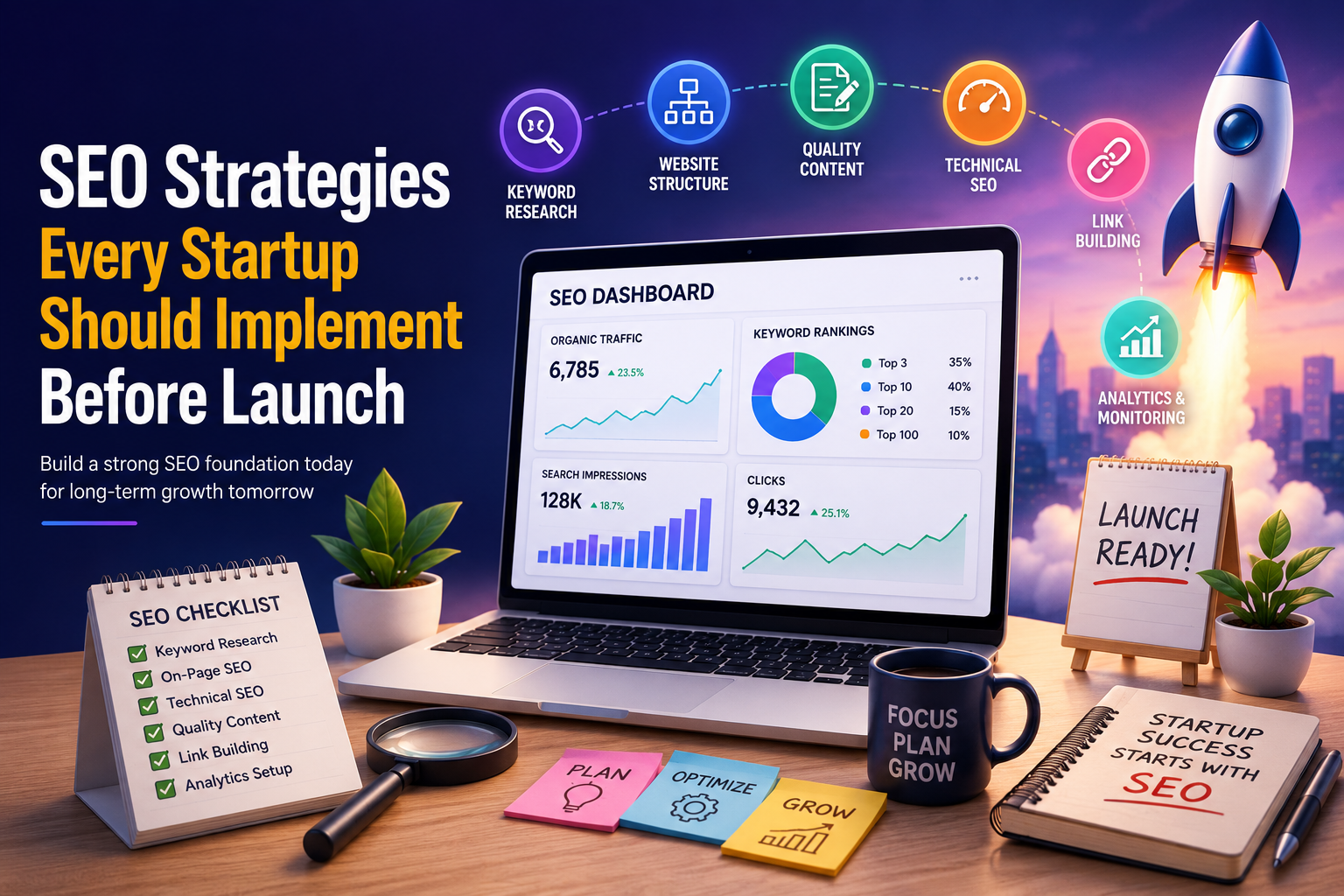
Launching a startup is an exciting process, but creating a great product or service is only one part of the journey. If potential customers cannot find your business online, even an excellent startup may struggle to gain visibility. This is why implementing SEO Strategies for Startups before launch can provide a strong foundation for long-term digital growth.
Search Engine Optimization (SEO) helps startups improve their visibility on search engines, attract relevant visitors, establish credibility, and generate organic traffic without depending entirely on paid advertising. Starting SEO early also gives search engines enough time to discover and understand your website.
Whether you are launching a SaaS company, e-commerce business, professional service, or technology startup, a well-planned SEO strategy can help you compete with established brands.
Why SEO Matters Before Startup Launch
Many founders wait until after launching their website to think about SEO. This can delay organic growth because search engines need time to crawl, index, and evaluate new websites.
Implementing SEO Strategies for Startups allows to:
- Build search visibility early
- Identify valuable keywords
- Create optimized website content
- Establish website structure
- Generate initial backlinks
- Improve technical performance
- Prepare for long-term organic growth
Starting early gives your startup a competitive advantage when the website becomes publicly available.
1. Conduct Keyword Research
Keyword research should be one of the first steps in your SEO plan.
Identify keywords your potential customers use when searching for solutions related to your product or service. Focus on a combination of:
- Primary keywords
- Long-tail keywords
- Commercial keywords
- Informational keywords
- Local keywords
For example, instead of targeting only a broad term such as “project management software,” a startup could target specific phrases such as “project management software for small teams.”
Effective keyword research is the foundation of Startup SEO because it helps you create content based on actual search demand.
2. Understand Search Intent
Finding keywords is not enough. You also need to understand what users expect when they search for them.
Search intent generally includes:
- Informational intent
- Navigational intent
- Commercial investigation
- Transactional intent
Create content that directly satisfies the user’s purpose. Matching search intent can improve engagement and increase the likelihood of converting visitors into customers.
3. Build an SEO-Friendly Website Structure
Your website should be easy for both users and search engines to navigate.
Create a logical structure with pages such as:
- Home
- About Us
- Products or Services
- Solutions
- Blog
- Contact
- Frequently Asked Questions
Use descriptive URLs and organize related pages into clear categories.
A well-structured website makes Startup Search Optimization easier and helps search engines understand relationships between your pages.
4. Optimize Page Titles and Meta Descriptions
Every important page should have a unique title and meta description.
Your title should:
- Clearly describe the page
- Include the primary keyword naturally
- Encourage clicks
- Stay concise
Your meta description should summarize the page and communicate its value to searchers.
Although meta descriptions are not a direct ranking factor, compelling descriptions can improve click-through rates from search results.
5. Create High-Quality Content
Content should be part of your SEO strategy from the beginning.
Create useful content that answers questions your target audience is asking.
Potential content formats include:
- Blog articles
- Guides
- Tutorials
- Case studies
- Industry reports
- FAQs
- Comparison pages
Avoid publishing content simply to increase the number of pages on your website. Focus on originality, expertise, usefulness, and relevance.
High-quality content is one of the most sustainable SEO Strategies for Startups.
6. Optimize Your Homepage
Your homepage is often the most important page on a new startup website.
Clearly communicate:
- What your startup does
- Who you serve
- What problem you solve
- Why customers should choose you
- What action visitors should take
Include your primary keyword naturally while keeping the copy easy to read.
Your homepage should serve both search engines and potential customers.
7. Implement Technical SEO
Technical SEO Strategies for Startups ensures that search engines can efficiently crawl and understand your website.
Before launch, check:
- Mobile responsiveness
- Website speed
- HTTPS security
- XML sitemap
- Robots.txt
- Canonical URLs
- Broken links
- Proper redirects
- Crawlability
- Indexing settings
Technical problems can prevent valuable pages from appearing properly in search results, making technical SEO an essential part of SEO Before Launch.
8. Make Your Website Mobile-Friendly
A significant portion of internet traffic comes from mobile devices. Your website should therefore work smoothly across smartphones, tablets, and desktops.
Test:
- Font readability
- Button sizes
- Navigation
- Page loading speed
- Forms
- Images
- Checkout processes
A strong mobile experience improves usability and supports better search performance.
9. Optimize Website Speed
Slow websites can frustrate users and negatively affect engagement.
Improve performance by:
- Compressing images
- Using modern image formats
- Reducing unnecessary scripts
- Enabling browser caching
- Optimizing code
- Using reliable hosting
Fast-loading pages create a better experience and support effective Startup SEO.
10. Set Up Google Search Console and Analytics
Before or immediately after launch, connect your website to essential measurement tools.
Google Search Console helps you monitor:
- Search queries
- Indexing
- Website performance
- Search impressions
- Click-through rates
- Technical issues
Analytics tools help you understand where visitors come from and how they interact with your website.
Without measurement, it becomes difficult to determine which SEO Strategies for Startups are delivering results.
11. Create a Google Business Profile
If your startup serves customers in a specific location, create and optimize a Google Business Profile.
Provide accurate:
- Business name
- Address
- Phone number
- Website
- Business category
- Working hours
- Photos
Local SEO can help startups appear in location-based searches and attract nearby customers.
12. Build an Initial Backlink Strategy
Backlinks from relevant and trustworthy websites can help establish authority.
Before and after launch, consider:
- Industry directories
- Startup directories
- Guest articles
- Business partnerships
- Digital PR
- Founder interviews
- Relevant industry publications
Avoid purchasing large numbers of low-quality backlinks. Focus on relevance, authority, and genuine relationships.
13. Prepare a Content Calendar
Consistency is important for long-term SEO.
Create a content calendar covering topics related to your customers’ questions, challenges, and buying decisions.
For example, a startup could publish:
- Educational guides
- Product tutorials
- Industry trends
- Expert insights
- Customer success stories
- Frequently asked questions
A consistent publishing schedule supports sustainable Startup Search Optimization.
Common SEO Mistakes Startups Should Avoid
Startups often make mistakes such as:
- Targeting only highly competitive keywords
- Copying competitor content
- Ignoring technical SEO
- Publishing low-quality articles
- Keyword stuffing
- Neglecting mobile optimization
- Forgetting image alt text
- Buying spammy backlinks
- Failing to monitor performance
Avoiding these mistakes creates a stronger foundation for organic growth.
Conclusion
SEO should not be an afterthought for a new business. By implementing SEO Strategies for Startups before launch, founders can establish a strong digital foundation, improve search visibility, attract relevant visitors, and create sustainable organic growth.
From keyword research and technical SEO to content creation, website optimization, analytics, and link building, every element contributes to a startup’s online presence. Starting SEO Before Launch gives search engines time to discover your website and allows your business to build authority as it grows.
If you are preparing to launch a new venture, investing in Startup SEO is just as important as understanding how to start a small business in India. A strong SEO foundation can help turn your new website into a consistent source of visibility, leads, and long-term business growth.

About StartupSpark
StartupSpark provides practical insights and actionable strategies for entrepreneurs looking to launch, grow, and scale successful businesses. From SEO and digital marketing to branding, funding, technology, operations, and business development, StartupSpark helps founders make smarter decisions and build sustainable businesses in a competitive digital economy.