
Introduction
In today’s digital-first world, startups rely heavily on technology, cloud platforms, remote work, and online communication. While technology helps businesses grow faster, it also increases the risk of cyberattacks. Startups are becoming common targets for hackers because many early-stage businesses lack strong security systems and dedicated cybersecurity teams.
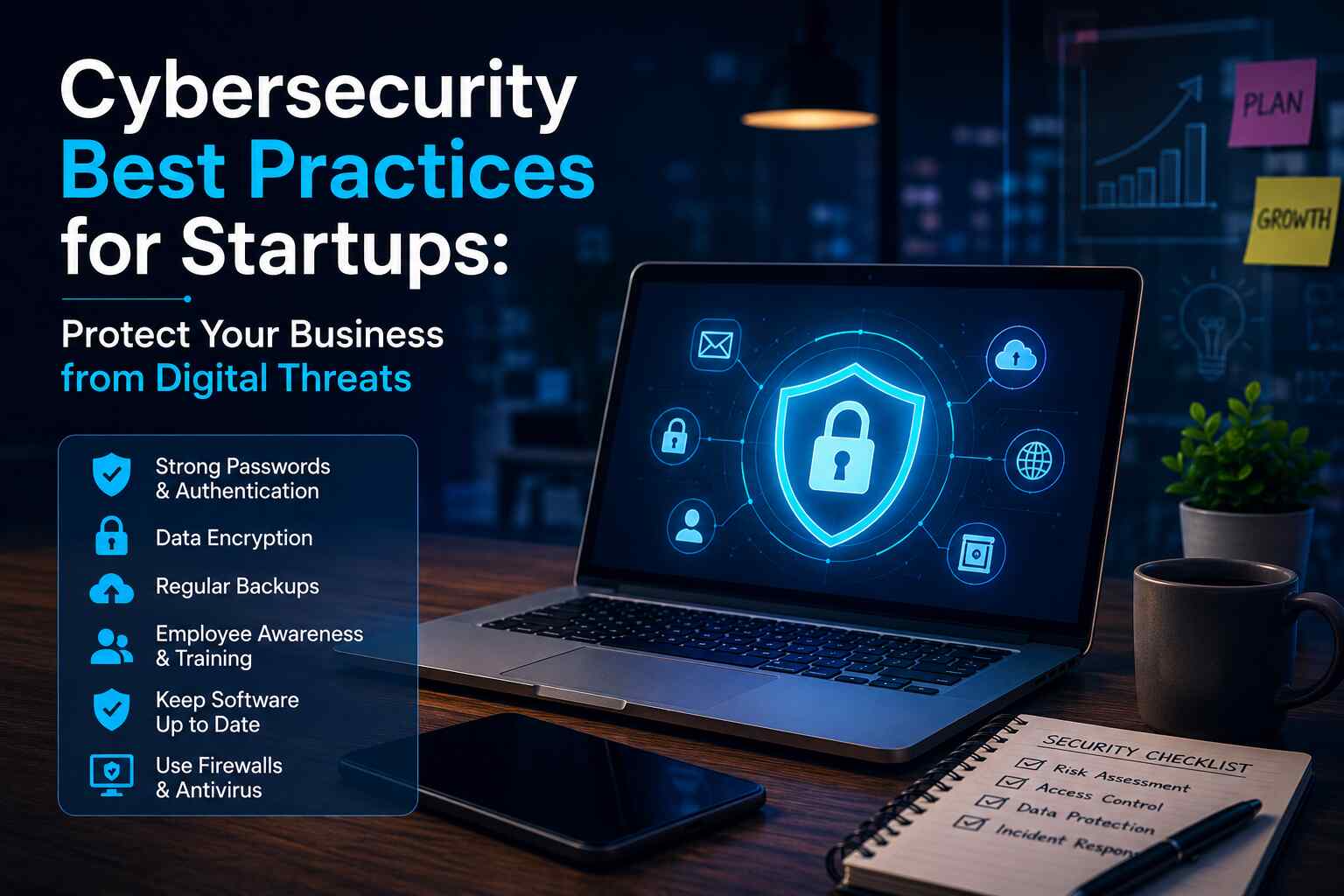
Implementing the right Cybersecurity Best Practices for Startups is essential to protect sensitive business data, customer information, financial records, and intellectual property. A single cyberattack can damage a startup’s reputation, interrupt operations, and lead to financial losses.
This blog explores the most important cybersecurity practices every startup should follow to build a secure and trustworthy business environment.
Why Cybersecurity Matters for Startups
Many startups assume cybercriminals only target large corporations. However, small and growing businesses are often easier targets because of weak security infrastructure.
Strong cybersecurity helps startups:
- Protect customer and company data
- Prevent financial fraud and ransomware attacks
- Build customer trust and brand credibility
- Avoid legal and compliance issues
- Ensure smooth business operations
- Protect intellectual property and confidential information
As startups continue scaling digitally, cybersecurity becomes a critical part of long-term business success.
Top Cybersecurity Best Practices for Startups
1. Use Strong Password Policies
Weak passwords are one of the biggest security risks for startups. Employees should use strong, unique passwords for every account and system.
Best Practices:
- Use passwords with letters, numbers, and special characters
- Avoid using common or repeated passwords
- Change passwords regularly
- Use password managers for secure storage
- Enable multi-factor authentication (MFA)
Multi-factor authentication adds an extra layer of protection by requiring additional verification beyond passwords.
2. Keep Software and Systems Updated
Outdated software often contains security vulnerabilities that hackers can exploit. Startups should regularly update operating systems, applications, plugins, and security software.
Important Areas to Update:
- Operating systems
- Antivirus software
- Firewalls
- Cloud applications
- Website plugins
- CRM and ERP systems
Automatic updates help reduce risks and improve system security.
3. Train Employees on Cybersecurity Awareness
Human error is one of the leading causes of cyber incidents. Employees may accidentally click malicious links, download infected files, or share sensitive information.
Cybersecurity training should include:
- Identifying phishing emails
- Recognizing suspicious websites
- Safe internet browsing habits
- Secure file sharing practices
- Data privacy awareness
- Social engineering attack prevention
A cybersecurity-aware team significantly reduces security risks.
4. Secure Your Wi-Fi and Networks
Unsecured internet connections can expose business systems to cyber threats. Startups should secure office and remote work networks.
Network Security Tips:
- Use strong Wi-Fi passwords
- Enable WPA3 or WPA2 encryption
- Avoid public Wi-Fi for sensitive work
- Use VPNs for remote employees
- Regularly monitor network activity
Secure networks help prevent unauthorized access and data theft.
5. Backup Business Data Regularly
Data loss from ransomware attacks, hardware failures, or accidental deletion can severely impact startup operations.
Recommended Backup Strategies:
- Use cloud-based backups
- Maintain offline backup copies
- Schedule automatic backups
- Test backup recovery regularly
- Store backups securely
Reliable backups ensure business continuity during emergencies.
6. Implement Access Control Policies
Not every employee needs access to all company data and systems. Limiting access reduces the chances of internal security breaches.
Access Control Best Practices:
- Provide role-based access
- Restrict sensitive information
- Remove access for former employees immediately
- Monitor login activity
- Use secure authentication systems
Proper access management improves overall business security.
7. Protect Customer and Financial Data
Startups handling customer information and online payments must ensure data protection.
Important Security Measures:
- Use SSL certificates on websites
- Encrypt sensitive customer data
- Follow secure payment processing standards
- Comply with data protection regulations
- Avoid storing unnecessary sensitive information
Data protection for Startups strengthens customer trust and business reputation.
8. Use Reliable Cybersecurity Tools
Investing in essential cybersecurity tools can help startups detect and prevent threats.
Useful Security Solutions:
- Antivirus and anti-malware software
- Firewall protection
- Endpoint security tools
- Email security systems
- Cloud security platforms
- Threat monitoring solutions
Modern cybersecurity tools provide real-time protection against evolving threats.
9. Develop an Incident Response Plan
Every startup should prepare for possible cyber incidents. A clear response plan helps businesses react quickly and minimize damage.
An Incident Response Plan Should Include:
- Steps to identify threats
- Emergency communication process
- Data recovery procedures
- Security team responsibilities
- Legal and compliance actions
Prepared businesses recover faster from cybersecurity incidents.
10. Secure Remote Work Environments
Remote and hybrid work models increase cybersecurity risks if devices and systems are not protected.
Remote Work Security Tips:
- Use company-approved devices
- Enable device encryption
- Install VPN software
- Avoid unsecured public networks
- Use secure collaboration tools
Strong remote work security policies help startups maintain safe digital operations.
Common Cybersecurity Threats Startups Face
Startups should understand the most common digital threats affecting modern businesses.Startup Cybersecurity helps growing businesses protect digital assets, customer data, and online operations from evolving cyber threats.
Major Threats Include:
- Phishing attacks
- Ransomware
- Malware infections
- Data breaches
- Insider threats
- Business email compromise
- Cloud security vulnerabilities
- Identity theft
Awareness of these threats helps businesses build stronger security strategies.
Benefits of Strong Cybersecurity for Startups
Implementing cybersecurity best practices offers several long-term benefits.
Key Advantages:
- Improved customer trust
- Better brand reputation
- Reduced financial risks
- Enhanced operational stability
- Protection of intellectual property
- Increased investor confidence
- Regulatory compliance support
Cybersecurity is not just an IT concern; it is a business growth strategy.
Future of Startup Cybersecurity
As startups adopt AI, cloud computing, IoT devices, and digital transformation technologies, cybersecurity will become even more important.Data Protection for Startups is essential for securing customer information, preventing data breaches, and maintaining business trust in the digital era.
Emerging cybersecurity trends include:
- AI-powered threat detection
- Zero-trust security models
- Cloud-native security systems
- Biometric authentication
- Advanced ransomware protection
- Cybersecurity automation
Startups that prioritize digital security today will be better prepared for future challenges.
Conclusion
Cybersecurity is one of the most critical investments for modern startups. From protecting sensitive data to ensuring smooth business operations, implementing strong Cybersecurity Best Practices for Startups can prevent costly cyber incidents and build long-term customer trust.
By focusing on employee awareness, secure systems, data protection, and modern security tools, startups can create a safe digital environment that supports innovation and growth.
As cyber threats continue evolving, proactive cybersecurity planning will help startups stay competitive, resilient, and future-ready.Strong cyber threat prevention strategies help startups protect sensitive data, prevent security breaches, and ensure safe business operations in the digital world.
If you are planning to explore entrepreneurship, read our complete guide on “How to Start a Small Business in India” to learn the essential steps for building a successful startup.