
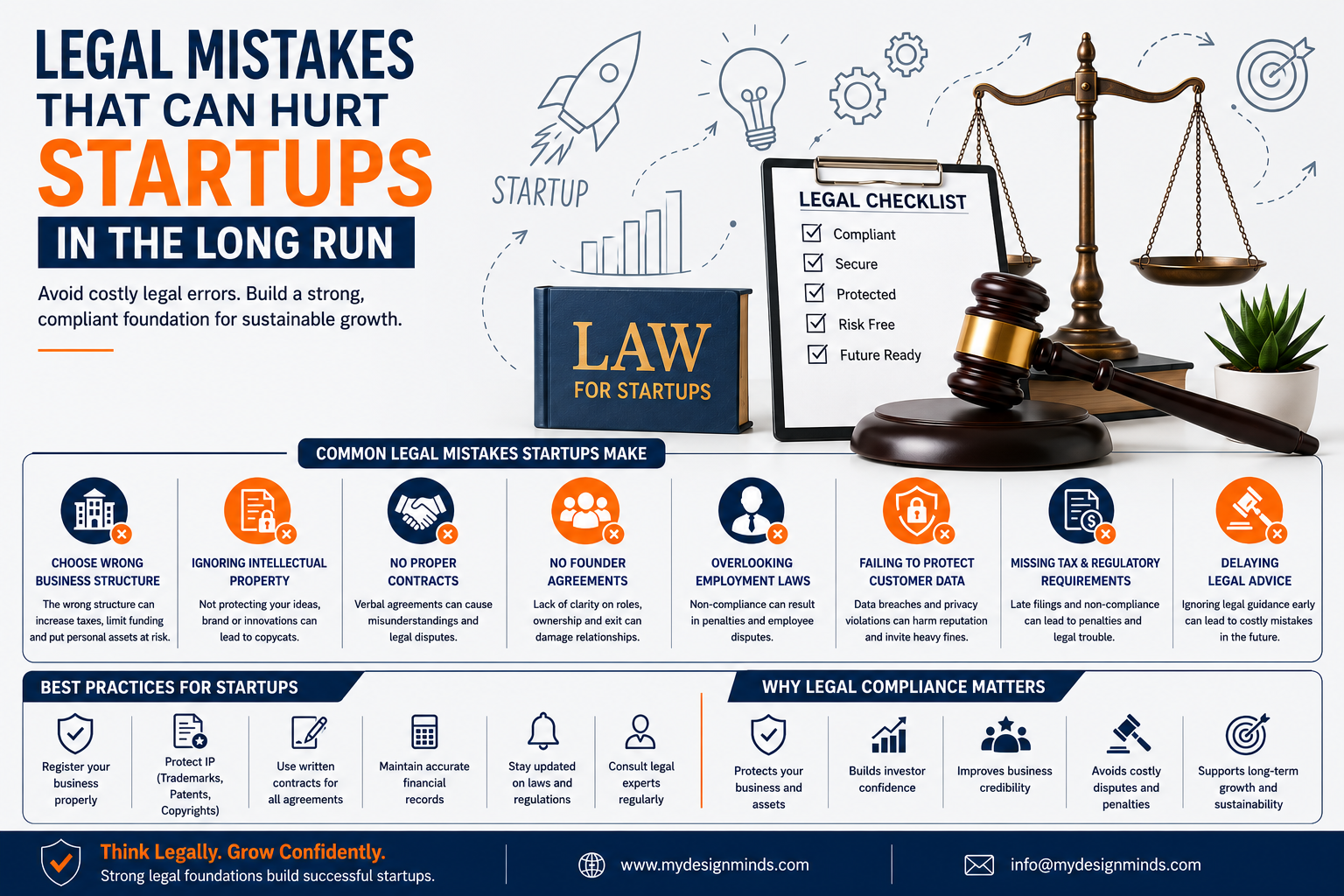
Starting a business is an exciting journey, but many founders focus heavily on product development, marketing, and fundraising while overlooking legal responsibilities. Ignoring legal requirements can lead to costly disputes, financial losses, damaged reputations, and even business closure. Understanding the most common Legal Mistakes for Startups helps founders protect their businesses and build a solid foundation for long-term success.
Whether you’re launching a technology company, manufacturing startup, or service-based business, legal compliance should be part of your business strategy from day one. In this blog, we’ll discuss the legal mistakes startups often make and how to avoid them.
Why Legal Compliance Is Important
Every startup operates within a legal framework that governs business registration, taxation, contracts, intellectual property, employment, and customer protection.
Proper Startup Legal Compliance helps businesses:
- Protect business assets
- Build investor confidence
- Avoid legal disputes
- Improve business credibility
- Ensure sustainable growth
Ignoring legal obligations may save time initially but often creates significant problems later.
Choosing the Wrong Business Structure
One of the earliest Legal Mistakes for Startups is selecting an unsuitable business structure.
Options may include:
- Sole Proprietorship
- Partnership
- Limited Liability Company (LLC)
- Private Limited Company
- Corporation
The right structure affects taxation, liability, funding opportunities, and future expansion. Consulting legal professionals before registration helps founders make informed decisions.
Ignoring Intellectual Property Protection
Many startups delay protecting their innovations.
Important assets include:
- Business name
- Logo
- Product designs
- Software
- Patents
- Trademarks
- Copyrights
Protecting intellectual property strengthens Startup Legal Compliance while preventing competitors from copying valuable innovations.
Operating Without Proper Contracts
Verbal agreements often create misunderstandings.
Every startup should use written contracts with:
- Employees
- Co-founders
- Vendors
- Clients
- Freelancers
- Investors
Well-drafted contracts reduce Business Legal Risks and clearly define responsibilities.
Neglecting Founder Agreements
Many businesses begin with friends or family members who assume trust is enough.
A founder agreement should define:
- Ownership percentages
- Decision-making authority
- Equity distribution
- Roles and responsibilities
- Exit procedures
This simple document prevents many Common Startup Legal Mistakes that arise during business growth.
Overlooking Employment Laws
Hiring employees introduces new legal responsibilities.
Startups should comply with regulations covering:
- Employment contracts
- Minimum wages
- Working hours
- Employee benefits
- Workplace safety
- Anti-discrimination policies
Strong Startup Legal Compliance protects both employers and employees.
Failing to Protect Customer Data
Modern businesses collect customer information through websites, apps, and online services.
Protect data by:
- Following privacy regulations
- Using secure systems
- Encrypting sensitive information
- Publishing clear privacy policies
- Obtaining customer consent
Ignoring data protection increases Business Legal Risks and can result in regulatory penalties.
Missing Tax and Regulatory Requirements
Many startups underestimate taxation and compliance obligations.
These include:
- Business registration
- GST or VAT filings
- Income tax
- Payroll taxes
- Annual reports
- Local licenses
Proper financial recordkeeping supports Legal Mistakes for Startups prevention and simplifies audits.
Ignoring Industry Regulations
Certain industries require additional certifications or licenses.
Examples include:
- Healthcare
- Manufacturing
- Financial services
- Food production
- Pharmaceuticals
Research industry-specific regulations before launching products or services.
Delaying Legal Advice
Many founders seek legal assistance only after problems arise.
Working with experienced legal professionals helps startups:
- Draft contracts
- Protect intellectual property
- Ensure regulatory compliance
- Resolve disputes
- Prepare investment agreements
Professional guidance significantly reduces Common Startup Legal Mistakes.
Conduct Regular Legal Reviews
Business laws evolve over time.
Schedule periodic reviews to evaluate:
- Contracts
- Intellectual property
- Employment policies
- Privacy compliance
- Regulatory requirements
Regular reviews strengthen Startup Legal Compliance and reduce future legal challenges.
Best Practices for Avoiding Legal Risks
To minimize legal issues:
- Register your business properly.
- Protect trademarks and patents early.
- Use legally binding contracts.
- Maintain accurate financial records.
- Stay updated on regulatory changes.
- Seek legal advice before signing major agreements.
- Train employees on compliance policies.
Following these practices helps startups avoid unnecessary legal complications and focus on growth.
Conclusion
Legal compliance is not just a regulatory requirement—it is a critical component of long-term business success. Avoiding Legal Mistakes for Startups, maintaining strong Startup Legal Compliance, preventing Common Startup Legal Mistakes, and reducing Business Legal Risks can protect your company from costly disputes while improving investor confidence and business credibility. Building a legally secure foundation allows startups to innovate, expand, and compete with confidence.
If you’re planning to launch your business, understanding legal compliance is just as important as learning how to start a small business in India and creating a sustainable strategy for long-term success.

My Design Minds supports startups with expert product design, engineering, CAD development, rapid prototyping, and manufacturing solutions. By helping businesses develop innovative products while maintaining professional development processes and confidentiality, My Design Minds enables startups to build strong, scalable businesses ready for future growth.