
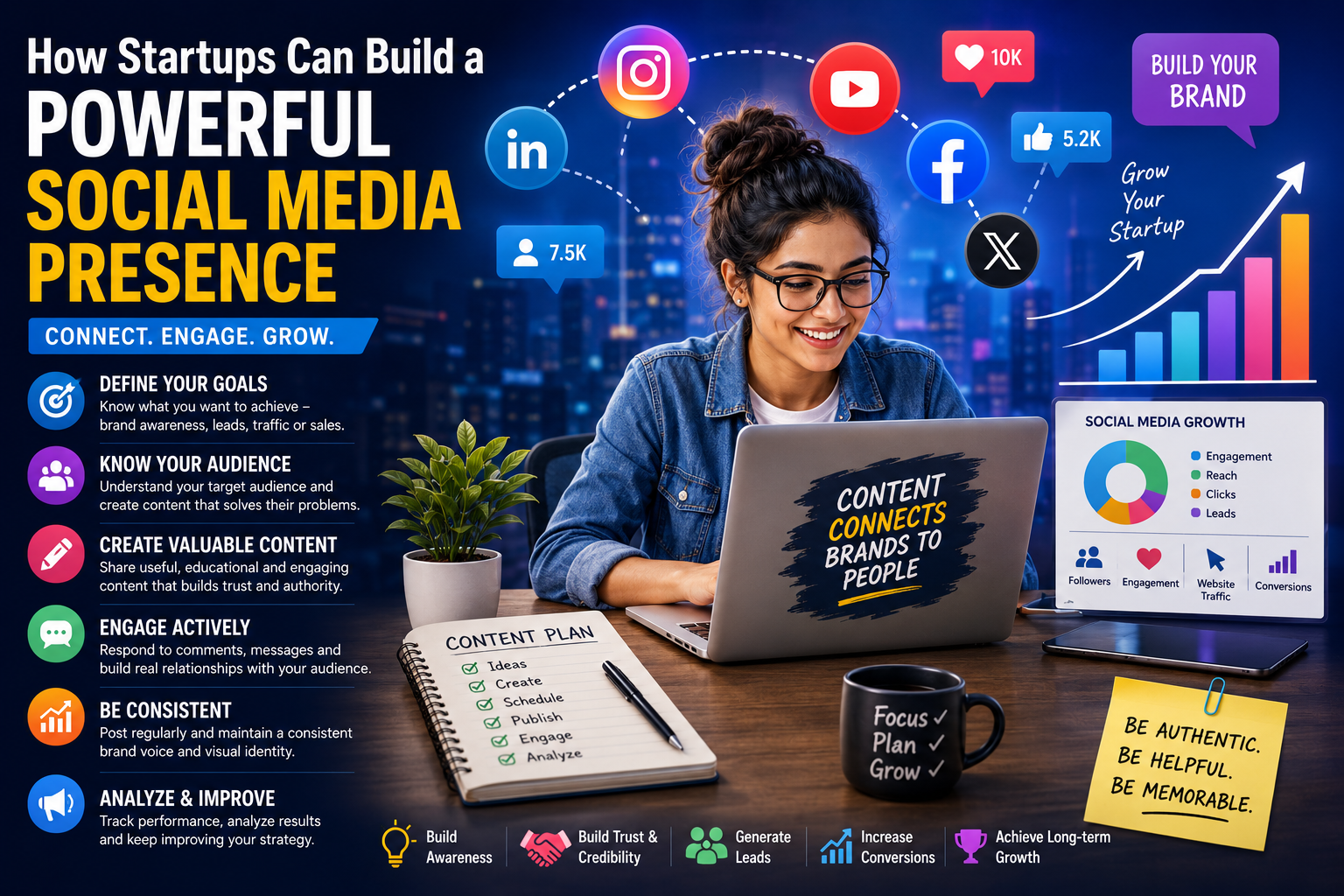
For startups, building awareness and reaching potential customers can be challenging, especially when competing against established brands with larger marketing budgets. Social media provides an affordable and powerful way for new businesses to connect with audiences, showcase their expertise, build credibility, and generate leads. A strong Social Media Presence for Startups can help a new business become recognizable while creating meaningful relationships with potential customers.
However, simply creating accounts on multiple platforms is not enough. Startups need a clear strategy, consistent content, strong branding, and genuine engagement. The right Startup Social Media Marketing approach can transform social platforms from simple communication channels into valuable sources of traffic, leads, and customer relationships.
Why Social Media Matters for Startups
Social media gives startups the opportunity to communicate directly with their target audience without depending entirely on traditional advertising. Platforms such as LinkedIn, Instagram, YouTube, Facebook, and other relevant channels allow businesses to showcase their products, share knowledge, and participate in industry conversations.
An effective social media strategy can help startups:
- Increase brand awareness
- Reach potential customers
- Generate website traffic
- Build customer trust
- Showcase products and services
- Generate leads
- Develop a loyal audience
- Improve brand recognition
For businesses with limited marketing budgets, social media can become an important part of Startup Brand Awareness.
Define Your Social Media Goals
Before creating content, determine what you want your social media activity to accomplish. Different startups may have different objectives.
Your goals could include:
- Increasing brand awareness
- Generating qualified leads
- Driving website traffic
- Building an online community
- Increasing product sales
- Recruiting employees
- Establishing industry authority
Clear objectives make your Social Media Strategy for Startups more focused and easier to measure.
Identify Your Target Audience
Understanding your audience is one of the most important steps in social media marketing.
Research:
- Age and location
- Professional background
- Interests
- Buying behavior
- Challenges
- Preferred platforms
- Content preferences
For example, a B2B technology startup may find LinkedIn more valuable than platforms focused primarily on entertainment, while a consumer-focused startup may benefit from visual platforms.
Knowing your audience helps you create content that is relevant and useful.
Choose the Right Social Media Platforms
Startups do not need to be active on every platform. Managing too many channels can reduce content quality and consistency.
Choose platforms based on where your target customers spend their time.
Useful for B2B marketing, professional networking, thought leadership, and lead generation.
Useful for visual branding, product demonstrations, short-form content, and lifestyle-focused businesses.
YouTube
Excellent for tutorials, educational videos, product demonstrations, interviews, and long-form content.
Useful for community building, customer communication, advertising, and broader audience reach.
The goal is not to be everywhere but to be effective where your customers are.
Create a Consistent Brand Identity
Your social media profiles should look and feel like part of the same business.
Maintain consistency in:
- Logo
- Colors
- Fonts
- Images
- Tone of voice
- Profile descriptions
- Messaging
A consistent identity makes your startup easier to recognize across different platforms and strengthens Startup Brand Awareness.
Create Valuable Content
People follow businesses because they expect useful or interesting content—not constant advertisements.
Create a balanced content mix including:
- Educational tips
- Industry insights
- Product information
- Customer success stories
- Behind-the-scenes content
- Founder stories
- Infographics
- Short videos
- Frequently asked questions
- Industry trends
Educational content can position your startup as a knowledgeable and trustworthy business.
Use Video Content
Video has become an important part of social media marketing. Startups can use short videos to explain products, answer customer questions, demonstrate solutions, or share company stories.
Video ideas include:
- Product demonstrations
- Quick tutorials
- Founder introductions
- Customer testimonials
- Industry tips
- Frequently asked questions
- Behind-the-scenes videos
You do not always need expensive equipment. Clear messaging and useful information are often more important than highly produced visuals.
Develop a Content Calendar
Consistency is essential for building a strong Social Media Presence for Startups.
Create a monthly or weekly content calendar that defines:
- Publishing dates
- Topics
- Platforms
- Content formats
- Captions
- Visual requirements
- Calls to action
A content calendar prevents last-minute posting and helps maintain a consistent publishing schedule.
Engage With Your Audience
Social media should be a two-way conversation. Do not simply publish content and disappear.
Respond to:
- Comments
- Questions
- Direct messages
- Mentions
- Reviews
- Feedback
Ask your audience questions and encourage discussions. Genuine engagement can turn followers into customers and advocates.
Use Hashtags and Keywords Strategically
Relevant hashtags and keywords can help improve content discovery. However, avoid using large numbers of unrelated hashtags.
Choose terms connected to:
- Your industry
- Products
- Customer problems
- Location
- Target audience
For example, a technology startup could combine industry-specific terms with broader startup and business-related keywords.
Collaborate With Industry Creators
Partnerships with relevant creators, experts, and industry professionals can help startups reach new audiences.
Possible collaborations include:
- Expert interviews
- Joint webinars
- Podcast appearances
- Co-created content
- Industry discussions
- Product reviews
Choose collaborators based on relevance and audience quality rather than follower count alone.
Use Social Proof
Potential customers are more likely to trust businesses that can demonstrate real results.
Share:
- Customer testimonials
- Reviews
- Case studies
- Success stories
- Awards
- Media mentions
- Customer-generated content
Social proof strengthens credibility and supports Startup Social Media Marketing.
Consider Paid Social Advertising
Organic social media can take time to build momentum. Paid advertising can help startups reach specific audiences more quickly.
Start with a small budget and test:
- Different audiences
- Creative formats
- Headlines
- Offers
- Calls to action
Measure results carefully before increasing your advertising budget.
Track Your Social Media Performance
A successful Social Media Strategy for Startups should be based on data.
Monitor metrics such as:
- Followers
- Engagement rate
- Reach
- Impressions
- Website traffic
- Leads
- Click-through rate
- Conversions
- Video views
Focus on metrics that contribute to business objectives rather than chasing follower numbers alone.
Common Social Media Mistakes Startups Should Avoid
Startups often make avoidable mistakes, including:
- Posting without a strategy
- Being active on too many platforms
- Publishing only promotional content
- Ignoring comments
- Using inconsistent branding
- Copying competitors
- Buying followers
- Failing to measure results
- Posting inconsistently
Avoiding these mistakes can help create a healthier and more authentic online presence.
Best Practices for Startup Social Media Marketing
For sustainable results:
- Define clear goals.
- Understand your audience.
- Select relevant platforms.
- Maintain consistent branding.
- Create valuable content.
- Use video strategically.
- Engage with followers.
- Share customer success stories.
- Analyze performance regularly.
- Improve your strategy based on results.
These practices can strengthen your Social Media Presence for Startups and create a reliable foundation for digital growth.
Conclusion
Building a powerful social media presence takes time, consistency, and strategic planning. Startups that understand their audience, choose the right platforms, create valuable content, maintain consistent branding, and actively engage with followers can build strong relationships and increase their visibility.
A well-planned Social Media Strategy for Startups can support brand awareness, customer acquisition, website traffic, and long-term growth. At the same time, consistent Startup Social Media Marketing can help establish credibility and differentiate a new business from competitors.
For startups, social media should not be treated simply as a place to promote products. It should be used to educate, communicate, build relationships, demonstrate expertise, and create a community around the brand. If you’re learning how to start a small business in India, developing a strong social media presence from the beginning can give your business an important advantage in a competitive digital marketplace.

About StartupSpark
StartupSpark provides practical insights and actionable strategies for entrepreneurs who want to launch, grow, and scale successful businesses. From social media marketing and SEO to branding, funding, technology, operations, and business development, StartupSpark helps founders make informed decisions and build sustainable businesses in today’s competitive market.