
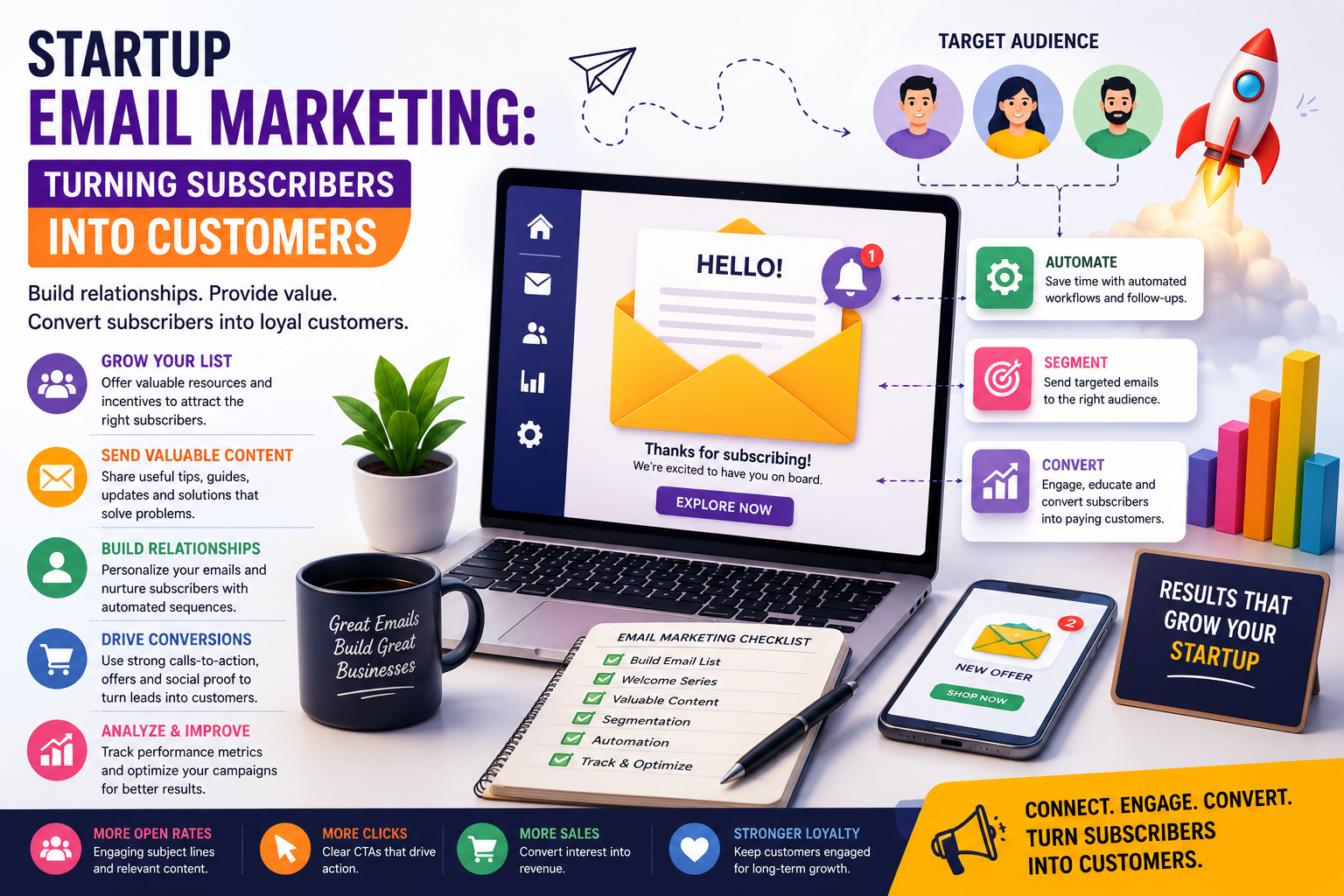
Building an email list is one of the most valuable marketing assets for a growing startup. Unlike social media followers or website visitors, email subscribers give businesses a direct way to communicate with potential customers. However, simply collecting email addresses is not enough. Startups need a strategic approach to turn subscribers into engaged prospects and, eventually, paying customers.
Startup Email Marketing helps businesses build relationships, educate their audience, promote products, and encourage conversions. With the right strategy, even a small email list can generate meaningful results without requiring a huge advertising budget.
From welcome emails and educational newsletters to personalized offers and automated campaigns, startups can use email marketing throughout the customer journey. The key is to provide relevant value while guiding subscribers toward taking action.
Why Email Marketing Matters for Startups
Email remains an important digital marketing channel because businesses have greater control over their subscriber relationships. Social media algorithms can change, but an email list provides a direct communication channel with your audience.
A strong Email Marketing for Startups strategy can help businesses:
- Build long-term customer relationships
- Increase website traffic
- Generate qualified leads
- Promote products and services
- Improve customer retention
- Encourage repeat purchases
- Reduce dependence on paid advertising
- Increase conversion opportunities
For startups operating with limited budgets, email can become a cost-effective channel for sustainable customer acquisition.
Build a High-Quality Email List
The first step is building an audience that genuinely wants to hear from your business. Avoid purchasing email lists because they can contain irrelevant or inactive contacts and may damage campaign performance.
Instead, encourage visitors to subscribe through valuable offers such as:
- Free guides
- E-books
- Checklists
- Templates
- Webinars
- Exclusive discounts
- Industry reports
- Free trials
Make your subscription form simple and explain what subscribers will receive. A clear value proposition can significantly improve sign-up rates.
Create a Welcome Email Series
The first email after subscription is an important opportunity to establish your relationship with a new subscriber.
A welcome series can include:
- A thank-you message
- An introduction to your startup
- Useful educational resources
- Your key products or services
- A relevant call to action
Avoid making the first email overly promotional. Focus on creating trust and showing subscribers why staying connected with your business is valuable.
Segment Your Subscribers
Not every subscriber has the same needs or interests. Sending identical emails to everyone can reduce engagement.
Segment your audience according to factors such as:
- Industry
- Location
- Customer type
- Previous purchases
- Website behavior
- Product interests
- Engagement level
Segmentation allows startups to deliver more relevant messages and develop a stronger Startup Email Strategy.
For example, a new subscriber may need educational content, while an existing customer may be more interested in advanced features or complementary products.
Create Valuable Email Content
Your subscribers should receive content that helps them solve problems or make better decisions.
Useful email content can include:
- Industry insights
- Practical tips
- Product tutorials
- Case studies
- Customer stories
- New product announcements
- Expert advice
- Exclusive resources
Avoid sending promotional messages every day. A healthy balance between educational and promotional content keeps subscribers engaged.
Personalize Your Emails
Personalization can make communication feel more relevant and human.
You can personalize emails using:
- Subscriber names
- Industry
- Product interests
- Previous interactions
- Purchase history
- Content preferences
For example, instead of sending the same product recommendation to every subscriber, suggest content based on their previous interests.
Effective personalization can strengthen Email Conversion Strategy and encourage subscribers to take action.
Use Strong Calls to Action
Every marketing email should have a clear purpose. Tell readers what you want them to do next.
Your call to action might encourage them to:
- Book a consultation
- Start a free trial
- Download a guide
- Read a blog
- Request a quote
- Purchase a product
- Schedule a demonstration
Keep the CTA clear and relevant to the content of the email. Too many competing calls to action can confuse subscribers.
Use Email Automation
Automation helps startups communicate with subscribers at the right time without manually sending every email.
Useful automated campaigns include:
- Welcome sequences
- Abandoned cart emails
- Lead nurturing campaigns
- Trial expiration reminders
- Product recommendations
- Customer onboarding
- Re-engagement campaigns
Automation is an important component of Startup Email Marketing because it saves time while maintaining consistent communication.
Create Effective Lead-Nurturing Campaigns
Not every subscriber is ready to buy immediately. Some need additional information before making a decision.
A lead-nurturing campaign can gradually move subscribers through the buying journey.
For example:
Email 1: Introduce the problem
Email 2: Explain possible solutions
Email 3: Share useful educational content
Email 4: Present your product or service
Email 5: Provide a case study or testimonial
Email 6: Offer a clear next step
This approach builds trust before asking for the sale.
Use Social Proof
Subscribers may hesitate to purchase from a new startup because they are unfamiliar with the brand. Social proof can reduce this uncertainty.
Include:
- Customer testimonials
- Reviews
- Case studies
- Success stories
- Industry awards
- Media mentions
- Customer statistics
Real customer experiences can increase credibility and support your Email Marketing for Startups efforts.
Optimize for Mobile Devices
Many subscribers read emails on smartphones. Your campaigns should therefore be mobile-friendly.
Use:
- Short paragraphs
- Clear headings
- Readable fonts
- Responsive designs
- Prominent buttons
- Compressed images
Always test your emails across different devices before sending large campaigns.
Measure Email Marketing Performance
Successful email marketing requires continuous measurement.
Important metrics include:
- Open rate
- Click-through rate
- Conversion rate
- Unsubscribe rate
- Bounce rate
- List growth
- Revenue generated
- Customer acquisition cost
Track performance across different campaigns to determine what content, subject lines, and offers generate the strongest results.
A/B testing can also help startups compare different subject lines, layouts, CTAs, and messaging.
Common Email Marketing Mistakes Startups Should Avoid
Startups can damage their email performance by:
- Sending too many emails
- Buying email lists
- Using misleading subject lines
- Sending irrelevant content
- Ignoring mobile users
- Having unclear CTAs
- Failing to segment audiences
- Not tracking conversions
- Making every email promotional
Avoiding these mistakes creates a healthier and more effective email marketing program.
Best Practices for Startup Email Marketing
For sustainable results, startups should:
- Build an organic subscriber list.
- Offer valuable incentives for sign-ups.
- Create a strong welcome sequence.
- Segment subscribers.
- Personalize relevant content.
- Use automation.
- Provide educational information.
- Include clear CTAs.
- Test different campaigns.
- Measure conversions and revenue.
Following these practices can turn email subscribers into qualified leads and long-term customers.
Conclusion
Startup Email Marketing is more than sending newsletters. It is a complete customer communication strategy that helps startups build trust, nurture prospects, increase conversions, and maintain relationships with customers.
By building a quality subscriber list, creating valuable content, segmenting audiences, personalizing messages, automating campaigns, and continuously measuring results, startups can create an effective Startup Email Strategy that supports sustainable growth.
For startups, Startup Email Marketing is a powerful way to build meaningful customer relationships and generate consistent business growth. By developing an effective Startup Email Strategy, businesses can deliver personalized and valuable content to the right audience at the right time. A well-planned Email Marketing for Startups approach helps nurture prospects, build trust, and increase engagement, while a strong Email Conversion Strategy turns interested subscribers into paying customers. When combined with quality content, audience segmentation, automation, and regular performance tracking, email marketing can become a cost-effective channel for sustainable startup growth.
If you are building a new business, learning how to start a small business in India is only the beginning. Developing a strong Email Conversion Strategy can help you turn your growing audience into loyal customers and create a reliable marketing channel for long-term business success.
About StartupSpark
StartupSpark provides practical insights and actionable strategies for entrepreneurs looking to launch, market, and scale successful businesses. From email marketing and SEO to branding, funding, technology, sales, and business growth, StartupSpark helps founders make smarter decisions and build sustainable businesses in a competitive digital economy.