Introduction
In 2026, startups face intense competition for customer attention. Building a strong product is important, but reaching the right audience is equally essential for business growth. This is where Cold Outreach Strategies for Startups can make a significant difference. Instead of waiting for potential customers to discover your business, cold outreach allows startups to proactively connect with prospects who may benefit from their products or services.
Modern outreach is no longer about sending hundreds of generic emails. Successful startups use personalization, automation, accurate targeting, valuable messaging, and consistent follow-ups to create meaningful conversations. By combining these approaches, businesses can improve their chances of generating qualified leads and building long-term customer relationships.
1. Define Your Ideal Customer Profile
The first step in successful outreach is knowing exactly who you want to contact. Startups should create an Ideal Customer Profile (ICP) based on factors such as industry, company size, location, job role, business needs, and purchasing behaviour.
For example, a B2B software startup may target marketing managers at companies with 50–500 employees rather than contacting every business owner. A clearly defined audience makes your campaigns more relevant and reduces wasted effort.
Before sending a message, understand what problems your target customers commonly face. This information can help you create outreach that focuses on their needs rather than simply promoting your product.
2. Personalize Every Outreach Message
Personalization is one of the most important Startup Cold Email Strategies in 2026. Prospects receive countless promotional messages, so generic emails are easy to ignore.
Instead of writing, “We provide excellent marketing services,” mention something specific about the prospect’s business. You could reference a recent product launch, company expansion, industry challenge, or relevant achievement.
Effective personalization does not mean writing an entirely different email for every prospect. Startups can create message templates while customizing important sections based on the recipient.
3. Keep Your Message Short and Valuable
Busy decision-makers rarely have time to read lengthy sales pitches. Your initial outreach should be concise and focused on one clear purpose.
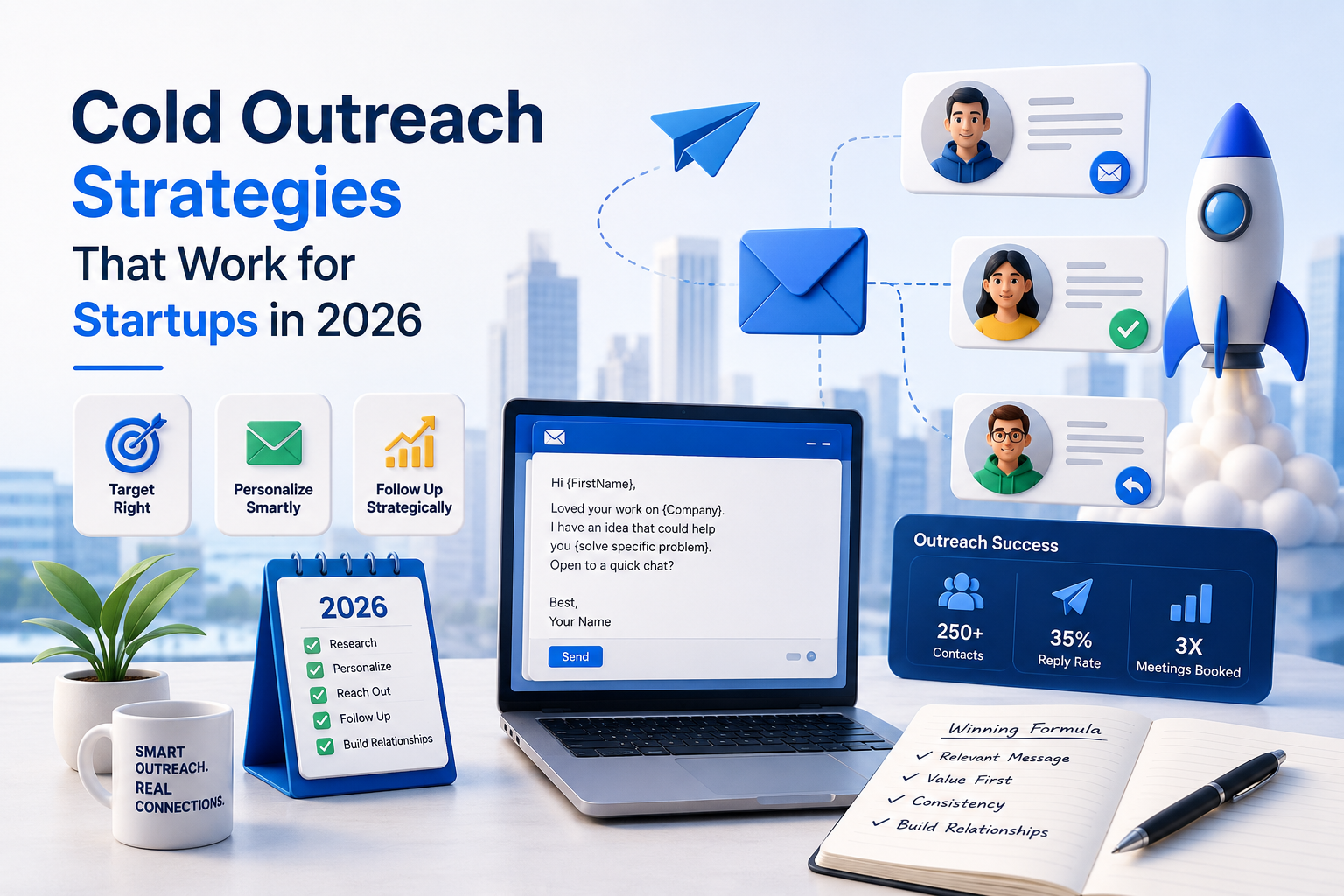
A strong cold message generally includes:
- A personalized opening
- A relevant problem or observation
- A concise explanation of your solution
- A clear value proposition
- A simple call to action
Avoid overwhelming prospects with product features. Instead, explain how your solution can help them save time, reduce costs, increase revenue, improve efficiency, or solve a specific business problem.
4. Use Multiple Outreach Channels
Email is an important channel, but startups should not depend entirely on email. Combining email with LinkedIn, phone calls, industry communities, and other professional channels can create multiple opportunities to connect with prospects.
For example, you might first connect with a prospect on LinkedIn, send a personalized email a few days later, and follow up with another useful message. This approach can make your outreach more recognizable without becoming intrusive.
A multichannel approach is particularly useful for B2B Outreach for Startups, where purchasing decisions often involve several conversations before a prospect becomes a customer.
5. Build a Follow-Up Sequence
Many prospects do not respond to the first message. This does not necessarily mean they are uninterested. They may be busy, have missed the message, or need more information before responding.
Create a structured follow-up sequence instead of sending random reminders. Each follow-up should provide a reason to continue the conversation.
For example, you can:
- Introduce your solution.
- Share a relevant benefit or insight.
- Provide a useful resource or case study.
- Ask whether solving the problem is currently a priority.
- Send a polite final follow-up.
Keep the tone professional and respectful. If a prospect clearly asks not to be contacted, remove them from your outreach list.
6. Use AI and Automation Carefully
AI and automation tools can make outreach more efficient in 2026. Startups can use them to research prospects, organize lead lists, identify relevant information, personalize sections of messages, and schedule follow-ups.
However, automation should support human communication rather than replace it. Sending thousands of poorly personalized AI-generated emails can damage your reputation and reduce trust.
Use technology to save time while keeping the final message relevant, accurate, and human.
7. Focus on Value Before Selling
Effective outreach should not immediately feel like a sales pitch. Prospects are more likely to engage when your message demonstrates an understanding of their challenges.
Offer something useful where appropriate, such as a short audit, industry insight, relevant report, practical recommendation, or useful resource.
This value-first approach helps establish credibility and can turn an unfamiliar company into a potential business partner.
8. Improve Your Lead Generation Process
Cold outreach works best when supported by a strong lead-generation system. Startups should regularly evaluate where their leads come from, which industries respond most frequently, and which messages generate the most engagement.
Track important metrics such as:
- Open or delivery rates
- Response rates
- Positive response rates
- Meetings booked
- Qualified leads
- Conversion rates
- Customer acquisition cost
These insights can help startups identify successful campaigns and improve underperforming ones.
9. Test and Optimize Your Campaigns
There is no single outreach message that works for every startup, which is why Cold Outreach Strategies for Startups, Startup Cold Email Strategies, B2B Outreach for Startups, and Lead Generation Strategies for Startups should be continuously tested and optimized. Experiment with different subject lines, opening statements, calls to action, offers, industries, and follow-up schedules. Compare the results and gradually improve your campaigns.
For example, one call to action may ask, “Would you be available for a 15-minute call?” while another could ask, “Is improving this process a priority for your team this quarter?” Testing different approaches can help startups identify which Startup Cold Email Strategies generate better conversations, strengthen B2B Outreach for Startups, and support more effective Lead Generation Strategies for Startups.
Conclusion
Successful Cold Outreach Strategies for Startups in 2026 are built around relevance, personalization, consistency, and value. Startups should focus on reaching the right prospects rather than simply sending more messages. A clearly defined customer profile, personalized communication, multichannel outreach, thoughtful follow-ups, AI-supported research, and continuous testing can create a more effective lead-generation system.
The goal of cold outreach is not simply to sell immediately. It is to start relevant conversations, understand customer needs, build trust, and create opportunities for long-term business relationships. By combining technology with genuine human communication, startups can turn cold prospects into qualified leads and sustainable customers.
Starting a small business in India requires a clear idea, proper market research, a defined target audience, a realistic budget, and a strong marketing strategy to turn your idea into a sustainable and profitable venture.