
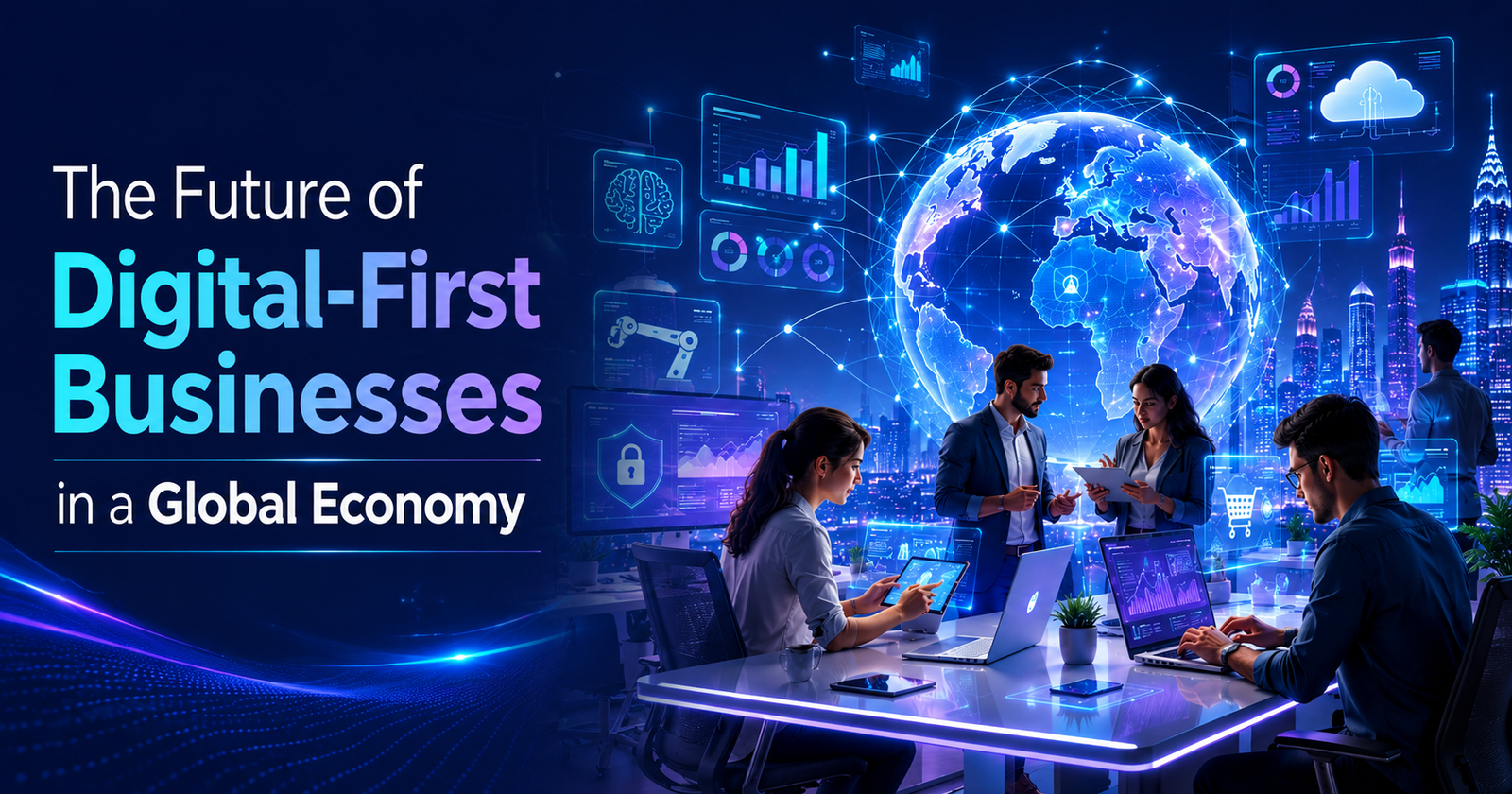
The modern business landscape has undergone a remarkable transformation over the past decade. Companies are no longer limited by geographical boundaries, physical stores, or traditional business models. Instead, technology has enabled organizations to operate, market, and serve customers from virtually anywhere in the world. This shift has given rise to Digital-First Businesses, which prioritize digital technologies, online customer experiences, and data-driven decision-making at every stage of their operations.
From startups to multinational enterprises, organizations are embracing digital transformation to remain competitive in the rapidly evolving Global Digital Economy. Cloud computing, artificial intelligence (AI), e-commerce, remote work, and automation have become essential components of business success. Companies that adopt a strong Digital Business Strategy are better positioned to innovate, scale, and respond to changing customer expectations.
In this blog, we’ll explore why digital-first businesses are shaping the future of entrepreneurship and how startups can thrive in an increasingly connected global economy.
What Are Digital-First Businesses?
Digital First Businesses are organizations that build their products, services, and customer experiences primarily through digital platforms. Unlike traditional businesses that later add digital channels, digital-first companies place technology at the center of their operations from day one.
Common characteristics include:
- Online-first customer engagement
- Cloud-based operations
- Data-driven decision-making
- Remote collaboration
- Digital marketing
- Automated workflows
- Scalable technology infrastructure
This approach enables businesses to adapt quickly to changing market conditions while serving customers worldwide.
Why Digital-First Businesses Are Growing
The growth of internet connectivity and digital technologies has accelerated the adoption of digital-first models.
Several factors contribute to this trend:
- Increasing online consumer behavior
- Growth of e-commerce
- Expansion of cloud computing
- Affordable digital tools
- Remote work culture
- Mobile-first customer experiences
- Artificial Intelligence adoption
These developments make Digital Business Transformation accessible even for small startups.
Benefits of Becoming a Digital-First Business
Adopting a digital-first approach offers several advantages.
Businesses benefit from:
- Lower operational costs
- Global market access
- Faster decision-making
- Improved customer experiences
- Greater operational flexibility
- Better scalability
- Enhanced productivity
These benefits help startups compete effectively in the Global Digital Economy.
Focus on Customer Experience
Customers expect seamless digital experiences across websites, mobile apps, and social media platforms.
To improve customer experience:
- Optimize website performance.
- Simplify user journeys.
- Offer personalized recommendations.
- Provide responsive customer support.
- Enable secure online payments.
A customer-focused Digital Business Strategy builds trust and encourages long-term loyalty.
Invest in Cloud Technology
Cloud computing has become the backbone of digital businesses.
Cloud solutions offer:
- Secure data storage
- Remote accessibility
- Lower infrastructure costs
- Automatic software updates
- Business continuity
- Flexible scalability
Cloud platforms allow Digital-First Businesses to expand operations efficiently while minimizing capital investment.
Leverage Artificial Intelligence
AI is transforming how businesses operate and serve customers.
Applications include:
- Chatbots
- Predictive analytics
- Personalized marketing
- Demand forecasting
- Customer support automation
- Fraud detection
AI-driven Digital Business Transformation enables startups to improve efficiency and deliver smarter customer experiences.
Use Data for Better Decision-Making
Successful businesses rely on data instead of assumptions.
Track important metrics such as:
- Customer acquisition cost (CAC)
- Customer lifetime value (CLV)
- Website traffic
- Conversion rates
- Customer retention
- Sales performance
Analyzing these metrics strengthens Digital Business Strategy and supports informed business decisions.
Build a Strong Digital Marketing Presence
A digital-first company must be visible where customers spend their time.
Effective marketing channels include:
- Search Engine Optimization (SEO)
- Content marketing
- Social media marketing
- Email marketing
- Video marketing
- Paid advertising
Consistent digital marketing increases visibility in the Global Digital Economy and attracts qualified customers.
Prioritize Cybersecurity
As businesses become more digital, protecting customer information becomes increasingly important.
Key cybersecurity practices include:
- Multi-factor authentication
- Data encryption
- Regular security updates
- Employee awareness training
- Secure payment gateways
- Data backup systems
Strong cybersecurity builds customer trust and protects business operations.
Embrace Remote and Hybrid Work
Digital-first organizations often benefit from flexible work environments.
Advantages include:
- Access to global talent
- Lower office expenses
- Improved work-life balance
- Increased productivity
- Business continuity during disruptions
Remote collaboration tools make it easier for Digital-First Businesses to manage distributed teams.
Expand Into Global Markets
Digital technologies allow startups to reach customers worldwide without establishing physical offices.
Before expanding internationally:
- Research target markets.
- Understand local regulations.
- Offer multilingual support.
- Accept global payment methods.
- Localize marketing content.
A well-planned Digital Business Strategy simplifies international growth while reducing expansion risks.
Common Challenges
Despite the advantages, digital-first businesses face several challenges.
These include:
- Increasing cybersecurity threats
- Intense online competition
- Rapid technological changes
- Customer privacy regulations
- Rising digital advertising costs
- Talent shortages
Addressing these challenges requires continuous innovation and strategic planning.
Best Practices for Long-Term Success
To succeed in the digital economy:
- Invest in scalable technology.
- Prioritize customer experience.
- Make data-driven decisions.
- Strengthen cybersecurity.
- Embrace continuous innovation.
- Build an agile business culture.
- Monitor global market trends.
These practices help businesses remain competitive and resilient.
The Future of Digital-First Businesses
The future belongs to organizations that can quickly adapt to technological change and evolving customer expectations. Emerging technologies such as AI, blockchain, the Internet of Things (IoT), augmented reality, and advanced automation will continue to reshape industries worldwide. Businesses that embrace Digital-First Businesses, accelerate Digital Business Transformation, strengthen their Digital Business Strategy, and actively participate in the Global Digital Economy will be better equipped to innovate, scale internationally, and create exceptional customer experiences.
Conclusion
The future of business is undeniably digital. Companies that invest in technology, customer-centric innovation, and agile operations will gain a significant competitive advantage in the global marketplace. By embracing Digital-First Businesses, driving Digital Business Transformation, participating in the Global Digital Economy, and implementing a robust Digital Business Strategy, startups can reduce operational costs, expand into international markets, improve customer satisfaction, and achieve sustainable long-term growth.
If you’re planning to build a successful modern business, understanding digital-first strategies is just as important as learning how to start a small business in India and preparing your company for success in an increasingly connected global economy.

About StartupSpark
StartupSpark empowers entrepreneurs with practical insights, expert guidance, and actionable resources to help them build, scale, and grow successful businesses. From startup planning and funding to digital transformation, marketing, operations, technology, and global expansion, StartupSpark provides founders with the knowledge they need to navigate today’s competitive business landscape and achieve sustainable long-term success.