
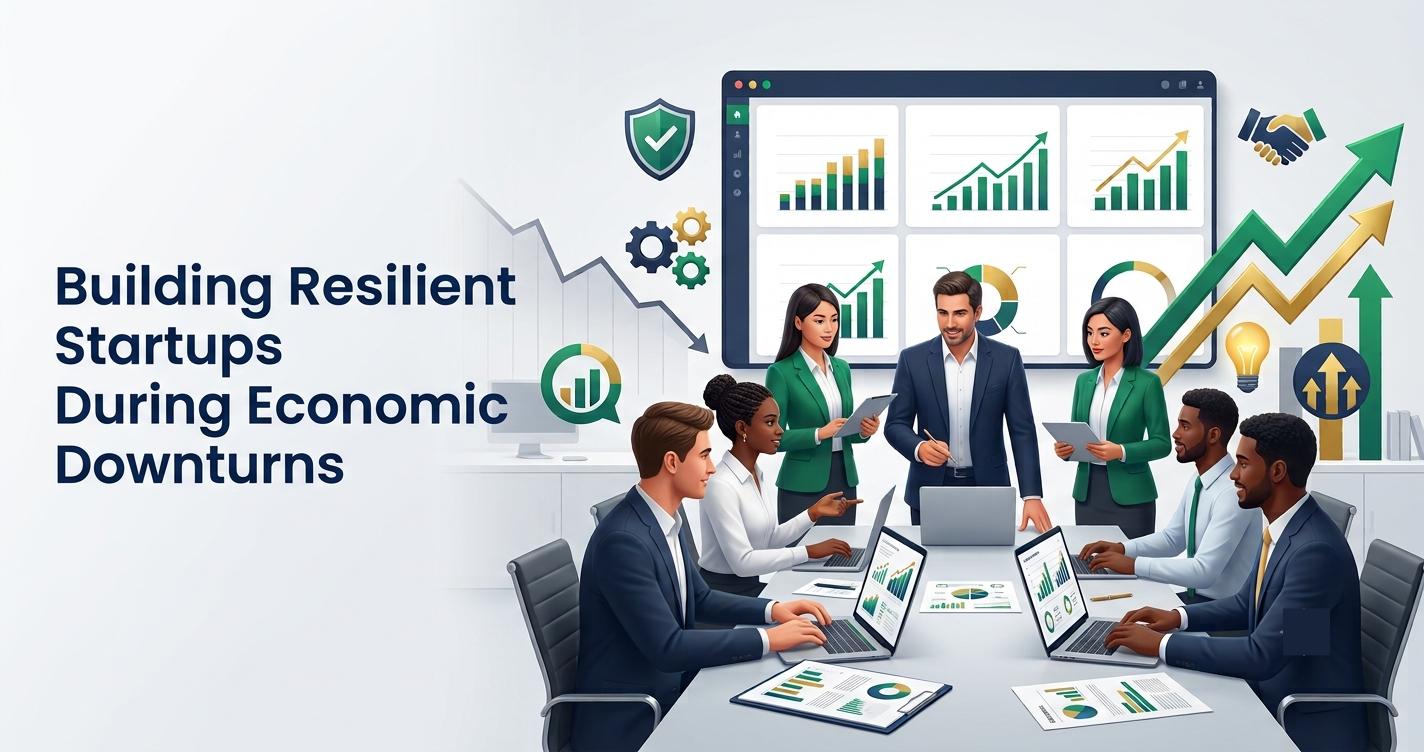
Economic downturns can be challenging for businesses of every size, but startups often feel the impact the most. Limited cash reserves, uncertain market conditions, and changing customer behavior can make it difficult for young businesses to survive. However, history has shown that many successful companies were built during periods of economic uncertainty because they adapted quickly, controlled costs, and focused on solving real customer problems. Startup Resilience is about preparing your business to withstand challenges while remaining flexible enough to seize new opportunities.
Building resilience requires more than cutting expenses. It involves smart financial planning, operational efficiency, customer focus, and a willingness to innovate. By developing strong systems and making data-driven decisions, startups can not only survive economic downturns but also emerge stronger than their competitors. In this guide, we’ll explore practical strategies to help startups remain resilient during uncertain times.
Why Startup Resilience Matters
Every business faces unexpected challenges, including recessions, inflation, supply chain disruptions, and changing market demands. A resilient startup can respond quickly to these situations without losing momentum.
Building Startup Resilience helps businesses:
- Reduce financial risks
- Improve operational stability
- Maintain customer trust
- Adapt to market changes
- Protect long-term growth
- Increase investor confidence
Strong Business Continuity for Startups ensures that businesses remain operational even during difficult economic conditions.
Strengthen Your Financial Foundation
Cash flow is the lifeline of every startup, especially during an economic slowdown.
To improve financial stability:
- Monitor cash flow regularly.
- Prepare realistic budgets.
- Build an emergency reserve.
- Reduce unnecessary expenses.
- Negotiate better payment terms with vendors.
- Review subscriptions and operational costs.
Financial discipline supports Economic Downturn Strategies by helping startups remain solvent during uncertain periods.
Diversify Revenue Streams
Relying on a single customer, product, or market increases business risk.
Consider expanding through:
- New product offerings
- Subscription services
- Digital products
- Strategic partnerships
- International markets
- Additional customer segments
Diversification strengthens Startup Resilience by reducing dependence on one source of income.
Focus on Customer Retention
During economic uncertainty, retaining existing customers is often more cost-effective than acquiring new ones.
Improve retention by:
- Delivering excellent customer service
- Offering personalized experiences
- Providing loyalty rewards
- Gathering customer feedback
- Solving problems quickly
Strong customer relationships contribute to effective Business Continuity for Startups.
Optimize Operational Efficiency
Efficient operations reduce costs without sacrificing quality.
Look for opportunities to:
- Automate repetitive tasks
- Improve workflows
- Eliminate unnecessary processes
- Reduce waste
- Increase team productivity
Operational improvements support Startup Risk Management while improving profitability.
Build an Agile Business Model
Market conditions can change rapidly during economic downturns.
Agile startups:
- Respond quickly to customer needs
- Test new ideas rapidly
- Adapt pricing strategies
- Launch products faster
- Continuously improve operations
Flexibility is one of the strongest Economic Downturn Strategies for maintaining competitiveness.
Strengthen Your Team
Your employees are one of your greatest assets during challenging times.
Build a resilient team by:
- Maintaining transparent communication
- Investing in employee training
- Encouraging collaboration
- Recognizing achievements
- Supporting employee well-being
A motivated workforce strengthens Startup Resilience and helps businesses navigate uncertainty more effectively.
Embrace Digital Transformation
Technology enables startups to operate more efficiently while reducing costs.
Useful digital solutions include:
- Cloud-based software
- CRM platforms
- Marketing automation
- Collaboration tools
- Data analytics
- AI-powered customer support
Digital transformation enhances Business Continuity for Startups by improving productivity and enabling remote work.
Monitor Market Trends
Successful startups continuously monitor changes in customer behavior and industry trends.
Track:
- Customer preferences
- Competitor activities
- Economic indicators
- Industry developments
- Emerging technologies
Staying informed supports better Startup Risk Management and helps businesses identify new growth opportunities.
Develop a Risk Management Plan
Every startup should prepare for potential business disruptions.
Your risk management plan should include:
- Financial contingency planning
- Supply chain alternatives
- Cybersecurity measures
- Data backup systems
- Crisis communication strategies
- Business recovery procedures
A structured plan improves Startup Resilience and minimizes operational disruptions.
Strengthen Supplier Relationships
Reliable suppliers play a critical role during economic uncertainty.
Build strong partnerships by:
- Communicating regularly
- Negotiating flexible contracts
- Maintaining multiple suppliers
- Planning inventory carefully
Diversified supplier networks reduce business risks and improve continuity.
Measure Business Performance
Tracking key performance indicators helps startups identify problems before they become serious.
Monitor important KPIs such as:
- Cash flow
- Burn rate
- Customer retention rate
- Monthly recurring revenue (MRR)
- Gross profit margin
- Customer acquisition cost (CAC)
These metrics support informed decision-making and improve Economic Downturn Strategies.
Common Mistakes to Avoid
Many startups struggle during recessions because of preventable mistakes.
Avoid:
- Overspending during growth periods
- Ignoring cash flow
- Delaying difficult decisions
- Depending on one major customer
- Neglecting employee communication
- Failing to monitor market changes
Avoiding these mistakes strengthens Startup Risk Management and increases long-term stability.
Best Practices for Building Startup Resilience
To prepare your business for economic uncertainty:
- Maintain healthy cash reserves.
- Focus on customer retention.
- Diversify revenue streams.
- Invest in technology.
- Improve operational efficiency.
- Monitor business performance regularly.
- Develop contingency plans.
These practices help startups remain competitive regardless of market conditions.
Conclusion
Economic downturns present significant challenges, but they also create opportunities for startups that are prepared to adapt. Strong Startup Resilience, supported by effective Business Continuity for Startups, practical Economic Downturn Strategies, and proactive Startup Risk Management, enables businesses to overcome uncertainty and build a foundation for long-term success. By focusing on financial discipline, operational efficiency, customer relationships, and innovation, startups can navigate difficult times with confidence and emerge stronger than ever.
If you’re planning to build a sustainable business, developing resilience is just as important as learning how to start a small business in India and creating a strategy that supports long-term growth.
About My Design Minds
My Design Minds helps startups transform innovative ideas into successful products through expert product design, CAD engineering, rapid prototyping, tooling, and manufacturing solutions. By combining innovative engineering, efficient product development, and advanced manufacturing expertise, My Design Minds enables businesses to reduce development costs, accelerate time-to-market, improve product quality, and build resilient products that are ready to compete in dynamic global markets.