Launching a startup without testing your idea is one of the biggest mistakes founders make. That’s where learning how to build your first MVP becomes essential. A Minimum Viable Product (MVP) helps you validate your idea, reduce risks, and enter the market faster.
In this MVP, you’ll learn exactly how to turn your idea into a working product step by step.
What is an MVP?
An MVP is a simplified version of your product with only the core features needed to solve a specific problem. The goal is not perfection-it’s validation.
The MVP development process focuses on building quickly, testing with real users, and improving based on feedback.
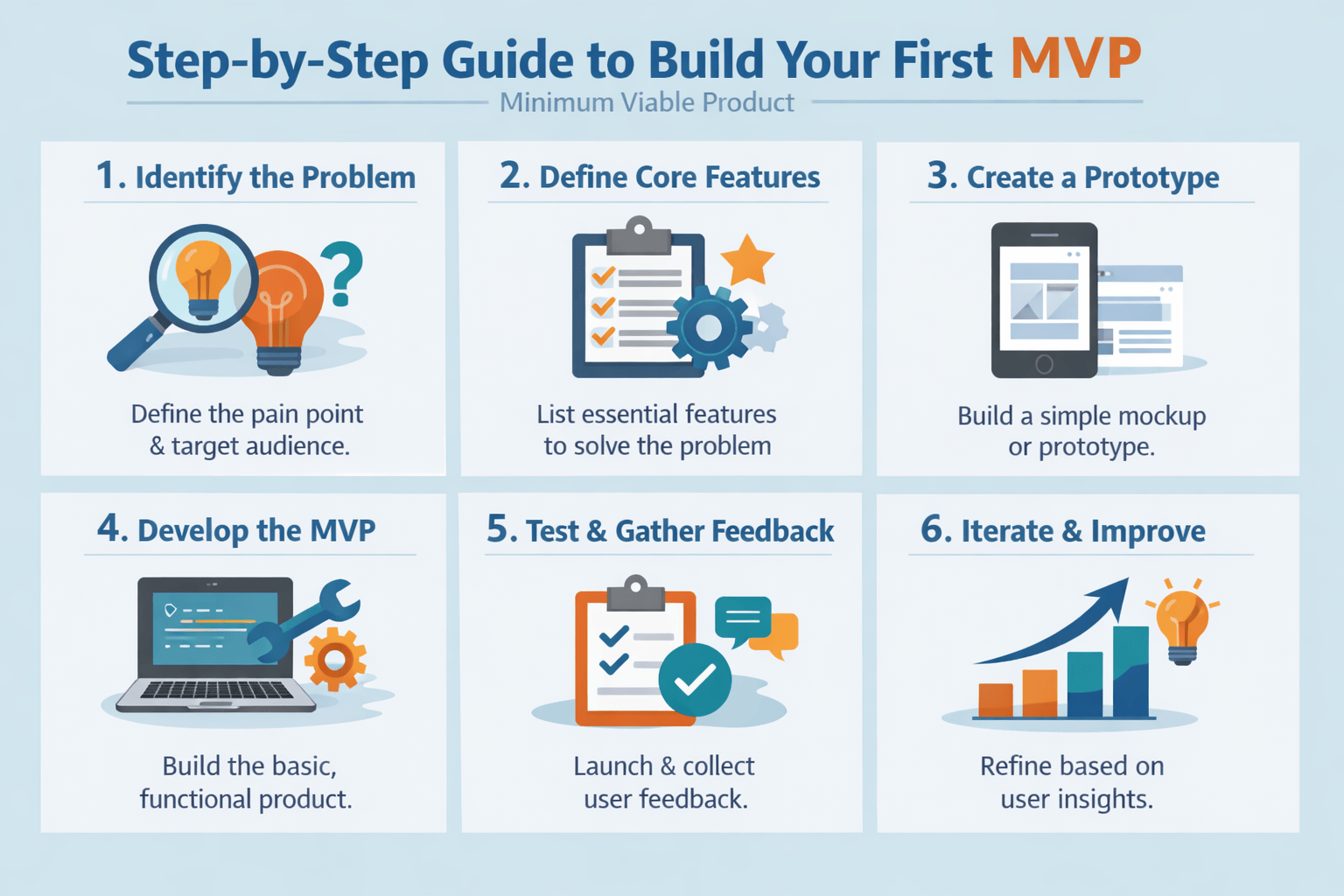
Step 1: Identify the Problem
Every successful startup product development begins with a clear problem. Ask yourself:
- What problem am I solving?
- Who is facing this problem?
- Why does it matter?
When you build your first MVP, clarity about the problem ensures you create something valuable.
Step 2: Define Your Target Audience
Understanding your audience is crucial in any MVP guide. Identify:
- Your ideal customer
- Their pain points
- Their behavior and preferences
This step ensures your MVP is built for the right people.It helps you reduce risk, improve product-market fit, and create solutions that truly solve real user problems effectively.To take your idea forward, read our complete guide on how to start a small business in India step by step and turn your MVP into a successful venture.
Step 3: Focus on Core Features
One of the most important parts of the MVP development process is prioritization. Avoid adding too many features.
Ask:
- What is the one feature that solves the main problem?
- What can be added later?
Remember, the goal is to build your first MVP, not a complete product.
Step 4: Choose the Right Tools
Modern startup product development is faster than ever with no-code and AI tools. You can build prototypes, websites, and apps without heavy coding.
Choosing the right tools helps you launch your MVP quickly and efficiently.
Step 5: Build and Launch Quickly
Speed is everything in the minimum viable product guide. Don’t wait for perfection-launch as soon as your core feature is ready.
When you build your first MVP, early launch helps you gather real-world feedback faster.
Step 6: Collect Feedback
Feedback is the backbone of the MVP development process. Talk to users, analyze behavior, and understand what works and what doesn’t.
This step helps improve your product continuously.
Step 7: Improve and Iterate
After feedback, refine your product. Successful startup product development is an ongoing process of improvement.
Keep updating your MVP based on user needs.
Common Mistakes to Avoid
While trying to build your first MVP, many founders make these mistakes:
- Adding too many features
- Ignoring user feedback
- Delaying launch
- Targeting the wrong audience
Following a structured MVP guide helps avoid these pitfalls.
Why MVP is Important for Startups
The MVP development process saves time, reduces costs, and increases success rates. It allows startups to test ideas before making large investments.
In modern startup product development, MVPs are the foundation of scalable businesses.
Internal Linking Suggestion
Before building your MVP, it’s important to validate your idea. Explore top startup ideas that will dominate 2026 to find high-potential opportunities.
Conclusion (My Design Minds Perspective)
Building an MVP is not just about creating a product-it’s about executing the right idea with the right strategy. This is where My Design Minds supports startups as a complete solution provider. From concept validation to product design and manufacturing support, the focus is on turning ideas into real, market-ready solutions.
For startups aiming to scale efficiently, combining structured MVP development with expert guidance ensures faster growth and reduced risk. In today’s competitive market, the right execution partner can make the difference between a failed idea and a successful product.