
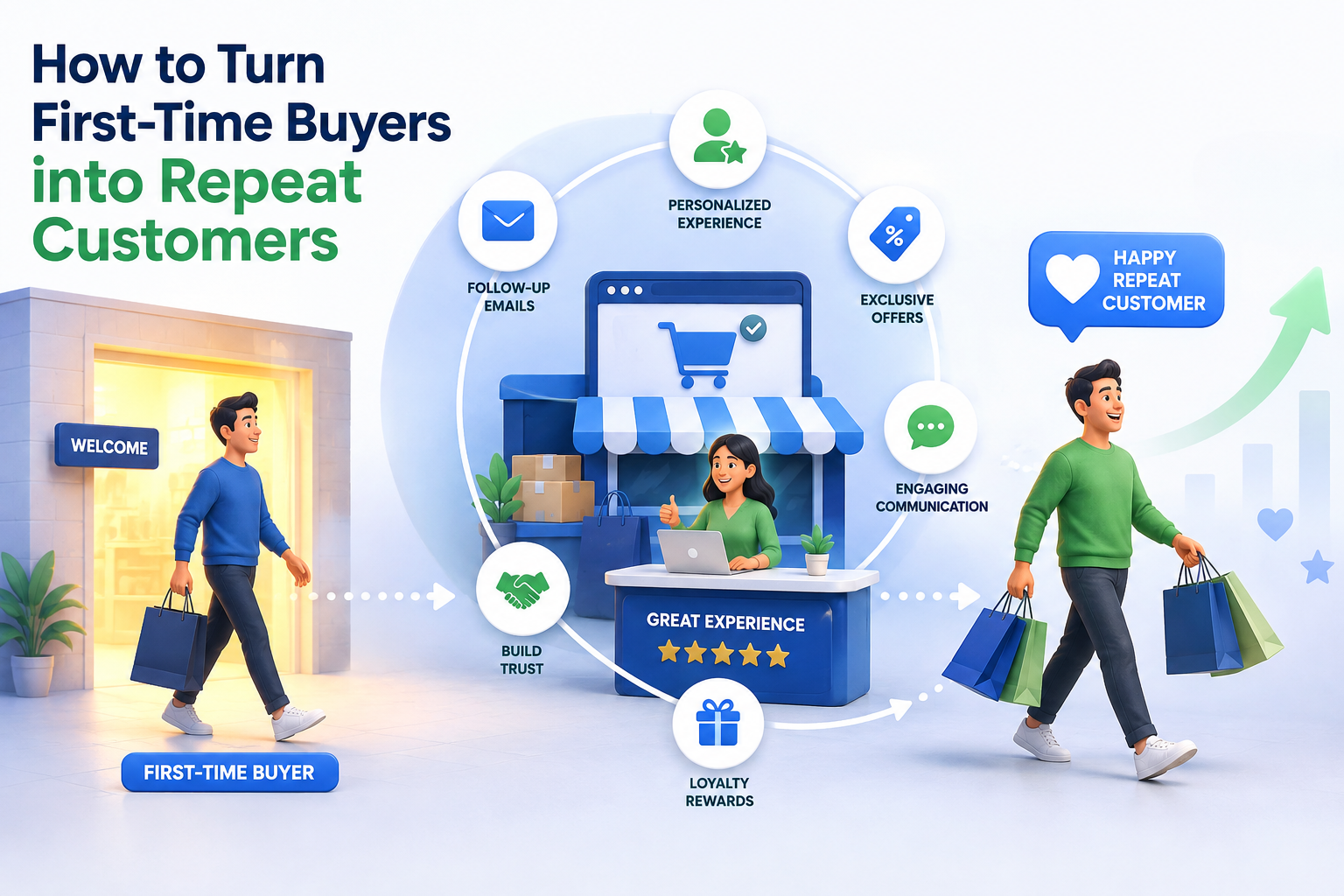
Getting a customer to make a first purchase is an important achievement, but it should not be the end of the relationship. Sustainable business growth depends on what happens after that first transaction. Brands that create a positive experience, communicate consistently, and provide relevant reasons to return can turn one-time shoppers into valuable long-term customers.
Effective customer retention strategies focus on building trust and reducing the friction between the first and second purchase. Recent ecommerce guidance emphasizes post-purchase communication, personalized recommendations, loyalty incentives, easy reordering, and timely win-back campaigns as important parts of retention.
Why Repeat Customers Matter
Acquiring new buyers requires continuous investment in advertising, content, promotions, and sales efforts. A returning customer has already experienced your product and brand, so convincing them to purchase again can be easier than starting from zero.
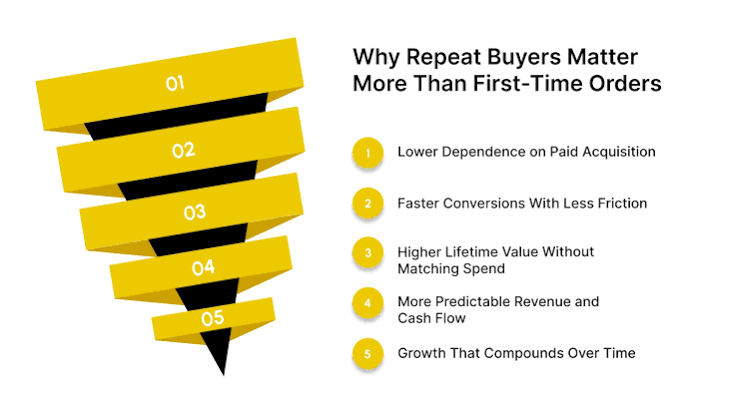
Repeat buyers can also contribute to stronger customer lifetime value, referrals, reviews, and brand advocacy. For this reason, businesses should measure not only new customer acquisition but also their ability to convert first-time buyers into loyal customers.
1. Create a Strong Post-Purchase Experience
The customer relationship does not end when payment is completed. The period immediately after an order is an opportunity to reinforce the buyer’s decision.
Send a clear confirmation message, provide accurate shipping information, and make tracking easy. After delivery, follow up to check whether the customer is satisfied. Product education, usage instructions, care information, or helpful tips can make customers feel supported rather than simply targeted for another sale.
A thoughtful post-purchase journey can increase trust and create a stronger foundation for future purchases.
2. Personalize Your Communication
Customers are more likely to respond when communication is relevant to their interests and previous purchases. Instead of sending the same promotional message to everyone, use purchase history and customer preferences to create targeted messages.
For example, someone who purchased a laptop accessory could receive recommendations for compatible products. A customer purchasing a consumable item could receive a reminder when it is likely to need replacement.
Personalization makes marketing more useful and can help businesses build stronger relationships without overwhelming customers with irrelevant promotions.
3. Give Customers a Reason to Return
Customers need a clear reason to make another purchase. This does not always mean offering a large discount.
Businesses can provide loyalty points, exclusive offers, free shipping, early access to new products, bundles, referral rewards, or special benefits for returning customers. Simple incentives can encourage buyers to take the next step while protecting profit margins.

A loyalty program should also be easy to understand. Customers should know what they earn, when they can use it, and how much value they receive. Complicated reward structures can create unnecessary friction.
4. Make the Second Purchase Easy
Convenience is one of the most practical ways to encourage repeat buying. If customers have to search through your entire website again, compare multiple products, and recreate a previous order, they may decide to purchase somewhere else.
Offer simple reorder options, saved preferences, quick checkout, and product recommendations based on previous purchases. For frequently purchased products, automated replenishment reminders can be particularly useful.
Reducing the number of steps between a customer’s intention and completed purchase can make your retention efforts more effective.
5. Use Email and WhatsApp Marketing
Owned communication channels can help brands stay connected with customers after the first order. Email can be used for product education, review requests, personalized recommendations, replenishment reminders, and win-back campaigns.
For businesses targeting Indian customers, WhatsApp can also be useful for timely order updates and retention communication. However, messages should provide genuine value rather than becoming a constant stream of promotional content.
The timing of communication is equally important. A customer may need product guidance immediately after delivery, while a replenishment reminder should arrive closer to the expected repurchase period.
6. Ask for Reviews and Feedback
Reviews help both businesses and future customers. After a customer has had enough time to experience the product, ask for feedback.
Positive reviews can strengthen social proof, while negative feedback can reveal problems with products, delivery, packaging, or customer support. Responding professionally to complaints can demonstrate that the business values its customers.
Feedback should also influence product and service improvements. When customers see that their opinions lead to meaningful changes, they have another reason to trust the brand.
7. Build Customer Loyalty Beyond Discounts
Discounts can generate short-term purchases, but genuine loyalty comes from consistently delivering value. Reliable products, responsive support, convenient purchasing, useful content, and a consistent brand experience all contribute to loyalty.
Businesses should avoid training customers to purchase only when a discount is available. Instead, combine occasional incentives with strong service and meaningful customer benefits.
This approach makes customer loyalty strategies more sustainable because customers return for the overall experience, not simply the lowest price.
8. Segment First-Time Buyers
Not every customer has the same needs, which is why effective customer retention strategies should be tailored to different customer segments. Segmenting your audience helps businesses create more relevant campaigns and improve the repeat purchase rate.
First-time buyers can receive onboarding messages and educational content, while frequent customers can receive VIP benefits, exclusive offers, and personalized recommendations. Customers who have not purchased for several months can receive carefully designed win-back campaigns that support stronger customer loyalty strategies.
By delivering the right message at the right time, businesses can create more meaningful customer experiences, encourage repeat customers, and avoid sending identical campaigns to every customer.
9. Track the Right Retention Metrics
Businesses cannot improve retention without measuring it. Monitor metrics such as repeat purchase rate, customer lifetime value, average order value, purchase frequency, churn rate, and revenue from returning customers.
The repeat purchase rate is particularly useful because it shows how effectively a business converts first-time buyers into returning customers. Tracking this metric by product, campaign, acquisition source, and customer segment can reveal which strategies produce the strongest results.
Use these insights to continuously improve your campaigns, offers, customer experience, and communication.
Conclusion
Turning first-time buyers into repeat customers requires more than occasional promotions. Effective customer retention strategies build a complete retention journey through personalized communication, excellent support, relevant recommendations, loyalty benefits, and convenient reordering. These customer loyalty strategies encourage a higher repeat purchase rate by giving customers valuable reasons to return and continue engaging with the brand.
The strongest customer retention strategies focus on creating genuine value at every stage of the customer journey. When customers trust a brand, enjoy its products, and find it easy and rewarding to return, one-time purchases can develop into long-term relationships.
How My Design Minds Can Help
My Design Minds helps businesses strengthen their digital presence through professional design, website development, and digital marketing services. A strong online experience can help businesses communicate their value, build customer trust, and create more opportunities for repeat engagement. From website design and content support to SEO and digital marketing, My Design Minds focuses on creating practical solutions aligned with business goals.
For companies looking to improve their online customer journey, stronger branding, better website experiences, and targeted digital marketing can work together to encourage customer engagement and long-term growth. With the right strategy, every first-time buyer can become an opportunity to build a lasting relationship and generate future business.
If you are planning your entrepreneurial journey, learning how to start a small business in India can help you understand the key steps involved in validating an idea, reaching customers, managing finances, and building a sustainable business.