
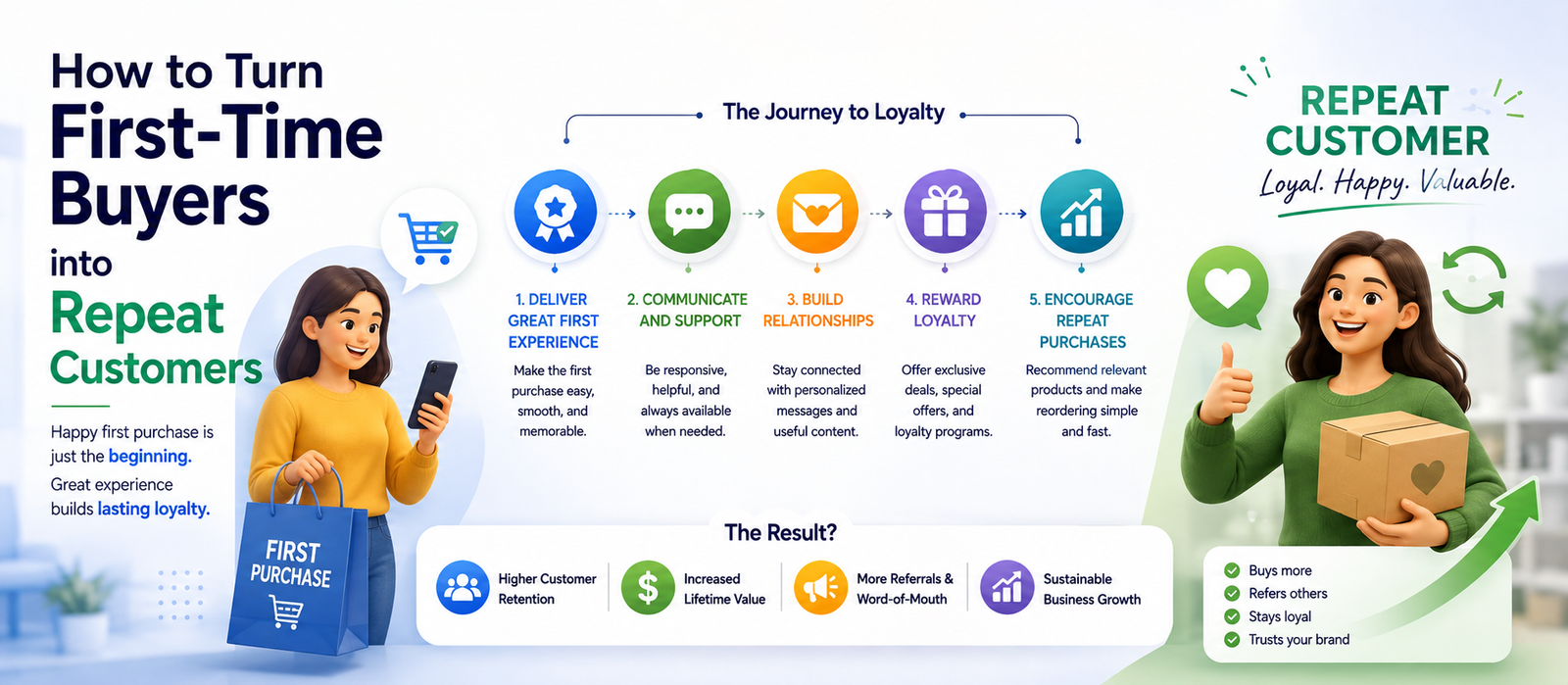
Getting a customer to make their first purchase is an important milestone for any business, but the real opportunity begins after the transaction. Turning First-Time Buyers into Repeat Customers can help businesses increase revenue, strengthen customer relationships, and build long-term brand loyalty. While acquiring new customers requires marketing, advertising, and sales investment, encouraging existing customers to purchase again can create a more sustainable growth model.
Customer retention is especially important for startups and growing businesses. A customer who has already purchased from your company knows your brand and has experienced your product or service. If that experience is positive, they may be more willing to buy again. Businesses can encourage this behavior through excellent service, personalized communication, loyalty programs, relevant offers, and consistent value.
Why Repeat Customers Matter
Repeat customers can contribute significantly to sustainable business growth. They are already familiar with your brand, which means businesses do not always need to spend as much effort introducing themselves.
Repeat customers can:
- Increase customer lifetime value
- Generate additional revenue
- Improve retention rates
- Provide valuable feedback
- Recommend your business to others
- Strengthen brand credibility
- Create a loyal customer community
A strong retention strategy does not mean simply encouraging customers to buy more. It means giving them genuine reasons to continue choosing your brand.
1. Deliver an Excellent First Purchase Experience
The journey toward creating repeat customers starts with the first purchase.
Make sure customers experience:
- Easy ordering
- Clear product information
- Transparent pricing
- Secure payment
- Fast communication
- Reliable delivery
- Helpful customer support
A smooth first experience creates positive expectations and increases the likelihood of another purchase.
If customers experience delays, unclear communication, or poor support, even an excellent product may not be enough to encourage them to return.
2. Follow Up After the Purchase
Do not stop communicating once the transaction is complete.
A simple follow-up message can show customers that your relationship with them extends beyond the sale.
For example, businesses can send:
- Order confirmation
- Delivery updates
- Product usage tips
- Thank-you messages
- Feedback requests
- Helpful resources
Post-purchase communication can make customers feel valued and provide opportunities to introduce relevant products or services.
3. Personalize Customer Communication
Customers are more likely to engage with messages that are relevant to their needs.
Use customer information such as:
- Previous purchases
- Product interests
- Browsing behavior
- Location
- Purchase frequency
- Communication preferences
For example, if a customer purchases a particular product, businesses can recommend complementary products that genuinely add value.
Personalization is one of the most effective Customer Retention Strategies because it makes communication more useful instead of treating every customer identically.
4. Provide Valuable Content
Not every communication should be a sales promotion.
Businesses can maintain engagement by sharing useful information such as:
- Product tutorials
- Industry tips
- How-to guides
- Maintenance advice
- Educational videos
- Expert insights
- Frequently asked questions
Valuable content keeps your brand relevant and helps customers get more value from their purchases.
5. Create a Customer Loyalty Program
Loyalty programs can give customers additional reasons to purchase again.
Depending on the business model, rewards could include:
- Discount vouchers
- Loyalty points
- Exclusive offers
- Early product access
- Free shipping
- Special customer benefits
- Birthday rewards
A loyalty program should be simple to understand. If customers cannot easily see how they earn and use rewards, participation may remain low.
6. Offer Personalized Recommendations
Use purchase history to recommend products that complement previous purchases.
For example, a customer who purchases a primary product may receive suggestions for accessories, upgrades, or related services.
Recommendations should be relevant rather than excessive. Sending unrelated promotions can reduce customer trust.
Effective recommendations are an important part of Repeat Customer Strategies because they help customers discover products that match their existing interests.
7. Ask for Customer Feedback
Feedback can help businesses understand what customers like and what needs improvement.
Ask questions such as:
- How was your experience?
- Did the product meet your expectations?
- What could we improve?
- What products would you like to see?
- Would you recommend us?
Customer feedback can reveal opportunities to improve products, services, website experiences, delivery processes, and support.
More importantly, asking for feedback shows customers that their opinions matter.
8. Provide Excellent Customer Support
Customer support can significantly influence whether someone purchases again.
Offer convenient support through channels such as:
- Live chat
- Phone
- Social media
- Help centers
Respond quickly and focus on solving the customer’s problem rather than simply closing the support request.
A customer who receives helpful support after a problem may become more loyal than a customer who never experiences an issue.
9. Create Win-Back Campaigns
Not every customer will purchase regularly. Some may become inactive after their first order.
Win-back campaigns can encourage these customers to return.
Messages might include:
- “We miss you”
- New product announcements
- Personalized recommendations
- Limited-time offers
- Helpful product updates
However, avoid sending excessive discounts. The goal is to remind customers about your value, not train them to purchase only when prices are reduced.
10. Build an Emotional Connection
Customers often remember how a brand made them feel.
Share your:
- Brand story
- Company values
- Founder journey
- Customer stories
- Behind-the-scenes content
- Community initiatives
Authentic storytelling can make your business more memorable and strengthen Customer Loyalty for Startups.
11. Make Repeat Purchases Easy
Convenience can strongly influence repeat buying behavior.
Make it easy for customers to:
- Reorder products
- Save payment information securely
- Find previous purchases
- Subscribe to recurring products
- Contact support
- Discover relevant products
The fewer unnecessary steps customers face, the easier it becomes to purchase again.
12. Measure Customer Retention
Businesses should track customer retention to understand whether their strategies are working.
Important metrics include:
- Repeat purchase rate
- Customer retention rate
- Customer lifetime value
- Purchase frequency
- Average order value
- Churn rate
- Loyalty program participation
- Customer satisfaction
Analyzing these metrics helps businesses identify which Customer Retention Strategies are producing meaningful results.
Common Mistakes to Avoid
Businesses often struggle to retain customers because they:
- Communicate only when selling
- Send irrelevant promotions
- Ignore customer feedback
- Make loyalty programs complicated
- Provide poor customer service
- Fail to personalize communication
- Overuse discounts
- Make repeat purchases difficult
Avoiding these mistakes can create stronger customer relationships.
Best Practices for Building Repeat Customers
To consistently turn first-time buyers into loyal customers:
- Create an excellent first experience.
- Follow up after purchases.
- Personalize communication.
- Provide valuable content.
- Reward loyal customers.
- Offer relevant recommendations.
- Collect and act on feedback.
- Deliver responsive customer support.
- Re-engage inactive customers.
- Make repeat purchases convenient.
These practices create a customer experience that encourages people to return naturally.
Conclusion
Turning First-Time Buyers into Repeat Customers requires more than sending occasional promotional emails. Businesses need to create positive experiences, understand customer needs, provide personalized communication, and consistently deliver value. Effective Customer Retention Strategies can increase customer lifetime value while reducing dependence on constantly acquiring new buyers.
Strong Repeat Customer Strategies should focus on helpful follow-ups, loyalty rewards, relevant recommendations, excellent support, and convenient purchasing experiences. At the same time, building Customer Loyalty for Startups requires businesses to create genuine relationships rather than relying only on discounts and promotions.
When customers feel understood, appreciated, and supported, they have more reasons to choose the same business again. For entrepreneurs learning how to start a small business in India, focusing on customer retention from the beginning can create a stronger foundation for sustainable revenue, positive word-of-mouth, and long-term business growth.

About StartupSpark
StartupSpark provides practical insights and actionable strategies for entrepreneurs looking to launch, grow, and scale successful businesses. From Customer Acquisition Costs for Startups, Startup Customer Acquisition Cost, and effective Customer Acquisition Strategies to First-Time Buyers into Repeat Customers, Customer Retention Strategies, Repeat Customer Strategies, and Customer Loyalty for Startups, StartupSpark covers essential topics that help founders attract customers, improve conversions, build lasting relationships, and achieve sustainable growth. The platform also explores digital marketing, SEO, branding, sales, funding, technology, and business development, helping entrepreneurs make smarter decisions and build successful businesses in a competitive market.