
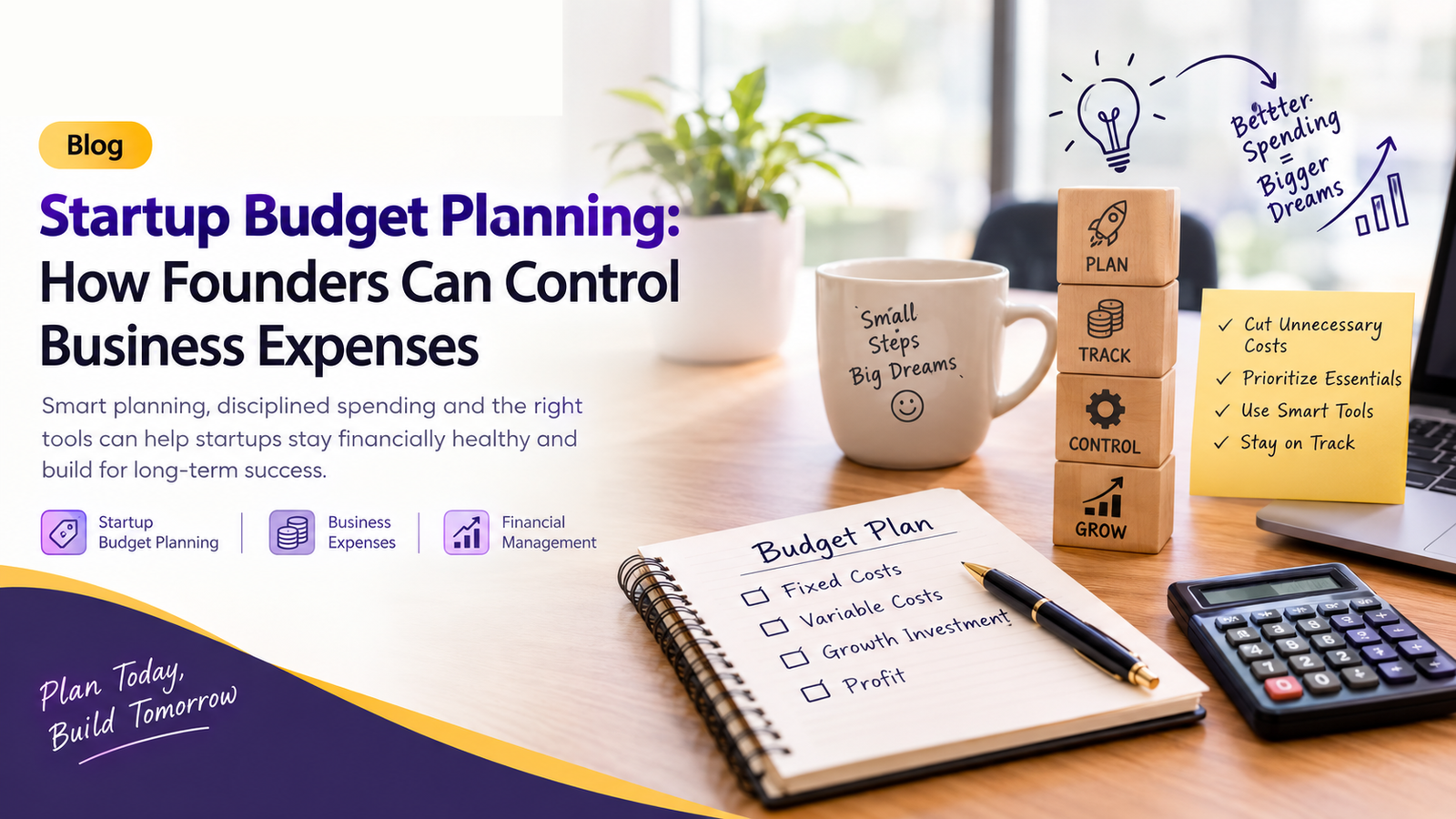
Starting a business is exciting, but managing money can quickly become one of the biggest challenges for founders. From office expenses and employee salaries to marketing, technology, inventory, and unexpected costs, small expenses can aStartup Budget Planning: How Founders Can Control Business Expenses
Starting a business is exciting, but managing money can quickly become one of the biggest challenges for founders. From office expenses and employee salaries to marketing, technology, inventory, and unexpected costs, small expenses can add up quickly. Without a clear financial structure, even a promising startup can struggle with cash flow.
This is where startup budget planning becomes essential. A well-prepared budget helps founders understand where money is going, identify unnecessary spending, and make informed decisions about growth. Instead of reacting to financial problems after they occur, entrepreneurs can create a system that keeps expenses under control from the beginning.
1. Separate Essential and Non-Essential Expenses
The first step in managing business expenses is understanding which costs are necessary for operations and which can be delayed or eliminated.
Essential expenses may include salaries, software subscriptions, equipment, raw materials, rent, legal fees, accounting, and basic marketing. Non-essential expenses could include expensive office upgrades, unnecessary subscriptions, excessive promotional activities, or purchases that do not directly support business objectives.
Create two categories and review them every month. This simple approach can prevent founders from spending valuable capital on things that do not contribute to business growth.
2. Create a Realistic Startup Budget
A startup budget should be based on realistic expectations rather than optimistic assumptions. Estimate your initial setup costs, monthly operating expenses, marketing expenditure, technology costs, and emergency requirements.
Include both fixed and variable expenses. Fixed costs remain relatively stable, while variable costs may change according to sales, production, or customer demand.
Your budget should also include a contingency reserve. Unexpected expenses are common in the early stages of a business, and having an emergency fund can help the company handle challenges without disrupting daily operations.
3. Track Every Business Expense
Founders cannot control what they do not measure. Keeping track of every expense provides a clearer picture of the company’s financial health.
Use accounting software, spreadsheets, or expense management platforms to record transactions. Categorize expenses so you can easily identify where the majority of your money is being spent.
Good business expense management also makes it easier to identify spending patterns. For example, a founder may discover that several software subscriptions perform similar functions or that marketing expenses are generating limited results.
Regular tracking turns financial data into useful information for decision-making.
4. Prioritize Spending That Supports Growth
Not every expense is bad. Some investments can directly contribute to revenue, customer acquisition, productivity, or long-term business development.
Before making a purchase, ask a few important questions:
- Does this expense solve a genuine business problem?
- Can it increase productivity or revenue?
- Is there a lower-cost alternative?
- Do we need it immediately?
- Can the expense be postponed until revenue increases?
This mindset encourages founders to think strategically instead of simply trying to reduce every possible cost.
5. Build a Strong Cash Flow Strategy
Profitability and cash flow are not always the same. A business may have sales but still experience financial pressure if payments from customers arrive late while expenses need to be paid immediately.
Effective startup financial planning should therefore include cash flow forecasting. Estimate when money will come into the business and when major payments will leave it.
Maintain sufficient working capital to cover regular operating costs. Founders should also monitor accounts receivable and follow up on overdue payments to maintain healthy cash flow.
6. Review Costs and Negotiate With Vendors
Startup expenses can often be reduced through better negotiations. When purchasing equipment, software, raw materials, or professional services, compare multiple suppliers before making a decision.
Ask vendors about startup discounts, annual pricing, bulk rates, or flexible payment terms. However, do not select a supplier solely because it offers the lowest price. Quality, reliability, delivery timelines, and customer support can have a significant impact on the business.
Review major contracts periodically. As your startup grows, you may be able to negotiate better rates based on increased purchasing volume.
7. Avoid Premature Scaling
One of the common financial mistakes founders make is spending heavily before validating demand. Hiring too many employees, purchasing excessive inventory, renting expensive offices, or investing in large-scale infrastructure too early can create unnecessary financial pressure.
Cost control for startups does not mean avoiding growth. It means matching expenses with actual business requirements.
Start small, test your assumptions, measure results, and increase spending when there is evidence that the investment is justified. This approach allows founders to preserve capital while gradually building the business.
8. Create Monthly Financial Reviews
Budgeting should not be a one-time activity. Set aside time every month to compare planned expenses with actual spending.
Review categories such as payroll, marketing, technology, operations, inventory, and professional services. Identify expenses that exceeded the original budget and understand why.
Regular business expense management helps founders respond quickly when costs begin moving in the wrong direction. It also allows them to adjust future budgets based on real business performance rather than assumptions.
9. Plan for Future Business Needs
Good financial planning looks beyond the current month. Founders should estimate upcoming expenses such as new hires, product development, equipment, marketing campaigns, technology upgrades, or expansion.
A practical startup financial planning process helps businesses prepare for these costs instead of making rushed financial decisions later.
At the same time, maintaining cost control for startups can help preserve capital for opportunities that matter most. The objective is not simply to spend less but to ensure that every major expense has a clear purpose.
Building a Financially Disciplined Startup
Financial discipline can give startups greater flexibility during uncertain periods. By separating essential expenses, tracking spending, forecasting cash flow, negotiating with suppliers, and reviewing budgets regularly, founders can make their available capital work harder.
Startup budget planning should become an ongoing part of business management rather than a document created only during the company’s launch. When founders understand their numbers, they can make more confident decisions about hiring, marketing, product development, and expansion.
If you are researching “How to start a small business in India,” creating a realistic startup budget should be one of your first steps because it helps you estimate setup costs, manage working capital, and avoid unnecessary financial pressure during the early stages.

How My Design Minds Can Support Your Startup
For founders turning an idea into a real product, managing expenses is closely connected with making the right design and development decisions. My Design Minds helps startups move from concept to execution with services covering product design, Mechanical CAD, prototyping, 3D printing, manufacturing support, website designing, graphic designing, and digital marketing. By bringing multiple design and business-support requirements together, founders can simplify coordination and make better use of their resources. Whether you are developing a new product or building your brand from the ground up, My Design Minds works as a solution provider to help bridge the gap between ideas and practical execution.
Leave a Reply