
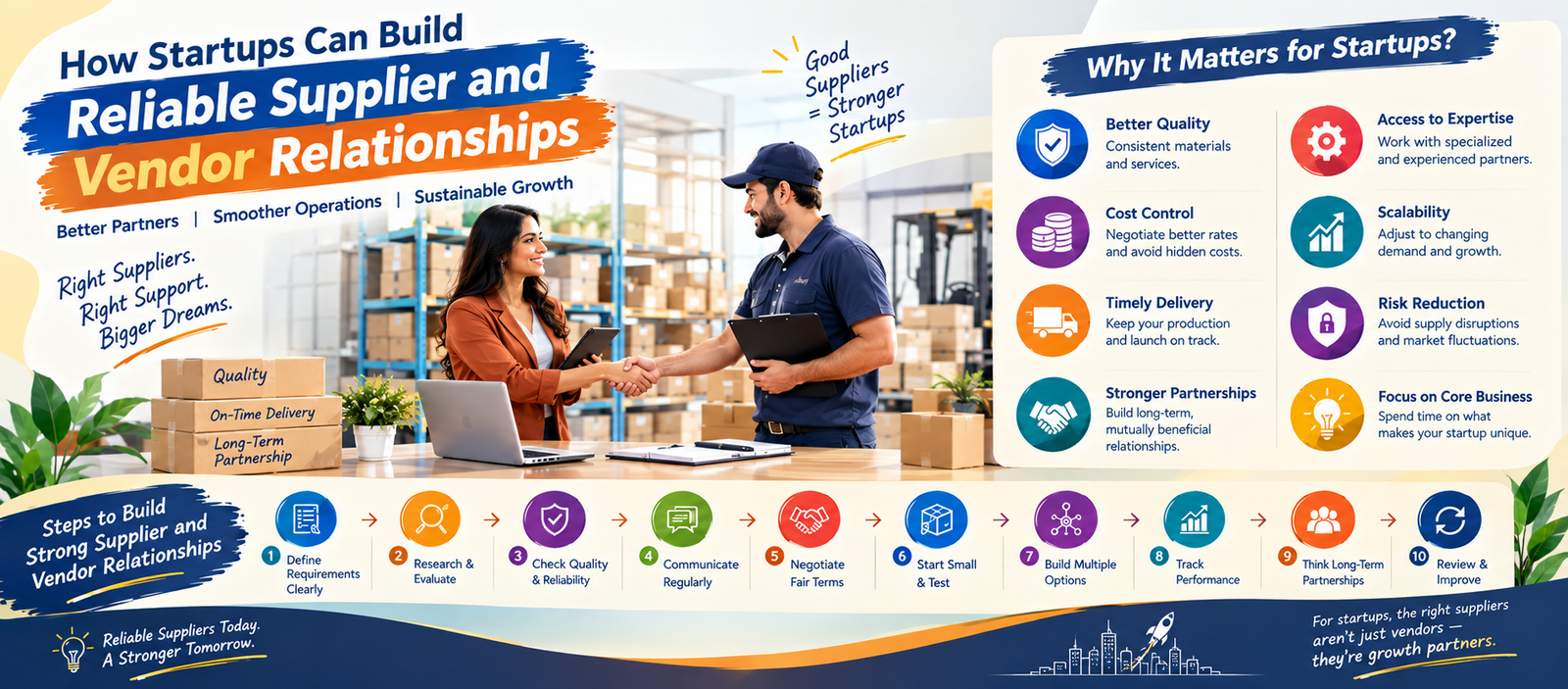
Supplier and Vendor Relationships are a critical part of startup operations because product quality, delivery schedules, pricing, and customer satisfaction often depend on external partners. A startup may have an excellent product idea, but unreliable suppliers can create delays, inconsistent materials, unexpected costs, and unhappy customers. Building dependable partnerships early can therefore create a stronger operational foundation.
Strong Supplier and Vendor Relationships begin with choosing partners based on reliability, quality, communication, and long-term suitability rather than price alone.
1. Define Your Requirements Clearly
Before approaching suppliers, clearly document what you need. Specify product specifications, materials, quantities, quality standards, delivery timelines, packaging requirements, payment terms, and compliance expectations. Clear requirements reduce misunderstandings and make it easier to compare potential partners.
Startups should also distinguish between essential and flexible requirements. This helps suppliers understand priorities and gives your business room to negotiate without compromising critical quality standards.
2. Research Potential Suppliers
Do not select a supplier based only on the lowest quotation. Research their experience, production capacity, quality systems, delivery record, customer feedback, and ability to handle your expected volumes. Ask for samples or previous work where appropriate.
Supplier Relationship Management should begin before the first purchase order. A structured evaluation process helps founders understand whether a supplier can support the business as it grows rather than simply meet one immediate requirement.
3. Evaluate Quality and Reliability
Price is important, but consistent quality is equally important. A low-cost supplier may become expensive if defective materials, rework, production stoppages, or returns occur frequently.
Consider creating a supplier evaluation checklist covering quality, delivery performance, communication, pricing, responsiveness, and problem-solving ability. Reviewing these factors regularly can help identify reliable partners and address issues before they become serious.
4. Communicate Expectations and Timelines
Good communication is the foundation of dependable business partnerships. Share forecasts, order schedules, design changes, quality expectations, and delivery requirements as early as possible.
Vendor Management for Startups should include regular communication rather than contact only when an order is placed. Simple practices such as scheduled updates, written specifications, and clear points of contact can prevent avoidable confusion.
5. Negotiate Fair Terms
Startups should negotiate pricing, minimum order quantities, payment schedules, lead times, warranty conditions, replacement policies, and delivery responsibilities before committing to a long-term arrangement.
Negotiation should not focus only on getting the lowest price. A sustainable agreement should provide value to both sides. Suppliers that can maintain healthy margins may be more willing to provide consistent service, prioritize urgent requirements, and invest in improving their capabilities.
6. Start Small and Test the Partnership
Before placing large orders, consider beginning with a smaller quantity or pilot project. This allows the startup to evaluate actual quality, communication, packaging, delivery accuracy, and responsiveness.
A successful trial provides practical evidence about how the supplier performs. If problems appear, founders can address them early or explore alternatives before the supplier becomes critical to the business.
7. Build More Than One Supply Option
Depending on a single supplier for an essential component can create significant operational risk. Delays caused by equipment problems, raw material shortages, transportation issues, or unexpected demand can affect production.
Developing relationships with backup suppliers can improve resilience. The goal is not necessarily to divide every order between several vendors, but to maintain realistic alternatives for important materials or services.
Reliable Suppliers can also help startups respond more effectively when demand changes. Keeping approved alternatives, specifications, and pricing information organized makes it easier to act when circumstances change.
8. Track Performance Regularly
Supplier performance should be measured using practical indicators such as on-time delivery, defect rates, order accuracy, response time, pricing changes, and issue resolution.
Supplier Relationship Management becomes more effective when decisions are based on documented performance rather than assumptions. A simple spreadsheet or procurement system can help founders review trends and identify recurring problems.
9. Treat Suppliers as Long-Term Partners
A strong relationship is built through professionalism, transparency, timely payments, realistic expectations, and mutual respect. Startups should communicate problems honestly and provide suppliers with reasonable notice when requirements change.
At the same time, founders should expect accountability. Long-term partnerships work best when both sides understand responsibilities and address problems constructively. Effective Supplier and Vendor Relationships can create better communication and make it easier to solve operational challenges.
10. Review and Improve the Network
Business needs change as startups grow. A supplier that works well for early-stage volumes may not have the capacity, technology, geographic reach, or quality systems required later.
Vendor Management for Startups should therefore include periodic reviews of current partners and future requirements. Expanding the supplier network, renegotiating agreements, or replacing underperforming partners may become necessary as the business evolves.
My Design Minds
My Design Minds supports startups and businesses with CAD design, product engineering, 3D visualization, reverse engineering, prototyping, 3D printing, and manufacturing support. Reliable Suppliers are important when turning product concepts into practical, manufacturable solutions. The team can help businesses prepare accurate designs and technical requirements that make supplier communication clearer. My Design Minds can also support product development through practical engineering and manufacturing expertise, helping businesses coordinate design requirements, prototypes, tooling, and production needs. By connecting design expertise with manufacturing support, My Design Minds helps startups create a stronger foundation for product development and supplier collaboration.
For entrepreneurs learning How to start a small business in India, building dependable supplier relationships can help control costs, maintain product quality, avoid unnecessary delays, and create a more stable foundation for sustainable business growth.

Leave a Reply